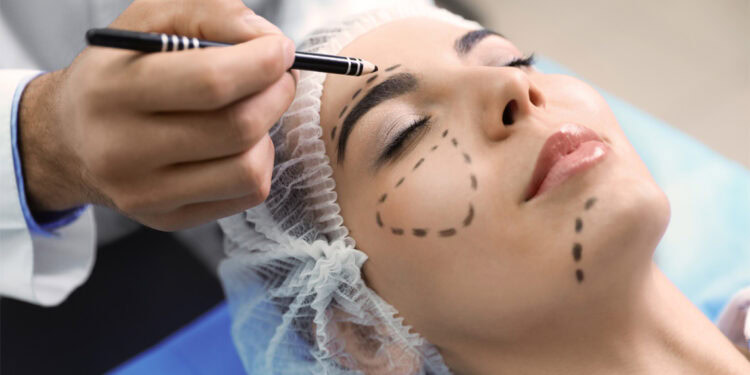

A recent study found religious salience and attachment to God were associated with lower rates of cosmetic surgery, but this varied based on income and gender. Additionally, participants who embraced the concept of costly grace were more likely to have undergone cosmetic enhancements. The new research was published in the journal Psychology of Religion and Spirituality.
The study focused on investigating the complex relationship between religiosity and the decision to undergo cosmetic surgery or enhancements, with a specific emphasis on individuals belonging to The Church of Jesus Christ of Latter-Day Saints, informally known as the LDS Church or the Mormon Church. Despite religiosity generally being associated with positive body image, the study authors were intrigued by the apparent contradiction in Utah, a state with a strong LDS Church presence, where cosmetic surgery rates are notably high.
The LDS Church has unique theological beliefs and teachings about the body. These beliefs, such as considering the body as a sacred temple and emphasizing its importance in the afterlife, could potentially shape individuals’ attitudes. The researchers aimed to identify how various facets of religiosity might shape the likelihood of undergoing cosmetic surgery.
“Religiosity tends to be protective against body image concerns and the desire for cosmetic surgery,” explained study author Sarah M. Coyne, a professor and associate director of the School of Family Life at Brigham Young University. “Yet, in Utah (a state that tends to be highly religious), signs for cosmetic surgery dominate the major interstate and the state rates the highest for Google searches for breast augmentations. We wanted to explore this apparent paradox in the current study and dig deeper into some of the nuances around religiosity and cosmetic surgery.”
The researchers first conducted a qualitative study, interviewing 128 individuals who had undergone cosmetic surgery to explore the relationship between religiosity and cosmetic surgery decisions among LDS Church members. Interviews were semistructured, covering topics such as personal religiosity, body image, and cosmetic surgery decisions.
The interviews were recorded, transcribed, and analyzed using grounded theory. (Grounded theory is a qualitative research methodology that involves systematically analyzing the data to develop theories or concepts that emerge directly from the data itself.)
Around 59% of participants who had undergone cosmetic surgery expressed that their religious beliefs had no impact on their decision. They viewed cosmetic surgery as a personal choice unrelated to religiosity.
On the other hand, many participants believed in involving God in significant decisions, including cosmetic surgery. Around 18% of participants who had cosmetic surgery shared that they prayed and felt they received divine guidance in their decision-making.
Approximately 65% of participants who had undergone cosmetic surgery experienced feelings of dissonance between their religious beliefs and their decision. They grappled with concerns about altering the body God gave them and questioned whether cosmetic surgery aligned with their faith’s teachings.
Next, the researchers conducted a quantitative survey among a large sample of LDS Church members to further explore the relationship between religiosity and cosmetic surgery decisions. The sample consisted of 1,333 individuals from the United States, mostly women, with varying ages, ethnicities, and income levels.
Around 14% of the participants had undergone cosmetic surgery, with prevalent procedures including breast augmentations, tummy tucks, liposuction, and buttock augmentations. Notably, there was no significant gender difference in reporting major cosmetic surgeries, although the male representation in the sample was limited.
Cosmetic enhancements (less invasive procedures compared to surgery) were quite common, with nearly 20% of participants acknowledging having undergone some form of cosmetic enhancement. The most frequent enhancements included laser hair removal, chemical peels, Botox injections or other soft tissue fillers, microblading, and dermabrasion.
Coyne and her colleagues found that two factors, religious salience and attachment to God, were associated with lower levels of cosmetic surgery. Religious salience refers to how important religion is in various aspects of a person’s life, such as their identity, decision-making, and daily actions. Attachment to God refers to a person’s emotional connection to and relationship with God.
This means that individuals who considered religion to be highly important in their lives and felt a strong emotional connection to God were less likely to have undergone cosmetic surgery. In other words, their religious beliefs and the strength of their relationship with God seemed to play a role in their decision not to pursue cosmetic surgery.
However, the relationship between religiosity and cosmetic surgery was not the same for everyone. The researchers found that this relationship was influenced by both income and gender.
Among individuals with higher incomes, the level of religious salience didn’t significantly affect the likelihood of undergoing cosmetic surgery. For men, as their religious salience increased, their likelihood of undergoing cosmetic surgery decreased. However, for women, the effect was smaller and less significant. This suggests that the connection between religiosity and cosmetic surgery was more pronounced for men.
The researchers also found a relationship between a specific religious belief called “costly grace” and cosmetic enhancements. Costly grace is a theological concept emphasizing that forgiveness and salvation are dependent on human effort, and it requires a commitment to living a morally aligned life. Individuals who strongly believed in the concept of costly grace were more likely to have undergone cosmetic enhancements.
“Religiosity is only protective for the desire to have cosmetic surgery for some individuals and in some contexts,” Coyne told PsyPost. “For example, the attachment to God tends to be highly protective. However, the belief in costly grace (i.e. I have to earn the grace of God) tended to be a risk factor for cosmetic surgery and enhancements. Thus, religion tends to be a mixed bag on this issue.”
While the findings provide unique insights into the relationship between religious concepts and cosmetic procedures among members of the LDS Church, it is unclear how well the results generalize to other religious faiths. “The study focused on the church of Jesus Christ of Latter-day Saints,” Coyne noted. “Thus, other religions may function differently.”
The study, “Plastic Piety: A Mixed-Methods Study of the Connection Between Religiosity, Cosmetic Surgery, and Body Image“, was authored by Sarah M. Coyne, Megan Gale, Jane Shawcroft, Emilie Davis, and Chenae Christensen-Duerden.