Subscribe
The latest psychology and neuroscience discoveries.
My Account
  • Mental Health
  • Social Psychology
  • Cognitive Science
  • Neuroscience
  • About
No Result
View All Result
PsyPost
PsyPost
No Result
View All Result
Home Exclusive Social Psychology Political Psychology

When facts don’t matter: How voters justify political misinformation

by Minjae Kim
October 18, 2024
in Political Psychology
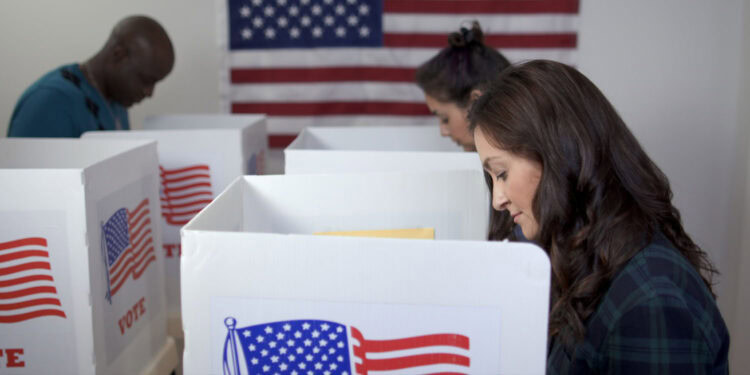
(Photo credit: Adobe Stock)

(Photo credit: Adobe Stock)

Share on TwitterShare on Facebook

Many voters are willing to accept misinformation from political leaders – even when they know it’s factually inaccurate. According to our research, voters often recognize when their parties’ claims are not based on objective evidence. Yet they still respond positively, if they believe these inaccurate statements evoke a deeper, more important “truth.”

Our team conducted a series of online surveys from 2018 to 2023 with over 3,900 American voters. These surveys were designed to elicit responses about how they evaluated political statements from several politicians, even when they recognized those statements as factually inaccurate.

Consider former President Donald Trump’s claims that the 2020 election was stolen from him. Even among supporters who recognized that his claims about fraud were not grounded in objective evidence, we found that they were more likely to see these allegations as important for “American priorities”: for example, they believe the political system is illegitimate and stacked against their interests.

The same logic applies to factually inaccurate statements about COVID-19 vaccinations that President Joe Biden made, suggesting that vaccinated people could not spread the disease. In our surveys, voters who supported the president saw the statement as important for American priorities, despite recognizing its factual inaccuracy.

Through these questions, we were able to uncover the criteria that guide voter behavior, depending on who makes which statement. Voters from both parties cared more about “moral truth” when they were evaluating a politician they liked. When evaluating a politician they didn’t like, on the other hand, voters relied more on strict factuality.

Our surveys documented how voters provide such justifications for their partisan standard-bearers, revealing a significant degree of “moral flexibility” in voters’ political judgment. I conducted this research with Oliver Hahl of Carnegie Mellon University, Ethan Poskanzer of the University of Colorado, and Ezra Zuckerman Sivan of MIT.

Why it matters

Conversations about how to combat misinformation often focus on the need for better fact-checking and education. However, our discovery illustrates the deeper but overlooked drivers behind voters’ tolerance and support for factually inaccurate statements. The findings suggest that misinformation survives not only due to voters’ “gullibility” but their moral calculations about whether partisan ends justify the means.

If voters are deliberately choosing to support misinformation because it aligns with their partisan perspectives, then providing factual corrections will not be enough to protect the democratic norm of grounding public policies in objective facts.

Google News Preferences Add PsyPost to your preferred sources

What still isn’t known

Our research leaves critical questions about how to combat such moral flexibility and its consequences.

To be sure, we do not see such moral flexibility as categorically wrong. As a society, for instance, we tend to think that telling kids that Santa Claus exists is unproblematic, because doing so protects certain values – such as children’s innocence and imagination.

But when it comes to public debate on an issue that should be based on objective evidence, moral flexibility limits the extent to which partisan groups can come to an agreement about facts, let alone what policy to derive from them.

What’s next

What can pull people on opposite sides of the political spectrum to cooperate with one another, if they cannot agree on what is factually correct?

There are likely more areas where partisan voters do agree with one another than the “culture war” narrative implies – and we hope to learn from them. In work in progress with sociologist Sang Won Han, we are studying lawmakers who frequently co-sponsor bills with politicians in the opposite party.

Sociologists Daniel DellaPosta, Liam Essig and I are also researching what contributes to politicians’ polarization in situations where opposite partisan voters actually do share a consensus. For example, a majority of both Democratic and Republican voters support background checks for gun purchases, while bills for such measures consistently fail to pass.


This article is republished from The Conversation under a Creative Commons license. Read the original article.

Previous Post

Use of GPS might reduce environmental knowledge and sense of direction

Next Post

Replication study undermines claim of “women leadership advantage” during COVID-19 crisis

RELATED

Study links phubbing sensitivity to attachment patterns in romantic couples
Artificial Intelligence

How generative artificial intelligence is upending theories of political persuasion

April 1, 2026
Belief in the harmfulness of speech is linked to both progressive ideology and symptoms of depression
Political Psychology

Belief in the harmfulness of speech is linked to both progressive ideology and symptoms of depression

April 1, 2026
Shifting genetic tides: How early language skills forecast ADHD and literacy outcomes
Authoritarianism

How a twin study untangled the surprising roots of authoritarian political beliefs

March 31, 2026
High meat consumption may protect against cognitive decline in people with a specific Alzheimer’s gene
Political Psychology

Metacognitive training reduces hostility between left-wing and right-wing voters

March 28, 2026
New Harry Potter study links Gryffindor and Slytherin personalities to heightened entrepreneurship
Moral Psychology

New psychology research pinpoints a key factor separating liberal and conservative morality

March 25, 2026
Brain MRI scans showing different views and slices for neurological and psychological research, highlighting brain structure and function analysis.
Neuroimaging

Brain scans reveal Democrats and Republicans use different neural pathways to buy groceries

March 23, 2026
Severe borderline traits in bipolar disorder are linked to early maladaptive schemas
Political Psychology

Left-leaning support for redistribution stems from perceived unfairness rather than malicious envy

March 23, 2026
Left-wing authoritarianism tied to greater acceptance of brutal war tactics
Political Psychology

Political ideology shapes views on acceptable civilian casualties in war

March 21, 2026

STAY CONNECTED

RSS Psychology of Selling

  • Emotional intelligence linked to better sales performance
  • When a goal-driven boss ignores relationships, manipulative employees may fight back
  • When salespeople fail to hit their targets, inner drive matters more than bonus checks
  • The “dark” personality traits that predict sales success — and when they backfire
  • What communication skills do B2B salespeople actually need in a digital-first era?

LATEST

How generative artificial intelligence is upending theories of political persuasion

Scientists use brain measurements to identify a video that significantly lowers racial bias

Brief mindfulness practice accelerates visual processing speeds in adults

Belief in the harmfulness of speech is linked to both progressive ideology and symptoms of depression

Better parent-child communication is linked to stronger soft skills and emotional stability in teens

Men who favor the tradwife lifestyle often view the women in it with derision

A diet based on ultra-processed foods impairs metabolic and reproductive health, study finds

Psychologists identify nine core habits associated with healthy non-monogamous partnerships

PsyPost is a psychology and neuroscience news website dedicated to reporting the latest research on human behavior, cognition, and society. (READ MORE...)

  • Mental Health
  • Neuroimaging
  • Personality Psychology
  • Social Psychology
  • Artificial Intelligence
  • Cognitive Science
  • Psychopharmacology
  • Contact us
  • Disclaimer
  • Privacy policy
  • Terms and conditions
  • Do not sell my personal information

(c) PsyPost Media Inc

Welcome Back!

Login to your account below

Forgotten Password?

Retrieve your password

Please enter your username or email address to reset your password.

Log In

Add New Playlist

Subscribe
  • My Account
  • Cognitive Science Research
  • Mental Health Research
  • Social Psychology Research
  • Drug Research
  • Relationship Research
  • About PsyPost
  • Contact
  • Privacy Policy

(c) PsyPost Media Inc