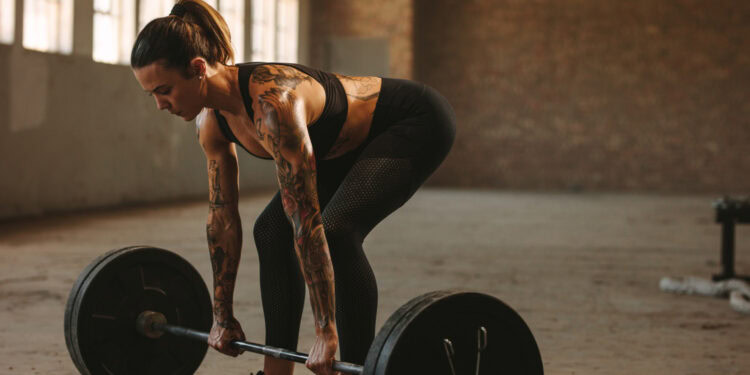

A recent study published in Sex Roles highlights the experiences of women athletes and coaches in traditionally male-dominated strength sports like Olympic weightlifting, powerlifting, CrossFit, and strongman. Researchers found that women in these fields confront societal expectations about femininity and strength while navigating challenges related to body image, relationships with male athletes and coaches, and underrepresentation in the sport. Despite these obstacles, the women expressed empowerment through their participation.
Strength sports remain predominantly male-dominated, with limited representation of women as athletes, coaches, and leaders. Women face societal stereotypes that label muscularity and physical strength as masculine traits, perpetuating barriers to participation and recognition in these fields.
Previous research has shown that women in male-dominated sports are often subjected to discrimination, exclusion from key networks, and systemic bias, particularly in coaching roles. The researchers aimed to explore how women athletes and coaches experience these dynamics in strength sports, which have been slow to integrate women into their traditions.
“I’ve always been interested in why and how people participate in sport. As a weightlifter myself, my own experiences deepened my curiosity of other women’s experiences in a sport that is typically dominated by men in competition, coaching, and recreational participation,” said study author Brianna Newland, the Associate Dean of the College of Business at the University of Colorado, Colorado Springs.
The researchers employed a qualitative approach, interviewing 21 women athletes aged 18–44 and four coaches actively engaged in strength sports. Participants were selected based on their identification as women and their recent experience competing or coaching in Olympic weightlifting, powerlifting, CrossFit, or strongman. Semi-structured interviews lasting 30 to 90 minutes were conducted, during which participants shared their experiences and perspectives on training, competition, body image, and relationships with male peers and coaches.
The interviews were transcribed and analyzed using interpretive phenomenological analysis, a method that focuses on understanding personal lived experiences and the meaning participants attach to them.
Participants described complex relationships with their bodies, often shaped by societal pressures to conform to traditional feminine ideals. Many noted feeling self-conscious about their muscularity in social settings, where larger or visibly strong bodies are perceived as unfeminine or unattractive. However, within the gym or competition settings, these same characteristics were viewed as markers of strength and athleticism, fostering a sense of pride and empowerment.
Several women expressed frustration with stereotypes that equate muscularity with aggression or violence, noting that men often assume strong women are combative or unapproachable. Others described how cultural myths about women’s bodies—such as fears of “bulky muscles” or injury from lifting weights—continue to discourage young girls from participating in strength sports.
Participants shared mixed experiences regarding their interactions with men in strength sports. Many reported positive support from male peers who respected their abilities and were eager to learn about their training. However, negative experiences were also common, particularly in general fitness settings, where women encountered dismissive or sexualized comments from men. Some male coaches were praised for their willingness to educate themselves on women-specific training needs, such as the effects of hormonal cycles, but others were criticized for lacking awareness or empathy in this area.
Women coaches highlighted systemic barriers to advancement in their field. They described feeling “invisible” or “outnumbered” in male-dominated coaching environments and noted that they often had to prove their expertise repeatedly to gain the same respect afforded to their male counterparts.
“Sport is one area where sexism and patriarchy still have a very strong foothold,” Newland told PsyPost. “Women have made many strides in debunking long held beliefs about girls’ and women’s participation in sport, but we still see these beliefs and a lack of growth in coaching/leadership opportunities more so in strength-based sports and those that are more violent in nature (e.g., gridiron football, MMA, boxing, etc.).”
Despite these challenges, the women emphasized the personal and social benefits of participating in strength sports. Many described feeling stronger, more confident, and more capable in their everyday lives as a result of their training. They also valued the camaraderie of training groups, which provided encouragement and fostered a sense of belonging.
For some, competing was less about winning and more about setting personal milestones and achieving mastery over their craft. These athletes viewed strength sports as opportunities for self-improvement and goal-setting rather than simply a pursuit of external validation.
“I think my own experiences were quite on par with the other women in the study,” Newland said. “I think what was so wonderful to see was the positivity in their strength and how that was reshaping long held societal beliefs about what it means to be a strong sportswoman, and a woman in society more generally because of their sport.”
Participants underscored the need for greater representation of women as athletes, coaches, and leaders in strength sports. They argued that more visible role models could inspire young girls to enter the field and challenge persistent gender stereotypes. CrossFit, which has prioritized gender inclusivity since its inception, was cited as a positive example of how strength sports can create inclusive spaces for women.
“With all studies, there are limitations,” Newland noted. “While we had a nice mix of race and nationality, we don’t understand the experience of non-binary athletes. We also did not get the perspectives of men who are engaging in the sport with women. Because of the nature of the sport, all genders can train together, which offers and opportunity to learn and grow from one another through these experiences. These environments are different than traditional gym settings where all genders might be working out in the same room but are not ‘training’ together. So, as next steps, we would like to explore the experiences of all strength-based athletes to get a deeper understanding of the experiences.”
“We would like to extend the study to include men, non-binary, and the LGTBQ community. We would also like to explore the experiences of girls who are interested in these sports and the infrastructure they have in place to support their participation. We also plan to see what happens at the governance level, especially in terms of how women coaches are mentored and developed.”
The study, “Beyond the Barbell: Women in Strength-Based Sports and the Reshaping of Gender Norms,” was author Monica Knowlton and Brianna L. Newland.