PsyPost
  • Mental Health
  • Social Psychology
  • Cognitive Science
  • Neuroscience
  • About
No Result
View All Result
Join
My Account
PsyPost
No Result
View All Result
Home Exclusive Evolutionary Psychology

Study suggests the link between eyelash length and attractiveness has both an evolutionary and cultural basis

by Beth Ellwood
December 25, 2020
Reading Time: 2 mins read
Share on TwitterShare on Facebook

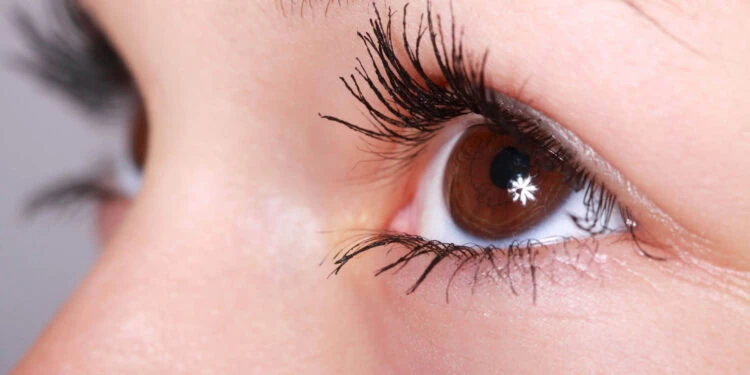
An experiment published in Evolutionary Behavioral Sciences suggests that the most attractive eyelash length is about one-third of the width of the eye. Interestingly, participants ranked the most attractive eyelash length differently for male and females faces, suggesting the interference of a cultural gender norm.

Since ancient times, people have engaged in eyelash-enhancing practices as a way of modifying their attractiveness. While some researchers have suggested that eyelashes are perceived as more attractive the longer they are, long eyelashes can also signal disease, such as immunodeficiency. From an evolutionary perspective, the ideal eyelash length to signal healthiness and, therefore, attractiveness should be somewhere in between long and short.

As research on this topic is scarce, study authors Farid Pazhoohi and Alan Kingstone set out to systematically investigate the influence of eyelash length on perceived attractiveness.

Pazhoohi and Kingstone asked a sample of 132 college students to rank a series of images of faces in order of attractiveness. Each subject was shown 11 images of the same face, identical except for the eyelash to eye-width ratios, which varied by increments of .10 units. In order to explore the influencing effect of gender, some of the students saw male faces and some of the students saw female faces.

The results showed that the link between eyelash length and attractiveness followed an inverted U-function, with “the highest ratings peaking at approximately one third of the eyes’ width.” In other words, both faces with very long eyelashes and those with very short eyelashes were rated as less attractive. This finding is consistent with the evolutionary perspective, given that both very long and very short eyelashes can signal disorder or disease.

However, subjects’ preferred eyelash length differed when rating male and female faces, suggesting the phenomenon has more than just a biological basis. Specifically, female faces were rated the least attractive when eyelashes were very short or nonexistent, whereas male faces were rated the least attractive when eyelashes were very long. In other words, participants preferred slightly longer eyelashes on women and shorter on men, suggesting that gender norms played an interfering role.

The overall findings suggest that there is an optimum length at which eyelashes are perceived to be most attractive, which has an evolutionarily adaptive basis. Still, this preference can be swayed by cultural gender norms. As the researchers speculate, cultures in which it is more accepted for men to wear eye-enhancing makeup might present with different findings than the current study.

The authors suggest that future studies should include faces of different ethnicities as well as 3D images to further extend their research.

Google News Preferences Add PsyPost to your preferred sources

The study, “The effect of eyelash length on attractiveness: A previously uninvestigated indicator of beauty”, was authored by Farid Pazhoohi and Alan Kingstone.

(Image by PublicDomainPictures from Pixabay)

TweetSendScanShareSendPinShareShareShareShareShare

Follow PsyPost

The latest research, however you prefer to read it.

Daily newsletter

One email a day. The newest research, nothing else.

Google News

Get PsyPost stories in your Google News feed.

Add PsyPost to Google News
RSS feed

Use your favorite reader.

Copy RSS URL
Social media
Support independent science journalism

Ad-free reading, full archives, and weekly deep dives for members.

Become a member

Trending

  • The psychology of jealousy: Study explores how perceived mate value is linked to relationship conflict
  • Scientists reveal what is actually happening to your body when you let out a random sigh
  • Long-term study reveals how childhood ADHD impacts adult mental health, cognition, and daily life
  • People with elevated ADHD traits miss out on an automatic learning advantage, study finds
  • Reclaimed hate speech backfires by desensitizing listeners, study finds

Science of Money

  • What makes a B2B salesperson resilient? Six factors identified
  • Crypto investors more likely to skip mortgage payments and misuse credit cards, study finds
  • The pronoun trick that makes virtual influencers feel more human
  • When a “green” surcharge backfires: Why donating fees to charity can undermine the policies they support
  • Attention has a price: New research links retail investor interest to earnings management

Recent

  • Constant search for meaning is associated with higher workplace burnout, study suggests
  • Willpower is linked to eco-friendly habits, but short-term boosts in self-discipline fall short
  • Elevated body mass index might lead to lower cortical thickness, study finds
  • Overactive immune cells might drive nerve pain in long COVID
  • People judge faces with more visible eye whites as more trustworthy and attractive
  • Trauma survivors process angry expressions differently on a subconscious level
  • Better personality functioning at the end of therapy is linked to long-term mental health
  • Scientists identify three subtypes of cocaine addiction
  • New study sheds light on how testosterone and estrogen treatments alter sexual motivation
  • How dating apps permanently changed campus hookup culture

PsyPost is a psychology and neuroscience news website dedicated to reporting the latest research on human behavior, cognition, and society. (READ MORE...)

  • Mental Health
  • Neuroimaging
  • Personality Psychology
  • Social Psychology
  • Artificial Intelligence
  • Cognitive Science
  • Psychopharmacology
  • Contact us
  • Disclaimer
  • Privacy policy
  • Terms and conditions
  • Do not sell my personal information

(c) PsyPost Media Inc

Welcome Back!

Login to your account below

Forgotten Password?

Retrieve your password

Please enter your username or email address to reset your password.

Log In

Add New Playlist

Subscribe
  • My Account
  • Cognitive Science Research
  • Mental Health Research
  • Social Psychology Research
  • Drug Research
  • Relationship Research
  • About PsyPost
  • Contact
  • Privacy Policy

(c) PsyPost Media Inc