Subscribe
The latest psychology and neuroscience discoveries.
My Account
  • Mental Health
  • Social Psychology
  • Cognitive Science
  • Neuroscience
  • About
No Result
View All Result
PsyPost
PsyPost
No Result
View All Result
Home Exclusive Evolutionary Psychology

Study suggests the link between eyelash length and attractiveness has both an evolutionary and cultural basis

by Beth Ellwood
December 25, 2020
in Evolutionary Psychology, Social Psychology
Share on TwitterShare on Facebook

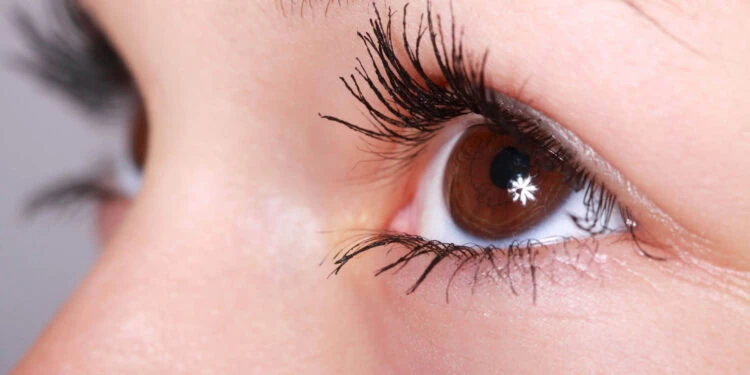
An experiment published in Evolutionary Behavioral Sciences suggests that the most attractive eyelash length is about one-third of the width of the eye. Interestingly, participants ranked the most attractive eyelash length differently for male and females faces, suggesting the interference of a cultural gender norm.

Since ancient times, people have engaged in eyelash-enhancing practices as a way of modifying their attractiveness. While some researchers have suggested that eyelashes are perceived as more attractive the longer they are, long eyelashes can also signal disease, such as immunodeficiency. From an evolutionary perspective, the ideal eyelash length to signal healthiness and, therefore, attractiveness should be somewhere in between long and short.

As research on this topic is scarce, study authors Farid Pazhoohi and Alan Kingstone set out to systematically investigate the influence of eyelash length on perceived attractiveness.

Pazhoohi and Kingstone asked a sample of 132 college students to rank a series of images of faces in order of attractiveness. Each subject was shown 11 images of the same face, identical except for the eyelash to eye-width ratios, which varied by increments of .10 units. In order to explore the influencing effect of gender, some of the students saw male faces and some of the students saw female faces.

The results showed that the link between eyelash length and attractiveness followed an inverted U-function, with “the highest ratings peaking at approximately one third of the eyes’ width.” In other words, both faces with very long eyelashes and those with very short eyelashes were rated as less attractive. This finding is consistent with the evolutionary perspective, given that both very long and very short eyelashes can signal disorder or disease.

However, subjects’ preferred eyelash length differed when rating male and female faces, suggesting the phenomenon has more than just a biological basis. Specifically, female faces were rated the least attractive when eyelashes were very short or nonexistent, whereas male faces were rated the least attractive when eyelashes were very long. In other words, participants preferred slightly longer eyelashes on women and shorter on men, suggesting that gender norms played an interfering role.

The overall findings suggest that there is an optimum length at which eyelashes are perceived to be most attractive, which has an evolutionarily adaptive basis. Still, this preference can be swayed by cultural gender norms. As the researchers speculate, cultures in which it is more accepted for men to wear eye-enhancing makeup might present with different findings than the current study.

The authors suggest that future studies should include faces of different ethnicities as well as 3D images to further extend their research.

Google News Preferences Add PsyPost to your preferred sources

The study, “The effect of eyelash length on attractiveness: A previously uninvestigated indicator of beauty”, was authored by Farid Pazhoohi and Alan Kingstone.

(Image by PublicDomainPictures from Pixabay)

Previous Post

Study: Liberals are prone to chronic second guessing, while conservatives tend to go with their gut

Next Post

Ketamine may ease depression by restoring the brain’s sensitivity to prediction error, study suggests

RELATED

Pro-environmental behavior is exaggerated on self-report questionnaires, particularly among those with stronger environmentalist identity
Climate

Conservatives underestimate the environmental impact of sustainable behaviors compared to liberals

March 5, 2026
Common left-right political scale masks anti-establishment views at the center
Political Psychology

American issue polarization surged after 2008 as the left moved further left

March 5, 2026
Evolutionary psychology reveals patterns in mass murder motivations across life stages
Authoritarianism

Psychological network analysis reveals how inner self-compassion connects to outward social attitudes

March 5, 2026
Wearing glasses does not always increase perceptions of intelligence, study shows
Definitions

What is sapiosexuality? The psychology of being attracted to intelligence

March 5, 2026
Republicans’ pro-democracy speeches after January 6 had no impact on Trump supporters, study suggests
Conspiracy Theories

Trump voters who believed conspiracy theories were the most likely to justify the Jan. 6 riots

March 5, 2026
Scientists discover psychedelic drug 5-MeO-DMT induces a state of “paradoxical wake”
Business

Black employees struggle to thrive under managers perceived as Trump supporters

March 4, 2026
Self-interest, not spontaneous generosity, drives equality among Hadza hunter-gatherers
Dating

Asexual women tend to prioritize different traits in a partner compared to heterosexual women

March 3, 2026
Study: Vulnerable narcissists fear being laughed at, but find pleasure in laughing at others
Social Psychology

The psychological reason why dark humor isn’t for everyone

March 3, 2026

STAY CONNECTED

LATEST

Long-term ADHD medication use does not appear to permanently alter the developing brain

Using cannabis to cut back on alcohol? Your working memory might dictate if it works

Conservatives underestimate the environmental impact of sustainable behaviors compared to liberals

American issue polarization surged after 2008 as the left moved further left

Psychological network analysis reveals how inner self-compassion connects to outward social attitudes

New neuroscience study links visual brain network hyperactivity to social anxiety

Trump voters who believed conspiracy theories were the most likely to justify the Jan. 6 riots

Simple blood tests can detect dementia in underrepresented Latin American populations

PsyPost is a psychology and neuroscience news website dedicated to reporting the latest research on human behavior, cognition, and society. (READ MORE...)

  • Mental Health
  • Neuroimaging
  • Personality Psychology
  • Social Psychology
  • Artificial Intelligence
  • Cognitive Science
  • Psychopharmacology
  • Contact us
  • Disclaimer
  • Privacy policy
  • Terms and conditions
  • Do not sell my personal information

(c) PsyPost Media Inc

Welcome Back!

Login to your account below

Forgotten Password?

Retrieve your password

Please enter your username or email address to reset your password.

Log In

Add New Playlist

Subscribe
  • My Account
  • Cognitive Science Research
  • Mental Health Research
  • Social Psychology Research
  • Drug Research
  • Relationship Research
  • About PsyPost
  • Contact
  • Privacy Policy

(c) PsyPost Media Inc