![[Adobe Stock]](https://sp-ao.shortpixel.ai/client/to_webp,q_glossy,ret_img,w_750,h_375/https://www.psypost.org/wp-content/uploads/2025/11/happy-barista-employee-at-cafe-750x375.jpg)
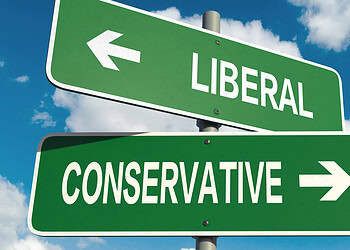
Companies may think of employee rules as a private matter, but new research suggests consumers are paying attention — and forming judgments based on what they see. A study published in the Journal of the Academy of Marketing Science finds that people’s political views shape how they respond to companies that tightly control their frontline staff. Liberals tend to prefer brands that give employees more freedom, while conservatives are mostly unaffected by how strict a company is.
In the past, companies treated employee behavior policies as internal tools to manage customer service, improve performance, and reduce mistakes. But today, these policies are often shared publicly — through corporate websites, social media, and even news coverage. Some companies promote flexible work environments, while others enforce strict guidelines. These decisions now signal more than just operations; they also communicate brand values.
Consumers, especially in the digital era, increasingly base their judgments on how companies treat their workers. Seventy-seven percent of consumers report that a company’s employee policies influence their decisions, according to a 2024 industry survey.
Despite this, most research still focuses on how behavioral control affects internal outcomes, like staff performance or service consistency. The authors of this new study wanted to explore how public perceptions of these policies influence consumer decisions — and how these perceptions vary depending on political ideology.
“We started by noticing that some people prefer being served by ‘robot-like’ employees who stick to a script, while others enjoy a more relaxed, unscripted service style,” explained study author Hung M. Dao of the University of Liverpool Management School.
“Around the same time, market reports showed that consumers were increasingly turning to social media to learn how companies treat their employees before making purchase decisions. That made us wonder whether people judge brands based on how much control they place on their staff. Since strict control can signal a dominance-based hierarchy, we began to suspect that liberals and conservatives might react differently to such policies.”
The research team conducted seven separate studies, involving over 2,800 U.S. participants across various platforms. They tested how consumers responded to strict versus loose behavioral control policies applied to frontline employees in different industries. These policies covered rules about employee appearance, speech, behavior, and even social media use.
In the first study, 200 participants read mock codes of conduct from a fictional coffee shop. Some read a version with strict rules (e.g., no emotional expression, scripted interactions), while others saw a more flexible policy (e.g., encouragement to show personality). Participants then rated how likely they were to purchase from the coffee shop. Liberals expressed significantly less interest when the policy was strict. Conservatives’ responses were mostly unaffected by the type of policy.
A second study used visual cues. Participants saw images of baristas either wearing uniforms and headsets with formal postures (suggesting strict control) or in casual clothing with relaxed body language (suggesting loose control). Again, liberals showed a clear preference for the looser environment, while conservatives did not significantly differentiate between the two.
A third study asked participants to choose between hotels with either strict or loose employee rules. The researchers also measured social dominance orientation, or SDO — a psychological tendency to accept or reject social hierarchies. They found that SDO helped explain the effect of political ideology: liberals, who typically reject dominance-based hierarchies, disliked strict control. Conservatives, who tend to accept such hierarchies, were more neutral.
“We thought conservatives would dislike strict control due to their emphasis on personal freedom, but they were mostly indifferent,” Dao told PsyPost.
To test fairness, other studies manipulated how strict control was applied. In one case, participants read that social media restrictions applied either to frontline workers or to executives. When strict rules applied to high-level employees, liberals responded more positively.
In another study, participants evaluated gyms. In one condition, a national chain enforced strict employee control. In another, a small local gym did. Liberals were more critical of strict policies from large, powerful firms than from smaller ones. Conservatives, in contrast, showed a stronger preference for strict control when it was enforced by the larger chain.
In the final study, researchers added a new twist: they made the risk of service failure more noticeable. For example, participants were told that hotels in a certain area were unreliable. In this context, both liberals and conservatives became more supportive of strict employee control. The desire for reliability seemed to override ideological differences.
“When we highlighted the risk of service failure, both liberals and conservatives actually preferred stricter control, suggesting that reliability and consistency concerns can override ideological preferences in certain situations,” Dao said.
“Consumers do notice how companies treat their employees, and it matters more to some than others. Liberals tend to prefer brands that give frontline staff more freedom, while conservatives are mostly indifferent. But the gap narrows when control feels fair. For example, when rules also apply to the CEO or when a smaller, less powerful company (e.g., independent firms) is the one enforcing them. In short, employee control policies aren’t just internal, they send a message about your brand values.”
“The effects are consistent and reliable: we found them across different industries, study designs, and in real-world settings,” Dao explained. Practically, firms should highlight employee freedom whenever possible. But if strict control is necessary, applying the same rules to both frontline staff and executives can soften negative reactions, especially among liberal consumers.”
But as with all research, there are some limitations. The study focused on how consumers respond before experiencing the actual service. It did not examine how they react during or after interactions, which may also be shaped by political views. The researchers also used hypothetical scenarios and mock companies, which may not fully capture real-world complexity.
Another limitation is that the study focused mainly on U.S. consumers, whose political beliefs may differ from those in other cultures. Future research could explore how cultural attitudes toward authority and freedom influence consumer reactions in other countries.
The researchers also plan to examine how people react to automated service agents like chatbots or robots. Even when no human is involved, people may still interpret control policies in ways that reflect their broader values and ideologies.
“Many companies assume their internal control policies stay behind closed doors, but they don’t,” Dao concluded. “How a company treats its employees sends a public signal about its values.”
The study, “Freedom or control? Liberals’ versus conservatives’ responses to frontline employee behavioral control policies,” was authored by Hung M. Dao, Aristeidis Theotokis, and J. Joško Brakus.