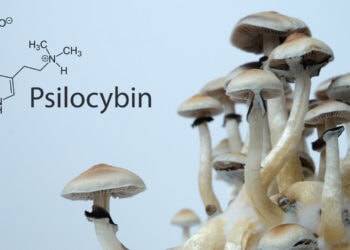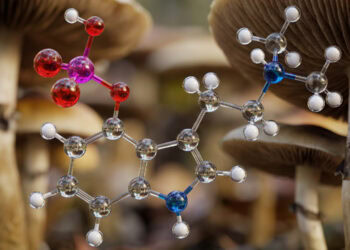
A new study published in the Journal of Psychopharmacology sheds light on how psilocybin, the psychoactive compound found in certain mushrooms, may produce anti-depressant effects. Researchers suggest that its benefits could be linked to specific patterns of serotonin receptor activity and increased flexibility in brain cells.
In recent years, clinical trials have shown that psilocybin can produce rapid and lasting improvements in symptoms of major depressive disorder, sometimes after only one or two treatment sessions. Despite promising results, scientists still have limited understanding of the biological mechanisms that allow psilocybin to produce such long-lasting effects.
One theory lies in the way psilocybin interacts with the brain’s serotonin system. The compound activates a serotonin receptor known as the 5-HT2A receptor, which is widely believed to play a central role in the psychedelic experience. However, researchers have not fully understood how activation of this receptor leads to changes in mood and behavior that may persist long after the drug’s immediate effects have worn off.
To investigate this question, a team led by Connor J. Maltby (Ulysses Neuroscience, Republic of Ireland) conducted an experimental study using mice. The researchers administered different doses of psilocybin and measured how strongly the drug occupied 5-HT2A receptors in the animals’ prefrontal cortex, a brain region involved in decision-making, emotional regulation, and complex thinking.
The researchers also examined several behavioral responses associated with psychedelic compounds. One of these measures was the acute “head twitch response,” a rapid side-to-side head movement in mice that is commonly used as a biological indicator of psychedelic activity.
In addition, to test the drug’s lasting effects, the animals were evaluated 20 to 24 hours after administration—when the drug had already cleared from their systems—in two widely used behavioral experiments: the elevated zero maze, which measures anxiety-related behavior, and the forced swim test, which is often used to assess depression-like behavior in rodents.
The results revealed a clear relationship between psilocybin dose, receptor activation, and behavioral outcomes. The drug produced increasing levels of 5-HT2A receptor occupancy as doses rose. However, the head twitch response followed an “inverted-U” pattern, meaning that optimal levels of receptor activation (~44–62%) produced the strongest responses, while higher doses caused a drop-off in twitches due to a general suppression of movement.
In the behavioral tests conducted the following day, mice receiving a moderate dose of psilocybin (1.5 mg/kg) showed greater willingness to explore open areas of the maze, a pattern typically interpreted as reduced anxiety-like behavior. Meanwhile, a higher dose (3 mg/kg) reduced immobility in the forced swim test, which researchers interpret as a sign of sustained antidepressant-like effects.
Beyond behavior, the researchers also examined biological changes within brain cells. They measured modifications to proteins that regulate the structure of microtubules, which are components of the cell’s internal framework that play an important role in neuronal growth and communication. The findings showed that psilocybin successfully shifted these molecular markers toward a more flexible, dynamic state in both the prefrontal cortex and the amygdala (the brain’s fear center).
Crucially, the drug also increased the expression of certain synaptic proteins associated with neuroplasticity—the brain’s ability to reorganize its connections and adapt. However, this increase in synaptic proteins occurred selectively in the prefrontal cortex, not in the amygdala. The researchers hypothesize that this regional difference may serve as an intrinsic safety mechanism, allowing the brain to rewire itself to fight depression while preventing the hardwiring of new fear-based connections.
The present findings “support the hypothesis of a potential role of microtubule dynamics in the promotion of neuronal plasticity, potentially associated with antidepressant efficacy,” Maltby and team noted.
Several limitations should be considered. For example, the study was conducted exclusively on male mice to limit biological variability, and animal models cannot fully replicate human mental health conditions. Also, the experiments utilized healthy animals rather than disease models, which may limit direct relevance to clinical conditions.
The study, “An exploration of the relationships between the effects of psilocybin on behavior, 5-HT2A receptor occupancy, and neuroplastic effects in mice,” was authored by Connor J. Maltby, Adam K. Klein, Enya Paschen, Jessica Pinto, Dino Dvorak, Joseph R. Hedde, Ashley N. Hanks, Massimiliano Bianchi, and Zoë A. Hughes.