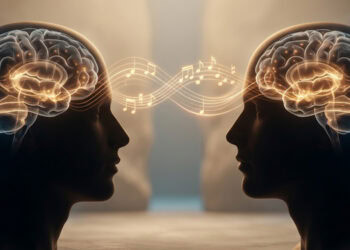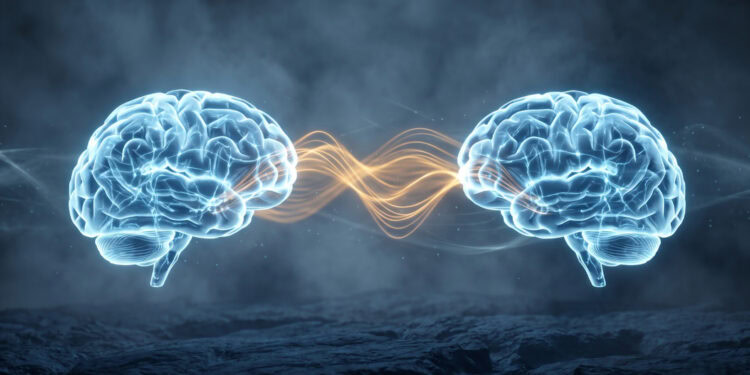
People with similar levels of autistic traits show greater social attraction to one another, and their brains synchronize in unique ways during active conversation. A recent experiment published in Biological Psychiatry suggests that social difficulties related to autism might be a problem of mismatched communication styles rather than an inherent social deficit.
For decades, clinical psychology has treated autism primarily as a social impairment. This view assumes that autistic individuals lack a cognitive tool called theory of mind. This concept refers to the ability to intuitively understand what others are thinking and feeling. Recently, alternative frameworks have emerged to challenge this deficit-based assumption.
One major alternative is the double empathy problem. This idea proposes that social friction is a two-way street. Neurotypical people and autistic people have vastly different ways of experiencing the world and processing sensory information. These differences lead to mutual misunderstanding, meaning neurotypical individuals also struggle to read the minds of autistic people.
Building on this concept, scientists developed the dialectical misattunement hypothesis. This hypothesis relies on predictive coding, a theory explaining how the brain constantly generates guesses about what will happen next. When an event matches the guess, interaction feels smooth. When a person’s behavior violates those expectations, the brain experiences a prediction error, leading to social awkwardness.
Following this logic, people who share similar psychological traits should predict each other’s behavior more easily. An autistic person avoiding eye contact might cause a prediction error for a neurotypical person, who expects a steady gaze. However, another autistic person would not find this behavior unusual. This shared wavelength should lead to more fluid interactions and a sense of mutual attraction.
Lead author Shuyuan Feng, working with Peng Zhang and Xuejun Bai from Tianjin Normal University in China, designed an experiment to test these ideas. Past research evaluating how well people with differing autistic traits connect has yielded contradictory results. The researchers suspected that earlier experimental designs caused this inconsistency.
Previous studies typically placed two people in a room to interact. This method makes it hard to separate a person’s general friendliness from their specific chemistry with a partner. By assembling larger groups, researchers can use a mathematical approach called the social relations model. This model isolates genuine interpersonal attraction from general social tendencies.
The research team measured autistic traits in hundreds of university students using a standard questionnaire. The students were not clinically diagnosed with autism. Instead, they took a survey that scores general behavioral and cognitive traits associated with the autism spectrum. The team selected students scoring in the highest and lowest ten percent to represent high and low autistic trait groups.
The researchers then assembled isolated groups of four people who had never met. Each group contained two individuals with high autistic traits and two with low autistic traits. In total, the study included twenty female groups and ten male groups.
The researchers used functional near-infrared spectroscopy to monitor the participants’ brain activity. This technology uses small optical sensors placed securely against the scalp. The sensors use light to measure blood oxygen levels in specific brain areas, highlighting which regions are working the hardest in real time. The participants wore these sensor caps while completing a series of social tasks.
First, the group sat quietly and listened to an audio story. This passive task allowed the researchers to measure how similarly their brains responded to the exact same information. Scientists use an analysis called inter-subject correlation for this purpose. It measures the overlap in brain responses across different people experiencing the same audio stimuli.
Next, the participants engaged in a structured group discussion. They debated a classic survival scenario, deciding which imaginary characters should be rescued from a deserted island. The discussion followed strict turn-taking rules to prevent people talking over each other from muddying the brain data. Following the discussion, participants privately rated how much they wanted to continue talking to or become friends with each group member.
The responses revealed distinct patterns of interpersonal chemistry. Participants with similar levels of autistic traits reported a stronger desire to socialize with one another. A person with high autistic traits was drawn to the other high-scoring group member, while those with fewer traits gravitated toward each other.
This mutual affinity only emerged when their opinions aligned during the survival task. Personality similarities like extraversion did not drive the attraction. Instead, agreeing on the survival topic helped individuals with similar traits perceive a deeper shared perspective. This shared vision served as the foundation for their social attraction.
The brain scans offered insight into how these connections formed on a biological level. During the passive story listening task, pairs with low autistic traits showed similar neural responses to the audio. Pairs with high autistic traits showed more varied, unique brain responses to the same story.
When communication shifted to the active group discussion, the brain activity aligned differently. The researchers measured inter-brain synchronization, a phenomenon where two people’s brain waves match up during a shared activity. A higher degree of synchronization indicates a smoother, more effective transfer of information between two minds.
Pairs with low autistic traits showed higher brain synchronization in the right temporoparietal junction. This brain region is heavily involved in social perception. People rely on this area to automatically process social cues and read the unstated intentions of conversational partners.
Pairs with high autistic traits demonstrated a completely different neural pattern. Their brains synchronized in the right dorsolateral prefrontal cortex. This area of the brain manages cognitive control, sustained focus, and deliberate problem-solving.
This neural pattern suggests that people with high autistic traits rely on an alternative mental strategy to process social interactions. Rather than relying on automatic social perception, they may recruit extra cognitive resources to deliberately build a connection. This strategy allows them to successfully align their brain activity with a partner who thinks similarly.
These findings challenge models portraying autism solely as an impairment of social cognition. Instead of failing to communicate, individuals with high autistic traits seem to use different neural pathways that are fully capable of supporting social bonds. The brain imaging supports the idea that social struggles might arise from a mismatch in cognitive strategies, rather than an inherent inability to connect.
The study has a few limitations to consider. The neuroimaging equipment only detects blood flow near the surface of the brain. Deeper brain structures involved in processing social rewards remain unobserved. Also, the structured nature of the timed laboratory tasks might not capture the organic flow of everyday social life.
The study participants were university students with varying levels of autistic traits, rather than individuals formally diagnosed with autism spectrum disorder. The researchers noted that future studies could apply these methods to clinical populations. Using larger imaging machines could also help map deeper neural networks associated with these unique styles of communication.
The study, “Attraction Through Similarity in Autistic Traits: A Group Communication Study Using the Social Relations Model and Functional Near-Infrared Spectroscopy Hyperscanning,” was authored by Shuyuan Feng, Mingliang Wang, Jianing Zhang, Lin Ding, Yuqing Yuan, Peng Zhang, and Xuejun Bai.