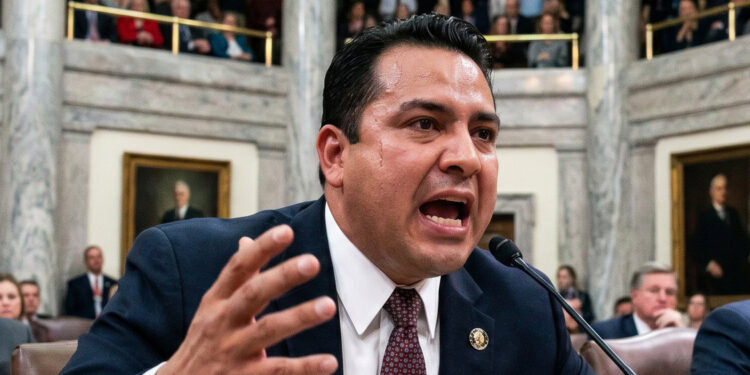
When cameras begin recording state legislative sessions, politicians do not actually change their voting behavior or become more polarized as a result. The new findings suggest that livestreaming political proceedings does not break the policymaking process, according to a recent study published in the American Political Science Review.
For decades, political observers have debated the impact of video transparency on government institutions. Some argue that putting cameras in a legislative chamber empowers everyday voters to easily monitor their elected representatives. Under this theory, increased visibility should encourage politicians to compromise and act moderately, fearing a backlash from the general public if they behave unreasonably.
Critics harbor the opposite suspicion, worrying that cameras incentivize politicians to engage in political theater. They fear that constant video coverage turns the legislative floor into a stage for performance rather than a place for serious debate. When politicians speak to the cameras, they might cater to political extremists, wealthy donors, or special interest groups rather than the average voter.
Looking at the national government, many people suspect a strong connection between video coverage and political dysfunction. The introduction of national broadcasting networks to the United States House of Representatives in 1979 coincided with a steady rise in political polarization. This trend led observers to blame the cameras for the changing environment.
Don’t miss the next big psychology finding
Every morning, PsyPost sends a short briefing on the most interesting new peer-reviewed research in psychology and neuroscience.
Many politicians share this negative assessment. Before passing away, Representative Don Young remarked of the eventual television coverage, “It’s probably the worst thing that happened to the Congress.”
Yet studying the national government presents a tough statistical challenge. Because national cameras were introduced only once, researchers cannot easily separate the impact of the broadcasts from other historical and cultural changes happening at the exact same time. It is impossible to know for sure what the national government would look like today if cameras had never been installed.
To overcome this hurdle, researchers turned their attention to state governments instead of the national capital. The new research was led by Jeffrey Lyons, a political scientist at Boise State University, along with Josh Ryan from Utah State University.
The team realized that different state legislatures adopted constant video coverage at wildly different times. Some states brought television cameras into their chambers in the late 1980s. Other states only began streaming their sessions online during the recent pandemic, in response to health limits on public access to government buildings.
The researchers specifically focused on continuous, unedited broadcasts, often known as gavel-to-gavel coverage. This means the cameras roll from the moment a legislative session opens until the moment it closes. By tracking this specific type of broadcast, the researchers avoided the inconsistencies of part-time camera coverage that only captures select, high-profile debates.
This staggered, state-by-state rollout allowed the researchers to conduct a robust statistical comparison. By gathering data on when 91 different state legislative chambers introduced this continuous coverage, they could track exactly how political behavior shifted before and after the cameras arrived in each specific state.
The researchers examined several distinct indicators of political dysfunction and productivity. At the chamber wide level, they tracked whether legislative sessions passed late budgets. A late budget indicates that politicians are refusing to compromise, which can lead to government shutdowns and economic instability within the state.
The team also measured the overall volume of bills passed to determine if lawmaking ground to a halt. In addition, they calculated whether the two major political parties drifted further apart in their voting records, a sign of deepening polarization.
They also looked at the behavior of individual politicians. The team analyzed each lawmaker’s overall ideological extremity based on their voting history. They tracked loyalty to the political party, noting how often a politician voted in lockstep with party leadership versus crossing the aisle.
Standardized effectiveness scores were evaluated as well. Legislative effectiveness measures how successfully a politician advances bills through the complex legislative process. If a politician abandons hard work in favor of performing for the camera, their effectiveness score would theoretically drop.
Despite the prevalent fears about video coverage, the results revealed that introducing cameras into a statehouse leaves legislative behavior largely unchanged. State chambers did not become more polarized, nor did they show increased dysfunction as the coverage began. At the individual level, lawmakers maintained their existing habits after cameras were installed.
The presence of video coverage did not affect whether states passed their budgets on time. It also did not alter the number of bills successfully enacted into law. The data produced no statistically significant changes in how often representatives voted with their party, and voting records did not become more extreme.
The researchers checked isolated cases to see if the timeline mattered. For example, they tested whether adopting television cameras in the 1990s had a different impact than adopting internet streaming in the 2010s. They also checked if the effects of video coverage took a few years to appear, but they still found no large or persistent shifts in how politicians approach the policymaking process.
The authors acknowledge a few limitations to their conclusions. While voting behavior and lawmaking productivity stay the same, it remains possible that the tone or rhetoric used during debates becomes more abrasive. Politicians might speak more aggressively for the cameras, even if their final votes remain unchanged.
It is also possible that politicians adjust to the presence of cameras by relocating their most sensitive negotiations. If the main legislative floor is being recorded, lawmakers might simply retreat to private offices, local restaurants, or back rooms to hammer out compromises away from public scrutiny.
Future studies might investigate whether other transparency measures influence statehouse dynamics. Researchers could look at the publication of roll call voting records in local newspapers, or track whether specific, media savvy politicians use the introduction of video coverage to uniquely boost their own individual careers.
For now, the latest evidence hints that livestreaming state and local government meetings is a benign practice. These findings are highly relevant today, as school boards, city councils, and local agencies increasingly stream their meetings over the internet.
Transparency advocates often encounter resistance from officials who claim that cameras will ruin the collaborative spirit of a governing body. The data from state legislatures cast doubt on those claims, suggesting that making government proceedings visible does not actually derail the hard work of legislating.
The study, “Lights, Camera, Inaction? The Effects of Gavel-to-Gavel Floor Coverage on U.S. State Legislatures,” was authored by Jeffrey Lyons and Josh M. Ryan. https://doi.org/10.1017/S0003055425101032
