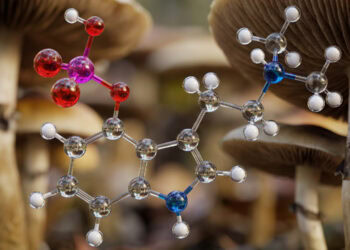
While the drug MDMA makes people feel closer to others, it does not appear to enhance pro-social behavior, according to a new double-blind, placebo-controlled study published in the Journal of Psychopharmacology.
MDMA, the drug popularly known as ecstasy, is often consumed recreationally because of its profound social and emotional effects. But scientists are also interested in how MDMA could be used during psychiatric treatment.
“There’s some promising psychiatric research in MDMA-assisted psychotherapy at the moment, for post-traumatic stress disorder (PTSD) and alcohol addiction,” said study author Anya Borissova, a medical doctor training as a psychiatrist at the University College London.
“It could be a much-needed development for conditions that don’t have very effective treatments yet. We don’t know how or why it might work, if it does turn out to be beneficial. There are theories, and studies like this one help us test some of those theories in a controlled way — specifically whether MDMA has prosocial effects like trust, empathy and cooperative behavior.”
“I’m interested in MDMA because it is a popular recreational drug which may have therapeutic applications,” added co-author Will Lawn, a postdoctoral research associate who is studying psychopharmacology and addiction.
In the study, 25 participants completed six psychological assessments of empathy, trust, and cooperation after ingesting 100 milligrams of MDMA or a placebo pill. In particular, the participants completed a trust investment task, a trustworthy face rating task, an empathic stories task, a public project game, a dictator game and an ultimatum game about 2 hours after drug administration.
The participants had general medical and psychiatric assessments before the study. They also completed a urine screening to test for prior drug use and provided multiple blood samples during the testing sessions to measure MDMA plasma concentrations.
The researchers found that MDMA increased self-reported closeness to others and euphoria compared to placebo. However, these subjective feelings did not translate into objective differences in behavior.
“Despite previous reports of MDMA’s prosocial effects, we didn’t find MDMA to increase trust, cooperative behavior or empathy in our tasks. Our findings are consistent with existing research that shows a very mixed picture concerning MDMA’s effects on laboratory-measures of social processing,” Borissova and Lawn told PsyPost.
The study also assessed changes in mood three days after MDMA administration.
“Despite the well-known ‘come-down’ effects observed with recreational ecstasy use, MDMA was safe without any bad effects on people’s moods in the days after the study. This is crucially important when considering the side-effects of MDMA administration in clinical groups,” the researchers noted.
Previous research has demonstrated that one’s physical and social environment plays an important role in the outcome of psychedelic experiences. The authors of the study believe it is possible that the research environment influenced the results.
“An important caveat is that this was a study done in a fairly sterile laboratory setting where, which potentially limits its applicability to the real world. It was also done with people who didn’t have any of the psychiatric conditions that MDMA is being tested for. These factors give us the advantage of testing ideas in a controlled, simple way, but it may be that the tasks we used were too different from the very personal process of psychotherapy,” Borissova and Lawn explained.
“For example, we found that people weren’t more willing to trust others with their money in a computer task but it would be interesting to see if MDMA might increase trust in a social interaction or in a task involving the sharing of personal information.”
“At a more technical level, we measured social processing two or more hours after drug administration and so the psychopharmacological effects could have been wearing off. In defense, however, participants still had MDMA in their plasma and reported subjective effects at this time,” the researchers said.
A similar study, published in The Journal of Neuroscience, found that participants under the influence of MDMA became more cooperative, but only when interacting with people who appeared to be trustworthy. That study also failed to find evidence that MDMA enhanced empathic processing.
“Often ostensibly clear-cut drug effects can be difficult to robustly replicate in a laboratory setting. This may be because these apparently prominent effects are not so real after all, or because laboratory measures are insensitive,” Borissova and Lawn said.
“Future research should investigate whether more ecologically valid measures of social processing mediate the therapeutic effects of MDMA.”
The study, “Acute effects of MDMA on trust, cooperative behaviour and empathy: A double-blind, placebo-controlled experiment“, was authored by Anna Borissova, Bart Ferguson, Matthew B. Wall, Celia J.A. Morgan, Robin L. Carhart-Harris, Mark Bolstridge, Michael A.P. Bloomfield, Tim M. Williams, Amanda Feilding, Kevin Murphy, Robin J. Tyacke, David Erritzoe, Lorna Stewart, Kim Wolff, David Nutt, H. Valerie Curran, and Will Lawn.