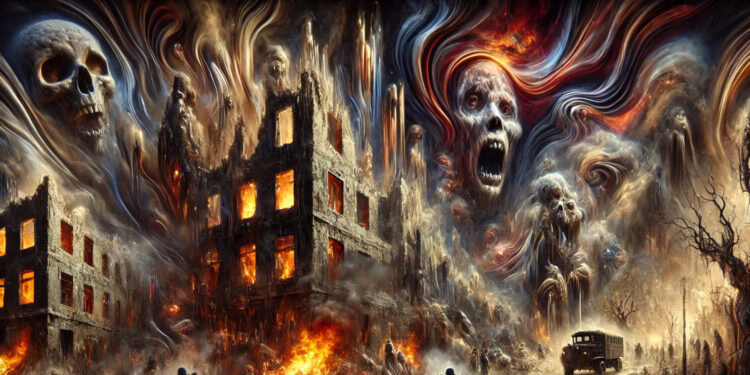

A qualitative study investigating the dreams of Israelis following the October 7, 2023 Hamas attacks revealed that the traumatic events significantly influenced the content of participants’ dreams. This suggests a possible disruption of the psychological mechanisms typically used for coping with stress. The findings were published in the journal Death Studies.
On October 7, 2023, Hamas, the militant and political organization governing the Gaza Strip at the time, launched a surprise attack on Israel. Over the course of one day, more than 1,200 Israelis were killed, hundreds were wounded, and another 240 were abducted and taken to Gaza. The attacks included raids and the firing of thousands of missiles into Israel, impacting nearly the entire country due to its small size.
The conflict between Hamas and Israel escalated into a prolonged war, which continues today. Virtually all residents of Israel experienced the war’s horrors, whether directly through the attacks, through their friends and relatives being affected, or by participating in the ensuing conflict. These traumatic events profoundly impacted many people’s mental health, influencing their dreams.
Study author Shani Pitcho of the University of the Negev noted that when core assumptions of one’s worldview are challenged, such as in the case of traumatic events where individuals confront death, their normal mechanisms for coping against stress can be disrupted and anxiety will emerge. Usually, people hold worldviews that allow them to make them feel safe and avoid anxiety. They use their self-esteem and close relationships in the same way, relying on them to feel safe and buffer anxiety.
However, when traumatic events happen, such as those from October 7, 2023, these factors may no longer be sufficient to protect from anxiety. In some cases, this disruption may play a key role in the development of mental disorders. But is this disruption visible in the contents of dreams?
Pitcho conducted a study in which she had 242 Jewish-Israeli participants describe their dreams through a Qualtrics survey. Participants were selected to be as diverse as possible. Their ages ranged between 18 and 70 years, with the average being 43. 80% of them were female. 10% of the participants resided in close geographic proximity to the zones affected by the attack and the subsequent war, because of which they had to evacuate their homes. 12% reported losing a loved one during these events, while 23% either sustained injuries themselves or knew someone who was injured or abducted during the attack.
The survey began two weeks after the initial Hamas attacks and continued for two months. Participants provided detailed descriptions of any dreams they had since the attacks, with no requirement for the dreams to be nightmares or war-related.
A thematic analysis of the dream descriptions revealed that many dreams were about death and directly confronting mortality. Themes identified in the dreams challenged the three main factors that buffer against anxiety: worldview, self-esteem, and close relationships.
A fundamental cultural worldview is that one’s home is one’s castle, a place that is safe. Still many people dreamt dreams depicting their house as no longer safe. Their dreams depicted homes as unsafe, with intruders breaking in, an inability to escape, and a lack of protection from authorities. These dreams reflected a perceived loss of security and safety.
One’s self-esteem is important not only because it makes a person see him/herself as valuable, but also because high self-esteem makes one feel protected. In contrast to this, dreams of participants included situations where they were unable to protect themselves, had no control, failed professionally (e.g. could not remember how to do something), morally or as parents (unable to protect children). These included dreams of helplessness or unworthiness.
Close personal relationships are the third buffer against anxiety as they protect an individual against danger. Still, in these dreams, participants dreamt of their loved ones being murdered, suddenly dying, being abducted, or hurt. They dreamt of being separated from loved ones and experiencing negative emotions such as sadness, anger, guilt, shame or fear.
“The paper offers a unique glimpse into the subtle effects that traumatic national events with high mortality salience can have on the human psyche. The demonstrated breach in the three psychological anxiety buffering mechanisms may reflect collective, negative feelings of shock, uncertainty, and fear, but it may also mark the beginning of a cultural change,” the researcher concluded.
“Prior to the events of October 7, the State of Israel was rocked by months of severe civil unrest that was driven by political processes that divided the country along social and religious lines. The fact that all of the study participants, irrespective of their diverse backgrounds, described similar dreams perhaps hints at the emergence of a new existential protection mechanism grounded in the therapeutic factor of universalism.”
The study sheds light on the dreams of Israelis during the 2023-2024 Israel-Hamas war. However, the collected data does not allow any conclusions to be drawn about participants’ stress levels. Additionally, the study focused on the dreams of Israeli Jews, which are not the only group affected or involved in this war. It is possible that dreams of other ethnic groups affected by the war, Palestinians, before all, were different.
The paper, “The stuff that nightmares are made of: Israeli dreams in times of the Israel-Hamas war,” was authored by Shani Pitcho.