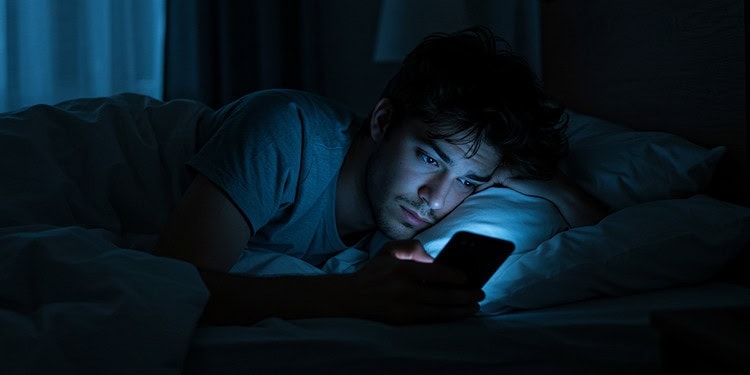
Lack of TikTok self-control strongly predicts bedtime procrastination
A recent study published in Acta Psychologica examined the relationship between TikTok use and various aspects of well-being among young people.
Read moreDetails
People maltreated as children tend to have more severe sleep problems, study finds
Youths with childhood maltreatment—particularly emotional and sexual abuse—experience more sleep problems, mediated by impaired emotion regulation strategies, such as reduced cognitive reappraisal and increased expressive suppression.
Read moreDetails
New study links poor sleep quality to cannabis-related memory issues
New research reveals that disrupted sleep may be the hidden link between heavy cannabis use and memory deficits, unmasking an unexpected culprit behind cognitive impairments.
Read moreDetails
Can light exposure help teens sleep earlier? New study suggests yes
A study of adolescents found that greater daytime light exposure was associated with earlier bedtimes and wake times. More intense morning light had a stronger impact. The teens' average sleep was still insufficient
Read moreDetails
A short nap boosts problem-solving by strengthening hidden connections
A nap, especially one that includes REM sleep, helps people solve problems they previously struggled with. Sleep enhances problem-solving by improving the ability to recognize hidden connections between related problems.
Read moreDetails
Scientists show how common sleep aid disrupts brain’s natural cleaning process
Norepinephrine-driven oscillations during non-REM sleep power the brain's glymphatic system to clear toxic proteins, but the sleep aid zolpidem disrupts this process, impairing waste clearance and potentially increasing neurodegenerative disease risk.
Read moreDetails
Astronaut sleep study reveals how spaceflight alters rest patterns
Astronauts sleep less and wake more in space, with REM sleep initially decreasing but recovering over time at the expense of NREM sleep.
Read moreDetails
Sleep problems surprisingly common in adults with ADHD, study finds
Recent research found 60% of adults with ADHD experience sleep disorders, often linked to psychiatric comorbidities. Systematic screening could improve understanding and treatment of both sleep and mental health issues in this population.
Read moreDetails
Cold-water immersion found to boost cognitive function and reduce sleep disturbances
Recent research found that short, frequent cold-water immersions improved cognitive performance on specific tasks, reduced sleep disturbances, and lowered worry levels, without affecting overall well-being or selective attention.
Read moreDetails
Scientists demonstrate a novel sleep-based technique to weaken negative memories
Reactivating positive memories during sleep weakens recall of negative memories, increases spontaneous positive memory intrusions, and enhances positive emotional judgments, suggesting a potential sleep-based approach for managing distressing memories and improving emotional well-being.
Read moreDetails
Study uncovers link between dream incoherence and dissociative symptoms
People with dissociative symptoms often have fragmented, incoherent dreams, higher nightmare distress, and more lucid dreaming, suggesting that dream patterns and REM sleep disturbances are linked to a fragmented sense of self.
Read moreDetails
Researchers identify two psychological traits linked to heightened nightmare frequency
New research sheds light on why some individuals are more prone to frequent nightmares, pointing to thin psychological boundaries and a trait called nightmare proneness as significant factors.
Read moreDetails
Caffeine can disrupt your sleep — even when consumed 12 hours before bed
A new study has found that a 400 mg caffeine dose disrupts sleep up to 12 hours before bedtime, yet many people fail to notice these disruptions, especially when consumed earlier in the day.
Read moreDetails
Study links bedtime consistency to better emotional control in children
Children with consistent sleep schedules show better emotional regulation, reduced impulsivity, and stronger social skills. Irregular sleep timing was linked to poorer behavior, but early parenting interventions mitigated these negative effects.
Read moreDetails
Psilocybin’s mental health benefits may include improved sleep
Individuals who consumed psilocybin in a therapeutic context reported modest, sustained improvements in sleep, with baseline sleep disturbances influencing the likelihood of achieving depression remission.
Read moreDetails