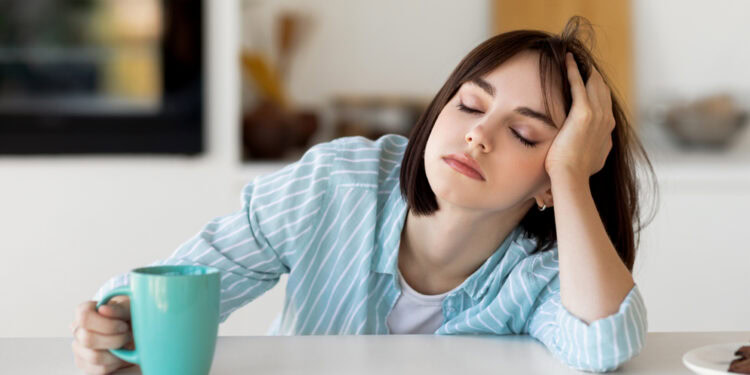
Getting a couple of hours less sleep than usual for just two nights may subtly dull how much people enjoy artwork and perceive its beauty, according to new experimental research published in Journal of Sleep Research. In a controlled sleep-laboratory study of young adults, mild sleep restriction dampened morning alertness and positive mood while lowering ratings of abstract paintings, though it did not alter judgments based on the perceived race or gender of the artist. The findings suggest that adequate rest does more than prevent fatigue and mistakes, playing a quiet role in how people appreciate everyday aesthetic experiences.
Aesthetics refers to how people perceive and respond emotionally to beauty, art, and design in the world around them. Those responses depend partly on visual features of an object, such as symmetry or color, and partly on what the viewer brings to the moment, including cultural background, personality, and mood. Psychologists studying art appreciation frequently use abstract paintings, which rely on shapes, colors, and textures rather than recognizable everyday scenes, leaving their meaning open to personal interpretation and creating wide variation from one viewer to the next.
Health guidelines generally recommend at least seven hours of sleep per night for adults, and falling short is well known to impair attention, memory, academic performance, and job satisfaction. Losing sleep also alters emotional life, though not always in the way people assume. Rather than uniformly fueling anger or distress, a 2023 meta-analysis of 154 experimental studies found that sleep loss consistently drains positive feelings and blunts emotional engagement, whereas its effects on negative emotions are mixed and depend on how sleep is disrupted.
Since positive emotions help draw people into artistic and creative experiences, shortened sleep could make visual art feel flatter and less rewarding. Prior work directly testing sleep and art appreciation has been scarce, though a 2019 study of aesthetic perception found that when people slept poorly, their empathy had less bearing on how they judged the proportions of sculptures.
Don’t miss the next big psychology finding
Every morning, PsyPost sends a short briefing on the most interesting new peer-reviewed research in psychology and neuroscience.
At the same time, some psychologists have proposed that sleep loss depletes the mental self-control people rely on to keep social stereotypes in check, raising the question of whether tired viewers might judge artwork differently depending on who supposedly painted it. Research on sleep and bias has examined both automatic associations and deliberate evaluations. In the domain of automatic attitudes, a 2017 laboratory study of healthy adults found that chronic sleep restriction increased unconscious negative associations with Arab-Muslim names on a rapid categorization test, whereas fully rested participants showed no such bias.
To examine how sleep shapes deliberate art appreciation and potential bias, co-first authors Ariadne D. Godinho of Baylor University and Chenlu Gao of Harvard Medical School and Mass General Brigham collaborated with Michelle R. Hebl of Rice University and senior author Michael K. Scullin, a professor of psychology and neuroscience at Baylor University who directs the Sleep Neuroscience and Cognition Lab.
“Sleep loss is known to cause performance errors and increase disease risk,” Scullin told PsyPost. “Less is known, however, about whether being well-rested benefits ‘the good things’ in life, such as our ability to enjoy artwork and experience beauty.”
The artwork experiment was part of a broader multi-week laboratory project at Baylor University examining how restricted sleep affects learning and creativity in college students. Sleep-monitoring records from the same project were also analyzed in an earlier sleep-staging study by Scullin and colleagues. Seventy-five students completed the broader protocol, and 68 healthy young adults, ranging in age from 18 to 22, finished every phase required for the artwork study. Slightly more than half of the final sample were women, and roughly 56 percent identified as non-White, including multiracial, Asian or Pacific Islander, African American, Hispanic, and other racial or ethnic backgrounds.
Eligibility was open to right-handed native English speakers aged 18 to 29 who normally needed at least seven hours of sleep a night, had no sleep disorders, and did not have extreme morning-lark or night-owl schedules. Researchers also screened out night-shift workers, frequent nappers, and people who consumed more than 300 milligrams of caffeine daily or drank caffeine regularly after 5:00 p.m. The team made the study’s data and task materials publicly available online, though the study was not preregistered.
The researchers used a counterbalanced crossover design, meaning every participant completed both a well-rested phase and a mildly sleep-restricted phase in the laboratory in a randomized order, allowing each person to serve as their own comparison. Participants began with an initial adaptation night in the lab monitored by polysomnography, an overnight recording technique that uses sensors on the scalp, face, and body to track brain waves, eye movements, muscle tension, and breathing. They then spent about a week sleeping at home while keeping a sleep log and wearing a wrist actigraph, a watch-like motion sensor that tracks daily sleep and wake patterns.
Participants returned to the sleep laboratory for two three-night stays separated by a wrist-monitored recovery break at home that averaged 5.4 nights, though individual gaps ranged from 3 to 46 nights. During the well-rested stay, lights were out for nine hours each night from 10:00 p.m. to 7:00 a.m.; during the sleep-restriction stay, time in bed was trimmed to 5.5 hours per night from 1:30 a.m. to 7:00 a.m. Outside of scheduled lab testing, students could attend classes and go about normal daytime routines, though napping was prohibited and verified with the wrist monitors.
The artwork evaluation took place after the second night of each laboratory stay. Upon waking at 7:00 a.m., participants rated their current positive and negative emotions on separate 10-to-50 scales and rated their sleepiness on a 1-to-9 scale, then took 30 minutes to shower and get dressed so that sleep inertia, the grogginess that lingers right after waking, could wear off. At 7:30 a.m., they viewed 12 paintings on a computer, drawn from a pool of 24 abstract paintings split into two counterbalanced sets of 12 so no image was ever repeated across sessions.
Participants were told the paintings came from a mix of nationally exhibited professional artists and local amateurs. Each painting appeared for 15 seconds alongside a fictitious year and a fictitious artist name chosen from prior discrimination research to suggest a White or African American man or woman, such as Anna Taylor or DeShawn Williams.
After briefly describing what they believed the artist meant to convey, participants rated each piece from 1 to 7 on overall liking, beauty, colorfulness, creativity, and artistic skill. They also guessed whether the work came from an amateur or professional display venue and estimated what an art curator would need to bid in U.S. dollars to acquire it.
Overnight brain-wave recordings confirmed that the schedules worked as intended: on the night before the art task, participants slept an average of 8.04 hours when well-rested versus 5.19 hours when restricted. Reflecting built-up sleep pressure during the restricted stay, participants fell asleep faster, spent less time awake during the night, and showed higher sleep efficiency, spending 94.7 percent of their time in bed asleep compared with 90.4 percent when well-rested. Even with that consolidated sleep, two nights of restriction left participants noticeably sleepier at 7:00 a.m. and lower in positive emotions, whereas negative emotions did not differ at a statistically significant level.
This emotional pattern aligns with an earlier study of emotional reactions to film clips, which examined everyday subjective sleepiness rather than experimentally restricted sleep and aesthetic judgments of visual art. That study similarly found that sleepier viewers experienced weaker positive feelings, particularly during bittersweet scenes, while their negative emotional responses remained unchanged.
In the main analyses of the five rating scales and perceived display venues, mild sleep restriction lowered participants’ aesthetic appreciation of the abstract paintings. On the 1-to-7 scale, participants liked the artwork less when sleep-restricted, giving an average rating of 4.33 compared with 4.53 when they were well-rested. They also rated the paintings as less beautiful after restricted sleep, averaging 4.33 compared with 4.51 when well-rested, shifts of roughly a fifth of a point, or about 4 percent.
Sleep loss did not alter every judgment about the paintings, however. Differences between the well-rested and sleep-restricted sessions were not statistically significant for perceived colorfulness, creativity, the skill needed to create the work, or whether participants guessed a painting came from an amateur outlet like a local coffee shop or a professional museum. The order in which participants completed the sleep phases also had no statistically significant effect, and exploratory checks linking art ratings to time spent in specific sleep stages, such as rapid eye movement sleep, did not remain statistically significant once extreme data points were removed.
Asked what the average person should take from the findings, Scullin said, “When we’re well-rested, we experience more alertness, greater happiness, and apparently, a touch more beauty.”
“We observed a subtle effect—a 5% change in artwork ratings—small enough that most people are likely unaware that their sleep patterns influence their aesthetic experiences,” he explained. “Yet, a 5% change might accumulate across thousands of everyday interactions with scenery, artwork, architecture, music, people, and other experiences. When ‘5%’ is placed within this larger context, it seems possible that sleep loss could subtly change our quality of life without us ever realizing why.”
To explore how sleep loss connected to lower art evaluations, the researchers ran statistical mediation analyses on the 66 participants with complete questionnaire data, testing morning sleepiness, positive mood, and negative mood in separate models. For overall liking, greater alertness and higher positive mood when well-rested each independently formed an indirect statistical link between the sleep schedule and painting ratings in their respective models. Once either variable was factored in, the direct relationship between sleep condition and liking was no longer statistically significant, a pattern researchers call full mediation. Negative mood, by contrast, did not form a statistically significant link.
For beauty ratings, a different pattern emerged across the separate models. Subjective alertness and sleepiness again formed an indirect statistical pathway, with the direct effect of sleep condition on beauty ratings no longer statistically significant once sleepiness was included, whereas neither positive mood nor negative mood was a statistically significant mediator.
“It was surprising that people’s positive emotions and negative emotions did not mediate the effect of sleep restriction on beauty ratings,” Scullin noted.
In the authors’ reading, that split suggests that perceiving beauty may be tied less to a viewer’s specific mood and more to overall brain alertness and visual sensitivity to subtle artistic details. Even so, the researchers caution right alongside this analysis that morning sleepiness and mood were both measured via self-report just before the task and may overlap with one another, meaning the statistical models cannot pinpoint a strict cause-and-effect chain among alertness, emotion, and art perception.
Contrary to the team’s secondary hypothesis, ratings of the paintings did not vary at a statistically significant level based on whether the listed artist’s name suggested a White or African American man or woman. That absence of bias held both when participants were well-rested and when they were sleep-restricted, and follow-up Bayesian analyses, which weigh how strongly the evidence favors the absence of an effect, supported the conclusion that artist names did not sway evaluations. The authors suggest this outcome aligns with prior studies indicating that mild sleep loss does not consistently trigger overt, conscious discrimination, even if some tests have linked short sleep to subtler unconscious associations.
There are a few caveats to keep in mind when interpreting these findings. The experiment took place in a tightly controlled laboratory setting with healthy college students aged 18 to 22 who viewed a single style of visual art on a computer screen early in the morning after two nights of mild sleep loss. Responses could differ among older adults, people facing months or years of insufficient sleep, or visitors encountering sculptures, music, and realistic paintings in everyday settings like museums. In addition, the researchers ran separate statistical tests across multiple rating scales without applying formal mathematical adjustments for multiple comparisons in order to preserve sensitivity to subtle effects, making independent replication important.
The absence of gender or racial bias in the ratings also comes with an important qualification. Artist identity was signaled solely through a printed fictitious name, and the researchers did not include a follow-up check to confirm that participants noticed the names or associated them with a specific race and gender as intended. Future studies could test whether more direct cues, such as artist photographs or short biographies in real gallery spaces, produce similar results.
Looking ahead, Scullin, who has also shared research on building healthier sleep habits in a TEDx talk, hopes to move beyond laboratory sleep restriction to test how improving rest shapes everyday well-being.
“We’re interested in how improving sleep quality can help people flourish across all their life domains,” Scullin added. “Experiencing happiness and beauty in life is one sign of flourishing, as is succeeding at work/school and having enriching social relationships. Correlational work suggests that good sleep health coincides with life satisfaction, and we’re interested in whether intervening to address insufficient sleep will make people’s lives better.”
The study, “Experimental Sleep Restriction Blunts Positive Emotions and Aesthetic Experiences When Viewing Artwork,” was authored by Ariadne D. Godinho, Chenlu Gao, Michelle R. Hebl, and Michael K. Scullin.
