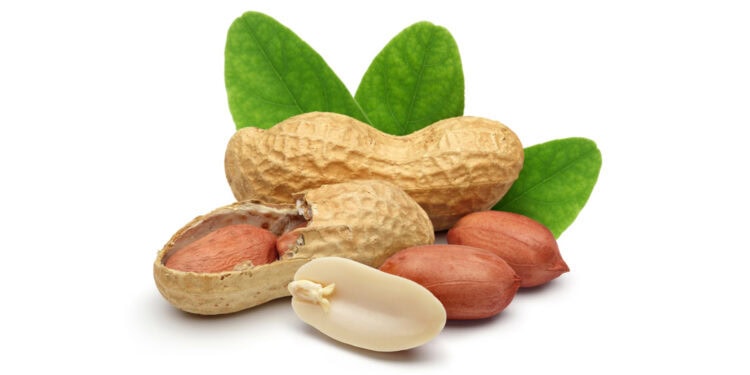
Eating about two handfuls of unsalted, skin-roasted peanuts every day for four months may alter how memory-related areas of the aging brain respond to the hormone insulin, according to a clinical trial published in Food & Function.
In a randomized study of healthy older adults, daily peanut intake shifted blood-flow responses to an insulin nasal spray within a right-hemisphere brain cluster that includes part of the hippocampus, even as liver fat, blood sugar, and cholesterol levels remained largely unchanged. The findings point to a potential biological pathway that could help explain why regular peanut consumption has been linked to better memory in older age.
How insulin acts in the aging brain
Insulin is a hormone produced by the pancreas that is best known for helping cells throughout the body absorb sugar from the bloodstream. Although the brain takes up most of its glucose without insulin’s help, dense concentrations of insulin receptors sit on brain cells in regions such as the prefrontal cortex, the hypothalamus, and the hippocampus, a seahorse-shaped structure deep in the temporal lobe that is essential for forming and recalling memories.
“The hormone insulin plays an important role in the brain, where it supports memory and other cognitive processes,” principal investigator and senior author Peter J. Joris, an associate professor in the Department of Nutrition and Movement Sciences at the Institute of Nutrition and Translational Research in Metabolism at Maastricht University, told PsyPost.
Don’t miss the next big psychology finding
Every morning, PsyPost sends a short briefing on the most interesting new peer-reviewed research in psychology and neuroscience.
Brain insulin responsiveness refers to the ability of specific brain areas to adjust their neural activity when exposed to this hormone, supporting circuits that regulate memory, appetite, and energy balance. When brain tissue becomes less responsive to insulin, a condition often called brain insulin resistance, that dysfunction is associated with metabolic conditions like type 2 diabetes as well as age-related cognitive decline and neurodegenerative disorders such as Alzheimer’s disease.
How strongly the brain responds to insulin is not fixed, and everyday habits appear able to shift it: eating a high-calorie, high-fat diet over a short period can dampen brain insulin signaling, whereas regular aerobic exercise can help restore it in adults with overweight or obesity. Nutritional researchers have also begun examining whether nutrient-dense foods like nuts and peanuts offer similar support for the aging brain.
In a 2025 clinical trial of healthy older adults conducted by the same researchers and analyzing data from the same experiment, published in Clinical Nutrition, eating 60 grams of unsalted, skin-roasted peanuts daily for 16 weeks increased global blood flow in the brain by 3.6 percent, improved verbal memory performance by 5.8 percent, and lowered systolic blood pressure compared with a peanut-free period.
“Our study suggested that regularly eating unsalted, skin-roasted peanuts may support brain health and improve cognitive performance in healthy older adults,” Joris explained.
Working alongside first author Lucia Kerkhof and colleagues at Maastricht University in the Netherlands, Joris also examined whether daily peanut intake affected brain insulin responsiveness, the trial’s other primary outcome measured during the same study visits. Because the brain and liver function as metabolically connected organs, the scientists additionally tracked fat stored inside the liver along with blood markers of sugar control, cholesterol, and low-grade body-wide inflammation.
Testing daily peanut intake in a crossover trial
The study was prospectively registered on ClinicalTrials.gov and carried out at Maastricht University between February 2023 and July 2024, with the supporting data included in the published paper and further details available from the corresponding author on request. Prior power calculations showed that at least 27 participants were needed to detect a 7.5 percent change in brain blood flow, a sample size the team’s earlier trials indicated was also sufficient to detect effects on regional brain insulin responsiveness.
The researchers enrolled 36 community-dwelling adults aged 60 to 75 with a body mass index (BMI) between 20 and 35, all of whom were right-handed, non-smokers, and free of diabetes, cardiovascular disease, and peanut allergies. Five enrollees withdrew early, including one woman who stopped due to digestive discomfort after eating peanuts and four participants assigned to begin with the control period who left due to scheduling conflicts, personal reasons, or not following the study protocol, leaving 31 participants (16 men and 15 women, average age 67) who completed the entire trial.
In this single-blind, randomized crossover trial, each volunteer served as their own control by completing two 16-week periods in random order, separated by an eight-week break to let any dietary effects wear off. During the peanut phase, participants ate 60 grams per day, roughly two servings, of unsalted, skin-roasted runner-type peanuts, providing 340 calories and 29.5 grams of mostly unsaturated fat, with the antioxidant- and fiber-rich skins left intact and eaten whole without heating or crushing.
During the control phase, participants abstained from peanuts, and throughout both phases they avoided other nuts and seeds while all scientists analyzing the scans and bloodwork remained blinded to group assignment. Among those who completed the trial, returned packets and daily food diaries indicated a median compliance rate of 100 percent.
At the end of each 16-week period, participants arrived after a 12-hour overnight fast, 24 hours without alcohol, and 48 hours without vigorous exercise, traveling to the clinic by car or public transit to avoid physical exertion before testing. To measure brain insulin responsiveness, the researchers used a noninvasive brain scan called pseudo-continuous arterial spin labeling magnetic resonance imaging (MRI). This technique magnetically tags water molecules in arterial blood in the neck to track blood flow through brain tissue without radiation or contrast dyes.
Participants underwent brain scans before and 30 minutes after receiving four puffs of insulin nasal spray, totaling 160 international units, which delivers the hormone rapidly to the brain along nasal pathways without triggering dangerous drops in systemic blood sugar. The researchers then compared voxel-by-voxel changes in brain blood flow before and after the spray across the entire brain, excluding the cerebellum, applying family-wise error correction for multiple comparisons while statistically accounting for trial period and sex.
During the same week-16 imaging visit, abdominal MRI scans quantified the percentage of fat stored inside liver tissue for 30 participants, as one scan lacked sufficient image quality. Fasting blood samples were also drawn at the start, midpoint (week 8), and end (week 16) of each phase to measure blood glucose, insulin, calculated peripheral insulin resistance, cholesterol fractions, triglycerides, and high-sensitivity C-reactive protein, an indicator of low-grade systemic inflammation. Because these blood biomarkers were treated as exploratory outcomes, the statistical models adjusted for baseline levels, sex, and trial period without applying corrections for multiple comparisons.
Changes in memory-related brain regions
Adding the daily packets of peanuts increased participants’ average daily calorie intake by about 0.9 megajoules (roughly 215 calories) and shifted their diets toward more unsaturated fat and fiber alongside less carbohydrate, saturated fat, and dietary cholesterol. Even with those extra calories, changes in waist circumference and body fat percentage were not statistically significant across the trial.
When the researchers examined large brain divisions as a whole, including total gray matter, cortical tissue, subcortical tissue, and global brain blood flow (which averaged roughly 40 to 44 milliliters per 100 grams of tissue per minute), differences in how blood flow reacted to the insulin spray were not statistically significant between the two phases.
However, whole-brain cluster analysis pinpointed one localized region of 552 cubic millimeters in the right hemisphere where blood flow dropped more strongly after intranasal insulin following the peanut phase than following the control phase, with an average difference of 5.4 milliliters per 100 grams of tissue per minute. Brain-atlas probabilities placed this cluster mainly across structures tied to memory processing: the lingual gyrus (20 percent), the hippocampus (14 percent), and the neighboring parahippocampal gyrus (11 percent), with slight overlap in the thalamus and posterior cingulate gyrus.
“Peanut consumption beneficially affected insulin responsiveness in a brain region involved in memory,” Joris said. “This provides an additional potential mechanism through which peanut consumption may benefit cognitive performance.”
At first glance, a drop in regional blood flow after an insulin spray might sound counterintuitive, since greater baseline blood flow is generally considered healthier for blood vessels. The authors explain that inside the hippocampus, insulin normally boosts inhibitory chemical signals that quiet down nerve-cell firing, and because local blood supply is coupled to nerve activity, a stronger dip in blood flow after insulin administration may reflect more efficient neural regulation, matching a pattern seen in a 2021 neuroimaging study of young men with normal weight or overweight.
Even so, when the researchers tested whether individual shifts in this regional insulin response tracked directly with the verbal recognition memory gains seen in the trial, the correlation was not statistically significant. Unlike the primary group comparison, the trial was not statistically powered to detect person-to-person correlations, and the authors note that biological variability or a non-linear relationship between insulin signaling and memory could mask a direct link.
Liver fat, blood markers, and proposed nutrients
These brain imaging results align with a 2024 crossover trial of older adults with overweight or obesity conducted by four of the same authors and published in the American Journal of Clinical Nutrition, which found that eating 60 grams of mixed tree nuts daily for 16 weeks altered insulin responsiveness in occipital and frontal brain clusters, including the lingual gyrus, without changing body weight or peripheral insulin sensitivity.
Unlike that mixed-nut study, which reduced liver fat by 15 percent, the peanut intervention left liver fat virtually unchanged at 5.3 percent versus 5.0 percent after the control phase, a difference that was not statistically significant. The authors suggest that mixed tree nuts may be more effective at curbing liver fat because they supplied roughly twice as much polyunsaturated linoleic acid (10 grams per day) as peanuts (5.6 grams per day), which contain mostly monounsaturated fats.
Across the exploratory blood panels, differences between the peanut and control phases were not statistically significant for fasting glucose, fasting insulin, peripheral insulin resistance, total cholesterol, low-density lipoprotein cholesterol, high-density lipoprotein cholesterol, or C-reactive protein. Blood triglycerides dipped modestly halfway through the peanut period at week 8, averaging 0.20 millimoles per liter lower than during the control period, before returning to baseline levels by week 16. Together, those results indicate that daily peanut intake altered regional brain responses to insulin without shifting standard metabolic risk markers in the bloodstream.
Although the trial was not designed to isolate individual chemical compounds, the authors propose several nutrients in skin-roasted peanuts that might contribute to the brain response. Peanuts are rich in plant protein and carry high levels of L-arginine, an amino acid the body converts into nitric oxide, a molecule that helps blood vessels relax and supports communication between memory cells in the hippocampus. Leaving the peanut skins intact also supplied dietary fiber and polyphenol antioxidants alongside unsaturated fats, vitamin E, and magnesium, which the researchers suggest could act together to influence insulin signaling in the brain.
Study caveats and questions for future research
As with all research, there are some caveats to consider, starting with the fact that the study was funded by a grant from The Peanut Institute Foundation, although the organization had no role in designing the trial, collecting or analyzing the data, writing the paper, or deciding to publish, and the authors reported no conflicts of interest. Because participants ate recognizable whole peanuts without a calorie- and nutrient-matched control snack lacking peanut-specific compounds, they knew which phase they were in, and part of the observed brain effect could stem from eating fewer carbohydrates and saturated fats rather than from peanuts alone.
In addition, blood-flow changes measured after a nasal insulin spray offer only an indirect window into nerve-cell signaling, and scientists are still working out how insulin-driven blood-flow shifts vary in direction across different brain structures. The study design also could not measure how much this regional insulin response contributed to improved memory relative to broader improvements in blood vessel health.
“It is important to note that these findings come from a mechanistic study in healthy older adults, with a dietary intervention lasting 16 weeks,” Joris noted. “Larger and longer studies are needed to confirm whether these effects are maintained with habitual intake over time and whether similar benefits occur in other target populations, including people with cognitive impairment. Future studies should also examine different peanut preparations.”
Because volunteers in the Maastricht trial ate whole, uncrushed, unsalted peanuts with their skins intact, testing other common options such as peanut butter, roasted skinless peanuts, or salted varieties will be necessary to see whether processing or added sodium changes the results. Future experiments analyzing isolated nutrients will also be needed to pinpoint which specific bioactive ingredients in peanuts influence insulin action in the aging brain.
The study, “Daily consumption of unsalted, skin-roasted peanuts beneficially affects regional brain insulin responsiveness in older adults: Results of a longer-term randomized controlled trial,” was authored by Lucia Kerkhof, Ronald P. Mensink, Jogchum Plat, Kevin M.R. Nijssen, and Peter J. Joris.
