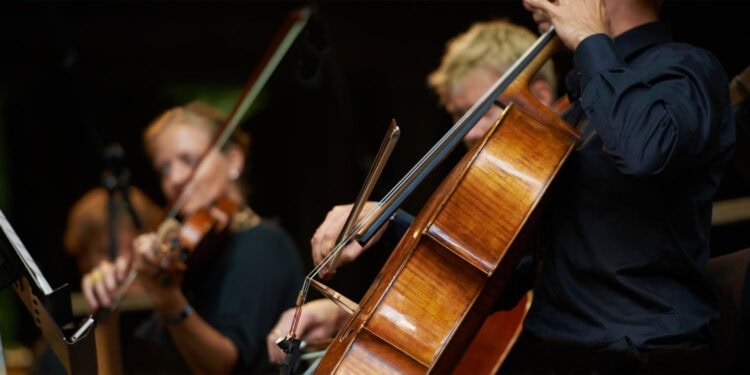
Children and teenagers who have spent time listening to classical music are more likely to appreciate complex musical styles like jazz and opera. A recently developed survey tool indicates that past emotional engagement with classical music is linked to a stronger preference for these genres. The research was published in the journal Psychology of Music.
Psychologists classify genres like classical, opera, jazz, and world music under the umbrella term of sophisticated music. The MUSIC model is a standard framework researchers use to categorize auditory tastes. In this model, sophisticated music is characterized by its perceived complexity and by being predominantly instrumental. Listeners generally perceive these genres as intelligent and inspiring.
Most children and teenagers gravitate toward pop, rock, or contemporary music in their daily lives. They rarely select sophisticated music to regulate their moods or socialize with friends. Music education programs frequently attempt to increase appreciation for classical music among younger generations.
Past studies have shown that young children are generally open to many types of music. This openness to different styles narrows dramatically during adolescence. During the teenage years, preferences tend to align strictly with what is popular among peer groups. As young people transition into adulthood, their willingness to explore diverse musical styles typically rebounds.
Don’t miss the next big psychology finding
Every morning, PsyPost sends a short briefing on the most interesting new peer-reviewed research in psychology and neuroscience.
Researchers wanted to know if a person’s specific history with classical music could predict their current musical tastes. Valnea Žauhar, a researcher at the University of Rijeka in Croatia, led the study alongside colleagues Igor Bajšanski and Sabina Vidulin. They developed a new questionnaire called the Past Experience with Listening to Classical Music Scale.
They designed this tool to measure how often children and adolescents listen to classical music. The survey also asks how much they enjoy it, and whether the music has evoked strong emotions for them in the past. The researchers created the survey by compiling items that assess voluntary listening during leisure time.
The survey questions also capture the vividness of listeners’ emotional responses. Statements asked the students if listening to classical music gives them goosebumps, makes them cry, or brings them joy.
In their first study, the researchers recruited 151 students from a general secondary school. The participants ranged in age from 15 to 18. The students listened to six 15-second audio clips of sophisticated music and rated how much they liked each one.
The researchers deliberately selected obscure, unreleased tracks of professional quality. This ensured that the students would be rating the music itself, rather than their familiarity with a famous song. After the listening task, the students completed the newly developed past experience questionnaire.
They also filled out surveys detailing their general music consumption and their tendency to use music for specific purposes. The researchers categorized these purposes as emotional listening, cognitive listening, or background listening. Emotional listening involves using music to change a mood, while cognitive listening involves analyzing the musical elements intellectually.
The secondary school students generally reported low levels of past experience with classical music. However, those who did report more past experience were more likely to use music for emotional and cognitive purposes. Past experience with classical music also strongly predicted how much the students liked the sophisticated music excerpts they had just heard.
Initially, the researchers noticed that formal music education seemed to predict a preference for sophisticated music. Students who had taken formal lessons preferred the excerpts more than those who had not. But when the researchers factored in past experiences with classical music, the statistical results shifted.
Formal training no longer predicted preference once past exposure was considered in the analysis. Having positive, emotional experiences with classical music in the past emerged as the sole positive predictor of liking the sophisticated clips. This suggests that emotional engagement is strongly linked to musical taste regardless of formal instruction.
The researchers then conducted a second study with 286 children attending a primary music school. These participants ranged in age from eight to 14. This experiment took place during a regular group music lesson.
The children listened to a two-minute excerpt from Antonín Dvořák’s Symphony No. 9, commonly known as the “From the New World” symphony. The researchers selected an energetic, highly expressive section of the music featuring striking brass instrumentation and strong rhythms.
Immediately after listening, the children rated how much they liked the music and how immersed they felt. They also completed the past experience questionnaire. In addition, they took a survey measuring the specific emotions the music evoked, such as feelings of activation or calmness.
The children generally liked the Dvořák excerpt. They reported that it produced moderate to moderately high levels of emotional activation. Their past experience with classical music reliably predicted how much they liked the symphony piece.
Older children and those with more past exposure to classical music reported higher levels of enjoyment. The strongest predictor of liking the music was the level of emotional activation the children felt during the listening session.
Music-evoked activation refers to feelings of power, tension, wonder, or joyful energy sparked by the audio. Children who felt these active emotions intensely were the most likely to rate the excerpt highly. Calmness, on the other hand, did not predict how much the children liked the fast-paced excerpt.
The study relies on self-reported data from the children and teenagers. This means the results depend on the participants accurately remembering and reporting their past listening habits. A person might not fully recall how often they heard classical music during their early childhood.
The researchers note that experience with classical music is a multifaceted concept. Future research should track participants over a longer period to see exactly how these musical experiences accumulate and shape preferences over time. Studies might also use objective methods, like having parents or teachers record the children’s exposure to classical music.
Because the research only included children and adolescents, the results do not show how these preferences evolve into adulthood. A longitudinal study, which follows the same individuals as they age, would offer a more precise picture of how early exposure influences lifelong tastes.
The study, “The Role of Past Experience With Listening to Classical Music in Liking Sophisticated Music,” was authored by Valnea Žauhar, Igor Bajšanski, and Sabina Vidulin.
