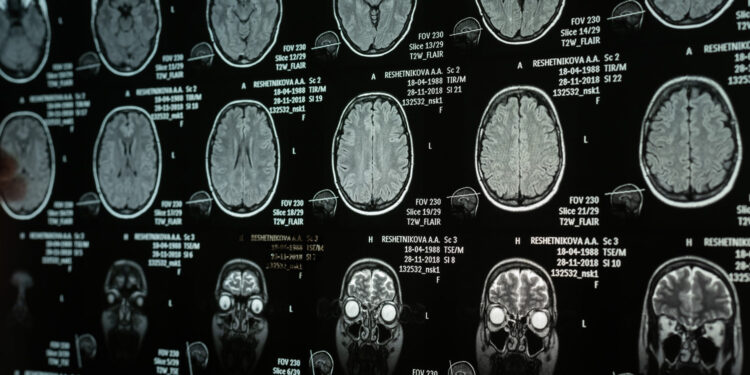
Irregular sleep schedules are associated with altered brain structure in youth
Many teenagers sleep in on weekends to catch up on rest. New research associates this irregular schedule with differences in the physical structure and internal communication of the developing brain, which may relate to cognitive growth.
Read moreDetails
People with synesthesia experience distinct thematic patterns in their dreams
Do waking perceptual traits influence our sleep? New research indicates that people with synesthesia have unique dream patterns, providing evidence that our individual brain structures actively shape our imagination long after we fall asleep.
Read moreDetails
How unemployment changes the way people dream
Job loss takes a hidden toll on the sleeping mind. By analyzing thousands of online dream reports, researchers found that unemployment strips away nighttime surprises and visual observations, mirroring the mental disengagement people experience during waking hours.
Read moreDetails
Evening screen use may be more relaxing than stimulating for teenagers
New findings suggest that social media use tends to lower heart rates in adolescents. The study indicates that digital devices likely disrupt sleep by changing schedules rather than by causing physical arousal before bed.
Read moreDetails
Infants fed to sleep at 2 months wake up more often at 6 months
Using a bottle to soothe infants at bedtime may backfire. A new study finds this practice disrupts the ability to self-soothe, leading to shorter sleep duration and more frequent interruptions as the baby grows.
Read moreDetails
Morning sunlight shifts sleep cycles earlier and boosts quality
A new study reveals that getting sunlight before 10 a.m. significantly helps align sleep schedules. Researchers found that just 30 minutes of early exposure shifts the sleep midpoint earlier by 23 minutes.
Read moreDetails
Severe sleep problems is associated with fewer years of healthy brain function
New research suggests that older adults with chronic sleep issues tend to live shorter lives and spend less time with normal memory and thinking skills.
Read moreDetails
Maladaptive personality traits are linked to poor sleep quality in new twin study
A new twin study reveals that individuals with maladaptive personality traits, such as negative affectivity and detachment, are more likely to report poor sleep quality. Genetics appear to play a partial role in this association.
Read moreDetails
Fragmented sleep predicts slower mental processing speed the next day in older adults
A new study published in Sleep Health reveals that frequent night waking is linked to immediate reductions in cognitive speed. The findings suggest that sleep continuity may be more critical than duration for aging brains.
Read moreDetails
Two-hour naps during night shifts may restore brain function and memory in nurses
A new study suggests that taking a two-hour nap during a night shift can restore brain connectivity. The findings indicate that napping reverses some cognitive deficits associated with sleep deprivation in nurses.
Read moreDetails
Deep sleep reorganizes brain networks used for memory recall
A new study reveals that deep sleep physically shifts where the brain processes memories. Researchers found that spending more time in slow wave sleep moves recall activity to the temporal lobe, boosting retention.
Read moreDetails
Disrupted sleep might stop the brain from flushing out toxic waste
The glymphatic system serves as the brain’s waste clearance mechanism. Emerging research suggests that sleep plays a critical role in flushing out metabolic toxins associated with neurodegenerative diseases like dementia.
Read moreDetails
Pre-workout supplements linked to dangerously short sleep in young people
Young people seeking a fitness boost may be sacrificing essential rest. Research links pre-workout supplement use to a higher likelihood of severe sleep deprivation in adolescents and young adults.
Read moreDetails
Humans have an internal lunar clock, but we are accidentally destroying it
New research confirms the Moon subtly shapes human sleep and biology. However, the rise of LED lighting and smartphones is severing this link, drowning out the natural contrasts that once structured our biological time.
Read moreDetails
Study links anxiety and poor sleep to heart and kidney disease progression
New research involving nearly 400,000 adults links healthy sleep patterns to a lower likelihood of developing heart, kidney, and metabolic diseases. The study suggests mental health factors may partially mediate this association.
Read moreDetails