
Dreams and daydreams share unexpected patterns of bizarreness
A new study reveals that waking mind wandering is just as densely packed with bizarre elements as nighttime dreaming. While dreams feature slowly transforming impossibilities, daydreams are marked by abrupt jumps in logic.
Read moreDetails
New study suggests dreams function as a “multimotive simulation space”
New research indicates that dreams often act as a simulation for social hurdles. By analyzing hundreds of dream reports, scientists found that themes like status and self-protection frequently organize the content of our sleep narratives.
Read moreDetails
Advanced meditation techniques linked to younger brain age during sleep
People who regularly practice advanced meditation techniques exhibit brain activity patterns during sleep that appear noticeably younger than their actual age. Researchers suggest these habits might help protect against cognitive decline, though questions about exact causes remain.
Read moreDetails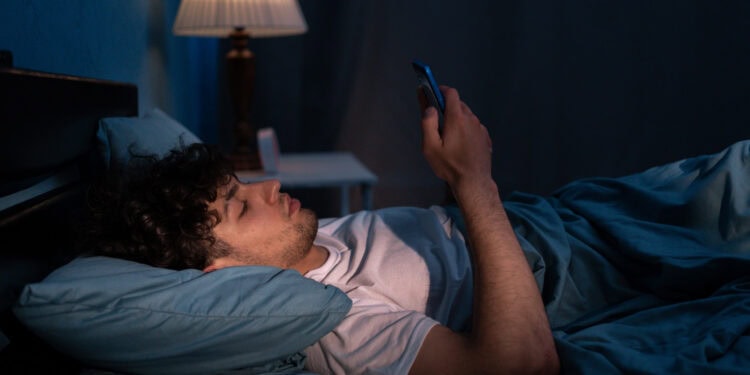
Disrupted sleep is the primary pathway linking problematic social media use to reduced wellbeing
Compulsive social media habits are closely linked to later symptoms of depression and anxiety, and new research suggests poor sleep is a major factor. Protecting your nightly rest might be key to maintaining your psychological wellbeing.
Read moreDetails
Feeling like you slept poorly might take a heavier toll on new parents than actual sleep loss
Wearable trackers show a new parent's actual sleep time doesn't predict their mental health. Instead, a new study finds that psychological distress actually worsens perceived sleep quality over the first year postpartum for both parents.
Read moreDetails
Genetic study unravels the link between caffeine intake and sleep timing
While heavy coffee drinking is often blamed for long restless nights, a new genetic analysis reveals that habitual caffeine consumption mainly boosts daytime alertness without inherently causing chronic insomnia.
Read moreDetails
Pink noise worsens sleep quality when used to block out traffic and city noise
Trying to drown out a noisy street with pink noise? You might be making things worse. New research indicates combining environmental noise with continuous pink noise degrades overall sleep architecture more than the traffic alone.
Read moreDetails
Brain scans reveal how poor sleep fuels negative emotions in alcohol addiction
Scientists have discovered that poor sleep amplifies negative emotions in individuals with alcohol use disorder. Imaging shows that insomnia activates neural networks linked to rumination, suggesting sleep treatments could greatly improve emotional well-being during recovery.
Read moreDetails
Poor sleep quality, not duration, linked to slower daily brain function in older adults
Using wearable sleep trackers and daily smartphone brain games, researchers discovered that waking up frequently during the night leaves dementia-free older adults with significantly slower cognitive processing speeds the very next day.
Read moreDetails
Regular exercise reduces anxiety and depression in people with chronic insomnia
A new review of multiple studies suggests that regular physical activity can significantly lower anxiety and depressed moods in people with chronic insomnia. The findings also point to improved overall sleep quality.
Read moreDetails
Scientists use “dream engineering” to boost creative problem-solving during REM sleep
A recent study published in Neuroscience of Consciousness provides evidence that dreaming about a specific problem helps people find solutions. Researchers used sound cues during sleep to successfully guide dream content toward unsolved puzzles.
Read moreDetails
Brain scans reveal the unique brain structures linked to frequent lucid dreaming
A new neuroimaging study suggests that people who frequently control their dreams share distinct structural brain patterns. These networks bridge the areas responsible for self-reflection, visual imagery, and cognitive control.
Read moreDetails
Scientists discover psychedelic drug 5-MeO-DMT induces a state of “paradoxical wake”
A new study in Communications Biology provides evidence that a psychedelic drug induces a hybrid sleep-wake state in active mice. This unusual brain activity suggests a potential mechanism for how psychedelics might help remodel neural connections.
Read moreDetails
Sexsomnia: How common is sleep sex?
Sleep sex is a real medical condition. Explore sexsomnia symptoms, risk factors, brain wave research, and potential management strategies.
Read moreDetails
People with a preference for staying up late show higher tendencies for everyday sadism
A new study published in Chronobiology International suggests that night owls tend to exhibit higher levels of everyday sadism. Researchers provide evidence that a natural preference for staying up late is linked to enjoying others' pain.
Read moreDetails