
What is the best exercise to improve sleep? The answer depends on your age, gender, and mental health
Four recent network meta-analyses indicate that the most effective exercise for improving sleep depends on a person's demographic and clinical profile. Tailoring physical activity to specific populations yields better results than generalized fitness recommendations.
Read moreDetails
Scientists uncover the physical signs of lucid dreaming in people with trauma symptoms
New research shows that specific sleep patterns, like interrupted rest and falling asleep quickly, can predict lucid dreaming in people with PTSD. This could eventually help therapists use conscious dreaming to treat trauma-related nightmares.
Read moreDetails
Missing a full night of sleep leaves a distinct metabolic signature in your spit
A new study reveals that staying awake for twenty-four hours leaves a specific chemical signature in saliva. Using machine learning, scientists identified ten biomarkers that accurately detect extreme fatigue, paving the way for roadside sleepiness tests.
Read moreDetails
Researchers induce the memory-boosting benefits of sleep in parts of the awake brain
Scientists have successfully replicated the restorative power of sleep in awake mice. By using targeted light stimulation to mimic deep-sleep brain rhythms, researchers relieved sleep pressure and rescued memory performance, offering new insights into how our brains reset.
Read moreDetails
Self-pleasure before bed is linked to falling asleep faster and sleeping better
Engaging in self-pleasure before going to sleep is linked to falling asleep faster, experiencing better physical rest, and waking up with elevated positive emotions, according to a recent survey exploring the hidden boundaries between waking behavior and dreaming.
Read moreDetails
The quality of your sleep appears to shape your political behavior
Quality sleep provides the energy necessary to engage in democracy. A new study finds that while rested citizens are more likely to vote, those struggling with sleep disruptions often channel their frustrations into boycotts and protests instead.
Read moreDetails
Lucid dreamers can rewire their minds to experience life as an animal
New research reveals that lucid dreamers can successfully transform their perceived bodies to experience life as animals or another gender, demonstrating the extreme adaptability of the subconscious mind.
Read moreDetails
Sleep apnea severity spikes on Saturdays, raising questions about standard weeknight testing
Shifting your sleep schedule on the weekend might feel good, but a new study found it increases the odds of severe sleep apnea by nearly 40 percent.
Read moreDetails
Good sleep quality is linked to a lower risk of depression in older adults
New research shows that older adults who get high-quality rest are much less likely to develop depression symptoms over a multi-year period. Improving your daily sleeping habits might offer a powerful way to protect your long-term mental health.
Read moreDetails
Poor sleep quality predicts marital strain, especially for women married to men
A bad night of rest often leads to relationship friction. However, a new study suggests that women in different-sex marriages are uniquely sensitive to how both their own and their partner's sleep quality impacts daily tension.
Read moreDetails
How a dose of medicinal cannabis alters brain waves during sleep
A new clinical trial mapped the sleeping brains of people with insomnia after they took a cannabis-based drug. The treatment altered deeper sleep stages and reduced dreaming, though participants experienced no cognitive impairment the morning after.
Read moreDetails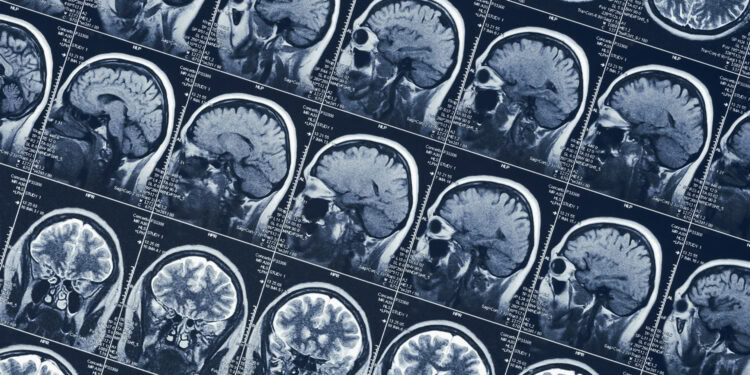
People working in shifts undergo gradual shrinkage of two brain regions
Working outside the traditional 9-to-5 schedule could be altering the physical structure of your brain. A new analysis of over 14,000 adults shows that shift work is linked to gradual shrinkage in brain regions controlling sleep and emotion.
Read moreDetails
Poor sleep and endless video scrolling form a predictable behavioral loop
Endless short videos can ruin your sleep, but exhaustion might also drive you to keep scrolling. A new study reveals how daytime tiredness acts as a gateway symptom, trapping users in a powerful cycle of media consumption.
Read moreDetails
Demonic attacks in dreams follow a chilling multi-night pattern
A fascinating new sleep study tracks the anatomy of demonic nightmares. Scientists found that these terrifying dreams often begin as minor threats days in advance before culminating in severe attacks that leave dreamers paralyzed with fear.
Read moreDetails
Brooding identified as a major driver of bedtime procrastination, alongside physical markers of stress
Struggle to turn off the lights at a reasonable hour? A new study reveals that bedtime procrastination isn't just a lack of willpower; it’s driven by a combination of physical nervous system stress and a tendency to emotionally "brood."
Read moreDetails