
Authoritarianism in parents may hinder a key cognitive skill in their children
A new study suggests that mothers who favor social hierarchies and obedience to authority use less perspective-taking language with their children—especially when discussing people from different ethnic backgrounds. Their children also show weaker ability to understand others’ thoughts and feelings.
Read moreDetails
New psychology research: Feeling politically excluded heightens antisocial tendencies
Being left out by political allies or rivals makes people feel less accepted and more inclined to lash out at opponents, new research shows. The emotional toll of political exclusion could be a key driver of deepening polarization in the...
Read moreDetails
Sheriff partisanship doesn’t appear to shape extremist violence in the United States
New research shows that partisan sheriffs in the United States, unlike local officials in some Global South countries, do not influence the prevalence of political violence, pointing to possible institutional differences across global democratic contexts.
Read moreDetails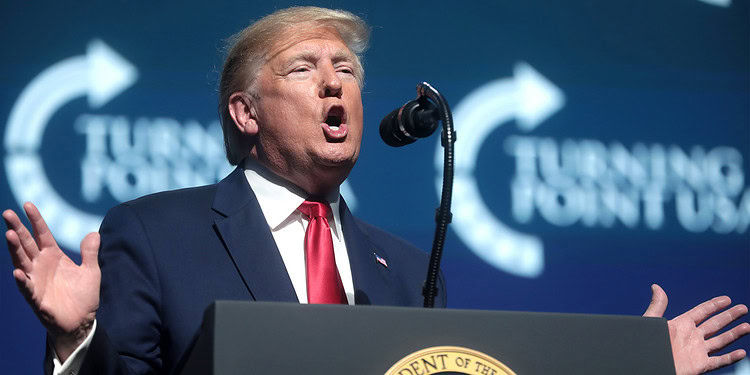
New study helps explain rising Trump support among minority voters
The belief that only conservatives prefer authoritarian leaders is upended by new research showing ethnic minorities—regardless of political affiliation—are more supportive of strong leadership than White liberals. The study suggests generalized trust is a key psychological factor.
Read moreDetails
Groundbreaking AI model uncovers hidden patterns of political bias in online news
Researchers developed a large-scale system that detects political bias in web-based news outlets by examining topic selection, tone, and coverage patterns. The AI tool offers transparency and accuracy—even outperforming large language models.
Read moreDetails
Genetic essentialism more common among supporters of radical right-wing parties
A new study finds that people who support far-right populist parties in Sweden and Norway are more likely to believe that genes determine social traits, raising concerns about the political implications of genetic essentialism and its links to discrimination.
Read moreDetails
New study upends decades-old narrative about Democrats and the white working class
A new analysis disrupts decades of conventional wisdom: the white working class was not a reliable Democratic base in the postwar era. Instead, support for Republicans has been a longstanding trend dating back to the 1940s.
Read moreDetails
Political diversity in your social circle might come with a surprising trade-off
People with politically mixed social circles may trust more of what they see on social media, including misinformation. A new study highlights an unexpected relationship between network diversity and belief in political content—true or false.
Read moreDetails
Sharing false information online boosts visibility for Republican legislators, study finds
A new study reveals that U.S. state legislators who posted false or inflammatory content during times of political turmoil sometimes gained online visibility—especially Republicans spreading low-credibility claims. But uncivil language often had the opposite effect, particularly for extremists.
Read moreDetails
Left-wing authoritarians are less likely to support physically strong men as leaders
Do muscles make a man a better leader? That depends on your politics. A new study finds conservatives are drawn to strong men in leadership roles, while left-wing authoritarians are more likely to shy away from physical dominance.
Read moreDetails
Narcissism may be fueling political polarization, according to new psychology research
A new study suggests that narcissistic personality traits—especially feelings of entitlement and antagonism—are strongly linked to political polarization. The findings highlight how psychological tendencies may fuel both loyalty to political in-groups and hostility toward opposing sides.
Read moreDetails
Scientists studied Fox News — here’s what they discovered
Fox News, a top-rated cable network since 1996, is known for its conservative commentary and strong influence on public opinion. Researchers have increasingly studied its role in shaping Americans’ views on politics, science, and conspiracy theories.
Read moreDetails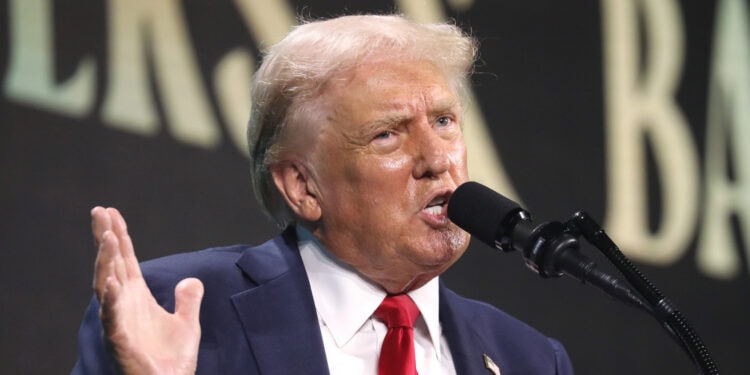
Dark personalities in politicians may intensify partisan hatred—particularly among their biggest fans
Researchers have uncovered a link between politicians' dark personality traits and affective polarization, suggesting that voters who support these leaders experience greater dislike for political opponents—especially when they feel ideologically aligned with the candidate.
Read moreDetails
Conservatives less trusting of science compared to liberals in the United States
A large-scale study has found that conservatives in the United States trust scientists less than liberals across nearly all scientific fields. Attempts to boost trust through brief, targeted messages failed, suggesting these attitudes may be deeply rooted.
Read moreDetails
Dark personalities more prevalent in less democratic countries, massive study shows
A massive global study finds that people living in democratic nations are less likely to score high on the “dark triad” of Machiavellianism, narcissism, and psychopathy—and more likely to be empathetic and satisfied with life.
Read moreDetails