
A unique event in Japan gave scientists unprecedented insight into gaming’s mental health effects
A unique study in Japan found that owning gaming consoles like the Nintendo Switch or PlayStation 5 reduced psychological distress and boosted life satisfaction, suggesting video gaming may benefit mental health, especially during challenging times like the pandemic.
Read moreDetails
Feminist women gamers blamed more for sexism, study finds
A study found that feminist women gamers are blamed more for sexist incidents, but only by those with sexist attitudes. These findings highlight the challenges women face in online gaming and the need for more inclusive, supportive environments.
Read moreDetails
Electromagnetic fields could boost focus and learning, new research suggests
Research found that exposure to specific electromagnetic fields may enhance a mental state called "flow," where people feel highly focused and immersed in tasks, suggesting potential for wearable tech to improve concentration and performance.
Read moreDetails
Study finds little evidence linking violent video games to increased aggression in adolescents
A new study of Czech adolescents challenges the belief that violent video games increase aggression, finding no significant link between game violence and changes in aggression or empathy over time.
Read moreDetails
Researchers develop new method for manipulating belief in free will using online games
Researchers used video games to explore how a loss of control impacts beliefs in free will. They found that while reduced agency in games alters beliefs in that context, it doesn't change people's overall views on free will.
Read moreDetails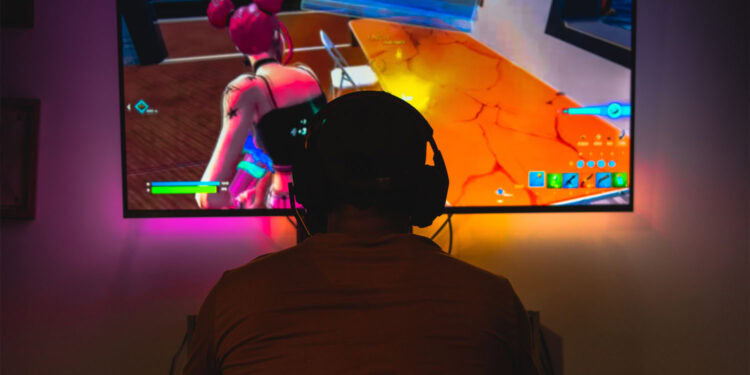
Playing “Fortnite” can expand social networks and boost well-being, study suggests
A Norwegian study found that playing Fortnite Battle Royale, especially for social reasons, expands social networks and positively impacts life satisfaction, particularly for women and individuals with disabilities.
Read moreDetails
Autistic traits may protect against loot box overspending, study suggests
A recent study found that gamers with higher levels of autistic traits are more vulnerable to excessive gaming and problematic gambling, but they spend less on in-game "loot boxes."
Read moreDetails
Video games boost cognitive function and mental health in schizophrenia patients
Video game training improves cognitive function, brain connectivity, and mental health in schizophrenia patients, according to recent research.
Read moreDetails
Video games help teens cope with academic stress, study suggests
A study found that academic stress significantly increases video game use among adolescents, with those having higher gaming efficacy more likely to use games as a coping mechanism.
Read moreDetails
Murders and psychopaths exhibit heightened aggressive tendencies in a video game setting, study finds
Inmates with pronounced psychopathic traits and those convicted of murder exhibited significantly heightened aggression in a video game-based shooting task compared to other criminal, according to a recent study.
Read moreDetails
Researchers shed light on the real-world benefits of Pokémon GO for children and teens
Playing Pokémon GO increases physical activity in children and teens but has mixed effects on their social and emotional well-being, showing both benefits and risks.
Read moreDetails
Video games linked to better neuropsychological performance in adults with multiple sclerosis
A study found that adults with multiple sclerosis who play video games regularly exhibit better cognitive functioning, particularly in visuospatial learning, short-term memory, and executive functioning, compared to those who play less frequently.
Read moreDetails
Video games and neural plasticity: StarCraft II expertise linked to enhanced brain connectivity
Playing RTS games like StarCraft II can alter brain connectivity, enhancing local networks tied to attention, reasoning, and motor control. This suggests video game expertise fosters specialized brain efficiency, potentially benefiting cognitive skills.
Read moreDetails
Extensive gaming shows no harm to adult psychological well-being
A recent study reveals that the amount of time adults spend playing video games has no significant impact on their mental health, challenging common concerns about the negative effects of gaming.
Read moreDetails
Virtual reality: A new hope for teen mental health?
A University of Washington study found that a VR environment reduced stress and improved mood in teens, offering a promising, engaging tool for managing adolescent mental health amidst unprecedented stressors.
Read moreDetails