Scientists have found that consuming a high-fat meal can significantly affect the way our brains respond to stress. This research, conducted at the University of Birmingham, suggests that a fatty diet may impair blood flow to the brain’s key areas during stressful situations, potentially impacting mood and cognitive performance. The findings have been published in the journal Nutrients.
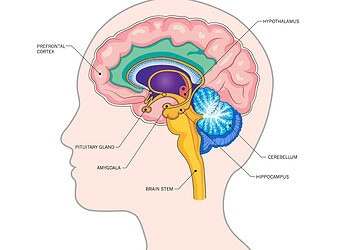
The motivation behind this study stemmed from a growing body of evidence linking episodes of acute stress to cardiovascular events and impaired brain function. Previous research has shown that stress can disrupt how blood flows through the brain, particularly affecting the prefrontal cortex, a region crucial for attention control and decision-making. Given that people often turn to high-fat foods during stressful times, the researchers sought to investigate how such dietary choices might influence the brain’s response to stress.
“I was initially very surprised to find out that even only one isolated episode of psychological stress could have an impact on our blood vessels even after our heart rate and blood pressure go back to normal (stress event is over),” said study author Catarina Rendeiro, an assistant professor in nutritional sciences.
“I have then become interested in how our food choices around periods of stress might protect our vessels or exacerbate the negative effects of stress in our body. My first study, showed that flavonoid-rich foods (e.g. cocoa, berries, apples) can protect from stress. However, a significant portion of the population tends to want to have less healthy (more high fat) options as snacks when stressed. That inspired this study to look at what happens when you choose a fatty snack close to a stressful episode.”
The study involved 21 healthy young adults, aged 18-45 years, comprising an equal number of males and females. To ensure consistency, females were tested during the early phase of their menstrual cycle. The participants were non-smokers, free from any chronic diseases, and were not on any long-term medication or dietary supplements. The research adhered to strict ethical guidelines and all participants provided informed consent.
Over the course of the study, each participant underwent two laboratory sessions, separated by a week for males and a month for females. In these sessions, they consumed either a high-fat or low-fat meal and then engaged in an 8-minute mental stress task. The stress task was designed to be challenging and mentally taxing, requiring participants to perform a series of rapid arithmetic calculations.
To measure the impact of these conditions on the brain and body, the researchers used a variety of techniques. They measured the participants’ blood pressure, heart rate, and cardiac output to gauge cardiovascular responses. To assess changes in the brain, they used near-infrared spectroscopy, a method that can measure blood oxygenation and hemoglobin levels in the prefrontal cortex. This allowed them to see how the brain’s blood supply changed during rest and under stress.
The findings were significant. While mental stress naturally increased heart rate and blood pressure, these physiological responses were not markedly different between the high-fat and low-fat meal conditions. However, when it came to the brain’s response, the high-fat meal noticeably reduced the increase in blood oxygenation in the prefrontal cortex during stress. This suggests that a high-fat diet may impair the brain’s ability to regulate its blood flow in response to mental challenges, possibly affecting cognitive functions like attention and decision-making.
Notably, there were no observed differences in the cardiovascular responses to stress between the high-fat and low-fat conditions, indicating that the effects were specific to brain function.
Moreover, the study found that fat consumption influenced mood. Participants reported greater mood disturbances, particularly fatigue, following the high-fat meal. This adds a new dimension to our understanding of the link between diet, stress, and emotional well-being.
“The key message from our study is that food choices during stressful times are particularly important, as they can aggravate the effect of stress in the body vasculature,” Rendeiro told PsyPost. “If you choose fatty snacks (in this study the fatty snack was two small butter croissants, delivering approximately 35 g of saturated fat), the levels of oxygenation in your brain, during that mental stress episode, are not as high in comparison to a low-fat option. This might compromise your brain performance and we are planning to investigate this in the future.”
“I was very surprised to see that the levels of oxygenation in the brain could be affected by eating two croissants just before a stressful task. We had previously shown that fat could impair the vasodilatory ability of peripheral vessels when combined with stress, but the fact that we could detect a similar effect in the brain is very impressive and worrying.”
Despite its novel findings, the study had some limitations. The meals were not tailored to individual metabolic rates, which might affect the results’ generalizability. The moderate sample size, though adequate for this type of study, suggests that larger-scale research could provide more definitive conclusions. Additionally, the study did not assess blood flow changes in the carotid artery during stress, which could have provided deeper insights into how stress affects brain circulation.
Looking ahead, the researchers suggest that future studies should employ more advanced techniques to better understand how dietary fats affect the brain during stress. Such research could use a combination of imaging technologies to explore changes in both the large arteries and smaller blood vessels of the brain. This would provide a more comprehensive picture of how diet impacts our brain’s health and function, particularly under stress.
“We need to understand whether the reduced levels of cerebral oxygenation translate into cognitive deficits,” Rendeiro said. “If it turns out that it does affect cognitive function, that means that unhealthy food choices associated with stressful events might compromise people’s ability to perform the very task they are stressing about, such as an interview, an exam, or work meeting. So thinking about going for the apple, grapes, or blueberries instead of the cookies during a stressful meeting might be something to consider.”
The study, “Fat Consumption Attenuates Cortical Oxygenation during Mental Stress in Young Healthy Adults“, was authored by Rosalind Baynham, Samuel J. E. Lucas, Samuel R. C. Weaver, Jet J. C. S. Veldhuijzen van Zanten, and Catarina Rendeiro.