Subscribe
The latest psychology and neuroscience discoveries.
My Account
  • Mental Health
  • Social Psychology
  • Cognitive Science
  • Neuroscience
  • About
No Result
View All Result
PsyPost
PsyPost
No Result
View All Result
Home Exclusive Social Psychology Political Psychology

Federal scientists feel scientific integrity has dropped under the Trump Administration, suggests study

by Beth Ellwood
July 3, 2020
in Political Psychology
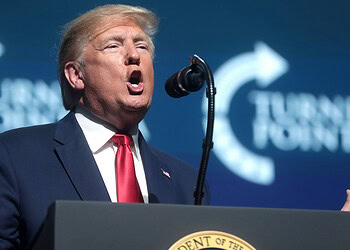
(Official White House Photo by Tia Dufour)

(Official White House Photo by Tia Dufour)

Share on TwitterShare on Facebook

A survey analysis across five federal agencies suggests that many federal scientists perceived a drop in scientific integrity during the Trump administration. The findings were published in PLOS One.

“President Trump and his administration have been regarded by news outlets and scholars as one of the most hostile administrations towards scientists and their work,” study authors Gretchen T. Goldman and colleagues say. “However, no study to-date has empirically measured how federal scientists perceive the Trump administration with respect to their scientific work.”

Goldman and her team analyzed responses from a 2018 survey questioning more than 3,700 federal scientists on their perception of scientific integrity within their agency. The five agencies were the Centers for Disease Control and Prevention (CDC), the Food and Drug Administration (FDA), the US Environmental Protection Agency (EPA), the National Oceanic and Atmospheric Administration (NOAA), and the Department of the Interior (DOI) (which included the National Park Service (NPS), US Fish and Wildlife Service (FWS), and the US Geological Survey (USGS)).

Results revealed that many federal scientists lacked trust in leadership within their agency. “Across the five agencies, 2,026 survey respondents reported “influence of political appointees” and “absence of leadership with needed scientific expertise” as major barriers to science-based decisions made at their agency,” the authors report.

These responses varied by agency, with FDA, CDC, and NOAA scientists appearing to have more trust in the integrity of their agency’s leadership than did EPA and DOI scientists. While 60% of EPA scientists chose “influence of political appointees” as a major barrier, only 10% of FDA employees and 17% of NOAA employees chose this response. Furthermore, 83% of EPA scientists either agreed or strongly agreed that political interests hindered science-based decision-making at their agency, while 32% of FDA scientists agreed with this statement.

When asked whether they agreed that resources within their agency had been distributed away from programs deemed politically controversial, 65% of EPA employees, 57% of DOI employees, and 47% of CDC employees reported their agreement. The authors share the following open-ended response from an employee at the Centers for Disease Control and Prevention, “Talk of defunding global health initiatives has caused my division to start terminating research collaborations with international laboratories that function as infectious disease surveillance sites in Africa and Asia.”

Self-censorship regarding climate change work was highest among EPA and DOI employees. Among scientists at the Environmental Protection Agency, 31% either agreed or strongly agreed with the statement, “I avoided working on climate change or using the phrase “climate change,” though I was not explicitly told to avoid them.” Similarly, 26% of DOI employees either agreed or strongly agreed.

“While the percentage of respondents reporting self-censorship is low,” the authors express, “it is unusual for hundreds of federal scientists to report censoring science-based information.”

Google News Preferences Add PsyPost to your preferred sources

A total of 68% of EPA respondents and 58% of DOI respondents reported that the effectiveness of their agency had decreased in the last year. However, 54% of FDA employees, 50% of NOAA employees, and 43% of CDC employees reported no significant changes in the effectiveness of their offices.

Goldman and associates point out that the survey response rate was low compared to previous surveys of a similar nature. They further disclose that leadership at several agencies either discouraged or expressly instructed their employees not to take the survey. Fear of retaliation for taking the survey may have deterred some scientists from participating, resulting in a biased sample. Results, therefore, cannot be generalized to the entire scientific community.

The study, “Perceived losses of scientific integrity under the Trump administration: A survey of federal scientists”, was authored by Gretchen T. Goldman, Jacob M. Carter, Yun Wang, and Janice M. Larson.


Previous Post

Suicide rate projected to increase as unemployment jumps from coronavirus outbreak

Next Post

New study highlights the destructive link between perfectionism and depressive symptoms

RELATED

People consistently overestimate the social backlash of changing their political beliefs, new psychology research shows
Political Psychology

People consistently overestimate the social backlash of changing their political beliefs, new psychology research shows

March 15, 2026
Contact with a service dog might help individuals with PTSD sleep better, study finds
Political Psychology

Veterans are no more likely than the general public to support political violence

March 13, 2026
A single Trump tweet has been connected to a rise in arrests of white Americans
Donald Trump

Texas migrant buses boosted Donald Trump’s vote share in targeted cities

March 12, 2026
New psychology research sheds light on the mystery of deja vu
Political Psychology

Black Lives Matter protests sparked a short-term conservative backlash but ultimately shifted the 2020 election towards Democrats

March 9, 2026
A psychological need for certainty is associated with radical right voting
Personality Psychology

A psychological need for certainty is associated with radical right voting

March 7, 2026
Pro-environmental behavior is exaggerated on self-report questionnaires, particularly among those with stronger environmentalist identity
Climate

Conservatives underestimate the environmental impact of sustainable behaviors compared to liberals

March 5, 2026
Common left-right political scale masks anti-establishment views at the center
Political Psychology

American issue polarization surged after 2008 as the left moved further left

March 5, 2026
Evolutionary psychology reveals patterns in mass murder motivations across life stages
Authoritarianism

Psychological network analysis reveals how inner self-compassion connects to outward social attitudes

March 5, 2026

STAY CONNECTED

LATEST

Excessive TikTok use is linked to social anxiety and daily cognitive errors

A common antidepressant shows promise for treating post-orgasmic illness syndrome

A reverse timeline of tragedy reveals the warning signs of incel violence

Higher skin carotenoid levels in toddlers predict better motor and language development

Cannabidiol may help treat severe alcohol addiction and protect the brain from damage

Suicide risk in older adults with autistic traits is linked to depression and isolation more than autism itself

Psychologists reveal a key trigger behind narcissists’ passive-aggressive behavior

New psychology study reveals we consistently underestimate our power in close relationships

PsyPost is a psychology and neuroscience news website dedicated to reporting the latest research on human behavior, cognition, and society. (READ MORE...)

  • Mental Health
  • Neuroimaging
  • Personality Psychology
  • Social Psychology
  • Artificial Intelligence
  • Cognitive Science
  • Psychopharmacology
  • Contact us
  • Disclaimer
  • Privacy policy
  • Terms and conditions
  • Do not sell my personal information

(c) PsyPost Media Inc

Welcome Back!

Login to your account below

Forgotten Password?

Retrieve your password

Please enter your username or email address to reset your password.

Log In

Add New Playlist

Subscribe
  • My Account
  • Cognitive Science Research
  • Mental Health Research
  • Social Psychology Research
  • Drug Research
  • Relationship Research
  • About PsyPost
  • Contact
  • Privacy Policy

(c) PsyPost Media Inc