Subscribe
The latest psychology and neuroscience discoveries.
My Account
  • Mental Health
  • Social Psychology
  • Cognitive Science
  • Psychopharmacology
  • Neuroscience
  • About
No Result
View All Result
PsyPost
PsyPost
No Result
View All Result
Home Exclusive Social Psychology Political Psychology

Genetics may play a role in the link between education, intelligence, and voter turnout

by Christian Rigg
July 16, 2021
in Political Psychology
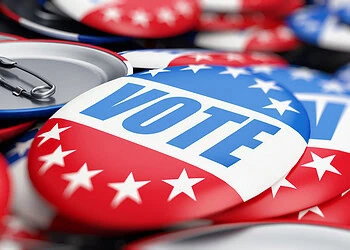
(Photo credit: Adobe Stock)

(Photo credit: Adobe Stock)

Share on TwitterShare on Facebook

Voter turnout is an important factor—perhaps the most important factor—in ensuring that the democratic process properly represents a population. Despite this, governments around the world are constantly faced with poor turnout. Understanding how individual differences predict this is important to building meaningful interventions.

While it is known that education and intelligence correlate with voter turnout, the precise mechanism of this relation is unknown. The same goes for the well-established relation between genetics and voter turnout (between 40-50%, according to some studies). The authors of a recent study published in Human Behaviour decided to examine the two factors together, to see to what extent genetic influence on voter turnout was mediated by education and intelligence.

The authors also wanted to create a more robust study than previous experiments which have relied on reared-together twin studies (making it difficult to separate nurture from nature) and voter self-reporting, known to be particularly unreliable. Instead, the present study used a large (Danish) genetic dataset comprising roughly 47 000 individuals, in correlation with actual voter registration records.

The results of the study seem to agree with the author’s hypothesis. That is, genotypes that predicted individual differences in education and performance on intelligence tests also predicted differences in voter turnout.

It’s important to note, however, that these relations are correlational in nature (not causal), and that their mechanisms are not yet understood. The authors allude to previous studies, for example, which suggest that the influence of genetics on education attainment may be exerted via personality traits or, indirectly, through the family environment.

Nonetheless, the correlation is clear and robust. Individuals with a greater genetic disposition to obtain a degree of education one standard deviation higher than the mean were 2.66 times more likely to vote in municipal elections. Similarly, scoring one standard deviation higher on intelligence testing was correlated with a 1.85x greater likelihood to vote in national elections.

There are some limitations, including the fact that the data is limited to a single nation. Nonetheless, the study’s large size and its robust correlational measures obtained through actual voter registration make this a particularly significant study statistically speaking, and lay the groundwork for interventions that will help increase voter turnout, buoying the democratic process.

The article, “Genetic predictors of educational attainment and intelligence test performance predict voter turnout”, was authored by Lene Aarøe, Vivek Appadurai, Kasper M. Hansen, Andrew J. Schork, Thomas Werge, Ole Mors, Anders D. Børglum, David M. Hougaard, Merete Nordentoft, Preben B. Mortensen, Wesley Kurt Thompson, Alfonso Buil, Esben Agerbo, and Michael Bang Petersen.

RELATED

Endorsing easily disproved lies acts as a psychological “power move” for some
Authoritarianism

Endorsing easily disproved lies acts as a psychological “power move” for some

December 2, 2025
Psychotic delusions are evolving to incorporate smartphones and social media algorithms
Authoritarianism

Participating in activist groups linked to increased narcissism and psychopathy over time

November 30, 2025
Whom you observe in your daily life alters your willingness to tax the rich
Political Psychology

Whom you observe in your daily life alters your willingness to tax the rich

November 28, 2025
Are online quizzes secretly changing your vote? Surprising study uncovers an “opinion matching effect”
Political Psychology

Your brain’s reaction to the unknown could predict how you vote

November 27, 2025
New psychology research sheds light on the mystery of deja vu
Authoritarianism

MAGA Republicans are more likely to justify political violence, study finds

November 21, 2025
Why are some people less outraged by corporate misdeeds?
Business

Why are some people less outraged by corporate misdeeds?

November 16, 2025
Liberals prefer brands that give employees more freedom, study finds
Business

Liberals prefer brands that give employees more freedom, study finds

November 15, 2025
A psychologist spent 50 years studying egos. He has a lot to say about Trump’s signature.
Donald Trump

A psychologist spent 50 years studying egos. He has a lot to say about Trump’s signature.

November 13, 2025

PsyPost Merch

STAY CONNECTED

LATEST

Long-term calorie restriction may slow biological aging in the brain

Distinct neural pathways allow the prefrontal cortex to fine-tune visual processing

Parental divorce linked to higher stroke risk in older adults

A field experiment reveals the psychology behind the “Batman effect”

Biofeedback training helps esports players react significantly faster

Scientists reveal a surprising consequence of chronic caffeine intake on sleep

How common is anal sex? Scientific facts about prevalence, pain, pleasure, and more

New research reveals mixed feelings about the terms “neurodiversity” and “neurodivergent”

RSS Psychology of Selling

  • Brain wiring predicts preference for emotional versus logical persuasion
  • What science reveals about the Black Friday shopping frenzy
  • Research reveals a hidden trade-off in employee-first leadership
  • The hidden power of sequence in business communication
  • What so-called “nightmare traits” can tell us about who gets promoted at work
         
       
  • Contact us
  • Privacy policy
  • Terms and Conditions
[Do not sell my information]

Welcome Back!

Login to your account below

Forgotten Password?

Retrieve your password

Please enter your username or email address to reset your password.

Log In

Add New Playlist

Subscribe
  • My Account
  • Cognitive Science Research
  • Mental Health Research
  • Social Psychology Research
  • Drug Research
  • Relationship Research
  • About PsyPost
  • Contact
  • Privacy Policy