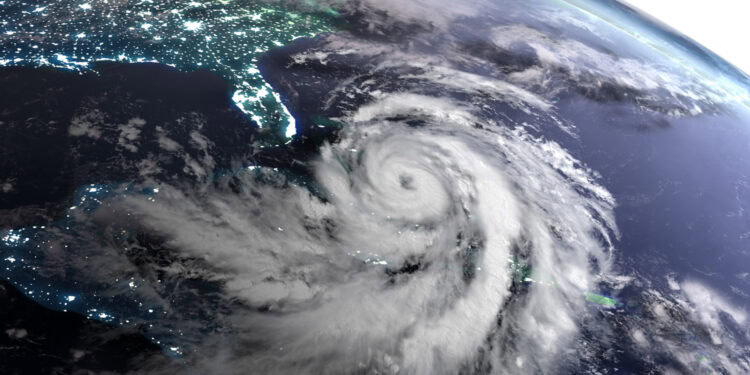

A retrospective study of young adults impacted by Hurricane Harvey in 2017 found links between perceived changes in health-related behaviors and personality traits. More extraverted individuals tended to perceive positive changes in their health since the hurricane, while individuals with higher levels of neuroticism perceived negative changes in their health and diet. The study was published in the Journal of Research in Personality.
Natural disasters can have far-reaching economic and public health consequences. While the physical damage they cause is often visible and relatively easy to quantify, their psychological effects on survivors are less apparent. Such events can result in traumatic experiences that lead to poorer mental and physical health long after the disaster has passed.
Scientists report that global warming has led to an increase in the frequency and intensity of hurricanes, with current levels at their highest in recent history. These events are expected to become even more frequent and severe in the future. However, research on the psychological impact of hurricane exposure on survivors is limited.
Study authors Olivia E. Atherton and Rodica Ioana Damian sought to examine the links between personality traits and perceived changes in health and health-related behaviors among individuals exposed to a hurricane. They hypothesized that individuals with higher levels of neuroticism—those who are less emotionally stable—would perceive stronger negative changes in health following hurricane exposure. Conversely, they expected the personality trait of conscientiousness to mitigate the perceived negative health effects of hurricane exposure.
The study participants were 646 college students who lived in the area affected by Hurricane Harvey, which hit Houston during the first week of the fall 2017 semester. The university where these students were enrolled closed for over a week due to the hurricane, with some campus buildings suffering extensive damage. Many students and faculty members were displaced from their homes, and the rebuilding process continued throughout the following year.
Of the participants, 72% were female, and their average age was 22. They completed two surveys as part of the study: the first in November 2017, shortly after the hurricane, and the second one year later.
In the first survey, participants provided demographic information, assessed their level of exposure to Hurricane Harvey by selecting stressors they had experienced from a list, and completed a personality assessment using the Big Five Inventory – 2. The second survey asked participants to reflect on their perceived changes in health and health-related behaviors compared to before the hurricane. This survey inquired about changes in general health, cigarette smoking, drinking and binge drinking, sleep problems, physical activity, and dietary habits.
The results showed that the level of exposure to Hurricane Harvey was not associated with changes in overall health, sleep, drinking, smoking, or physical activity. However, participants who experienced more adverse effects due to the hurricane were more likely to report that their diet had worsened than those less affected.
Individuals high in neuroticism were more likely to report negative changes in health after the hurricane, including worsened sleep, decreased physical activity, and poorer diet. Meanwhile, more extraverted individuals tended to perceive improvements in their health.
“We find that some people’s perceptions of their health (i.e., nutrition) may be disrupted by a hurricane, and that some people (i.e., higher in Neuroticism) may be at higher risk for perceiving worse changes in various health domains (i.e., overall health, sleep, nutrition, physical activity). Yet, the reasons for, and boundary conditions of, these findings remain to be explored,” the study authors concluded.
The study provides an interesting exploration of possible links between hurricane exposure and perceived health changes. However, it should be noted that the study relied solely on retrospective self-reports, leaving room for reporting biases and memory recall issues that could influence the results. Additionally, the sample consisted entirely of college students, and results may not generalize to other demographic groups.
The paper, “Hurricane exposure, personality traits, and perceived changes in health and health behaviors,” was authored by Olivia E. Atherton and Rodica Ioana Damian.