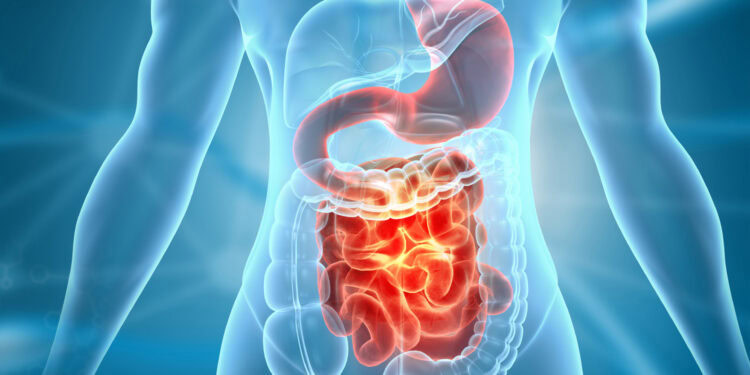
New research suggests that chronic stress disrupts the body’s natural mechanisms for repairing the intestinal lining by reducing levels of a specific regenerative protein. Scientists found that administering a single dose of this protein, called Reelin, reversed these damaging effects in rats, restoring protective cell populations and signs of normal cell turnover within the small intestine. The study was published in the journal Chronic Stress.
The lining of the gut serves as a critical biological barrier, selectively allowing nutrients into the bloodstream while preventing the entry of harmful bacteria, toxins, and large molecules. When this barrier is damaged, it can become overly permeable, a condition often referred to as “leaky gut,” which is frequently observed following exposure to prolonged psychological stress. When the intestinal barrier fails, inflammatory substances originating from the gut contents can enter circulation, potentially contributing to systemic inflammation and worsening symptoms of stress-related mental health conditions, such as major depressive disorder.
The gut barrier maintains its integrity through continuous and rapid regeneration. The entire lining of the intestine must be replaced every three to five days, ensuring that older, potentially damaged cells are promptly shed and replaced by healthy, functional cells. The large extracellular matrix protein, Reelin, is present in the gut lining and is thought to play a key role in promoting the migration of new intestinal epithelial cells up the villi to replace old ones, thereby regulating this turnover.
Prior research has established a link between chronic stress and reduced Reelin levels in the brain and blood plasma, often mirroring findings in individuals diagnosed with major depressive disorder. The researchers aimed to understand if this relationship extended to the gut, specifically investigating how chronic stress alters Reelin expression in the small intestine and whether a single dose of recombinant Reelin could restore intestinal health markers.
“This study aimed to understand the role of Reelin in the gut, especially under conditions of chronic stress,” said Hector Caruncho, professor of medical sciences at the University of Victoria and corresponding author on the study. He explained that “The gut-brain axis is becoming essential to understanding many psychiatric disorders, including depression.”
Ciara S. Halvorson, a neuroscience doctoral student at the University of Victoria and first author on the paper, emphasized the importance of the regenerative process being studied. “Under healthy conditions, the gut lining is renewed every four to five days,” Halvorson noted. “This is important as the cells in the gut lining are constantly exposed to damaging factors in the gut.”
To evaluate these questions, the researchers utilized male Long Evans rats, a common model for stress studies. The animals were divided into four experimental groups to test the effects of chronic stress and Reelin treatment. For three weeks (21 days), rats received daily subcutaneous injections of either a vehicle solution (the control) or a high dose of corticosterone, a glucocorticoid hormone used to simulate the powerful physical effects of chronic stress.
On the final day of the daily injections, the rats received a single intravenous injection administered via the lateral tail vein. Half of the corticosterone-treated rats received recombinant Reelin (three micrograms), and the other half received the vehicle solution. The control rats (which had received vehicle injections for 21 days) also received either Reelin or vehicle on the final day.
Four days following the single Reelin injection, the scientists harvested the small intestines from the animals. They then processed the tissue to analyze two primary markers associated with gut health: the density of cells producing Reelin, and the number of cells undergoing programmed cell death, known as apoptosis.
Reelin is primarily released from cells located in the lamina propria, the connective tissue layer situated directly beneath the epithelial cells that form the gut lining. By analyzing the density of Reelin-immunoreactive cells, the scientists could assess the local population of Reelin-producing cells in the intestine.
The findings showed that rats exposed to 21 days of corticosterone (the chronic stress group) experienced a significant decrease in the density of Reelin-immunoreactive cells in the lamina propria, showing a reduction of approximately 50 percent compared to the control animals. This indicated that chronic stress directly diminished the population of Reelin-producing cells in the gut environment.
When the corticosterone-treated rats received a single intravenous injection of Reelin, this reduction was completely reversed. The density of Reelin-immunoreactive cells returned to levels statistically indistinguishable from the healthy control rats that had never received corticosterone.
The researchers also evaluated apoptosis using cleaved caspase-3, a protein fragment recognized as a key signal for cells entering their terminal phase of life. In a healthy gut, apoptosis is concentrated at the very tips of the villi (the finger-like projections lining the intestine). This controlled death and subsequent shedding ensures that damaged or old cells are cleared out as new ones migrate up from the base of the villi.
The results showed that chronic corticosterone administration caused a marked decrease (about 55 percent) in the number of cleaved caspase-3 immunoreactive cells at the villi tips compared to control animals. This reduction suggests that chronic stress significantly slowed the necessary shedding and replacement of cells in the gut lining.
The introduction of recombinant Reelin partially restored this cellular process. The single injection increased the cleaved caspase-3 cell counts in the corticosterone-treated rats by roughly 55 percent compared to the stressed animals that did not receive Reelin treatment. This suggests that the Reelin injection helped reactivate the normal cycle of epithelial cell turnover.
The scientists also compared the gut markers with neurobiological markers measured in the hippocampus of the same rats, which were reported in a previous related study. Specifically, they looked for relationships between intestinal Reelin cell density or apoptosis counts and hippocampal Reelin cell counts or the counts of the GluA1 receptor subunit, an important marker for brain signaling.
The analysis revealed no significant correlations between any of the measured intestinal markers and the measured neurobiological markers, regardless of whether the animals were stressed or treated with Reelin. The researchers suggest this lack of correlation might indicate that, although the gut and brain communicate, reduced Reelin production in the gut does not necessarily reflect reduced Reelin levels in other, distant regions of the body for any individual animal.
The research proposes that by supporting the integrity of the gut lining, Reelin may act as a protective factor against stress-induced damage. If chronic stress causes the loss of Reelin-producing cells and slows epithelial renewal, the gut barrier becomes weaker. Reelin administration appears to correct this issue, potentially supporting a healthier gut barrier composition.
The rats used in this study had previously exhibited depressive-like behaviors following the chronic corticosterone exposure, including increased immobility in the forced swim test, which were also reversed by the single injection of Reelin. This suggests that Reelin’s benefits extend beyond the gut, offering therapeutic potential across multiple physiological systems affected by chronic stress.
While the findings are promising, the study was conducted in an animal model using a pharmacological agent (corticosterone) to simulate chronic stress. Future research will need to explore the exact molecular pathways by which Reelin influences cell migration and turnover in the gut. Scientists also need to confirm these effects in human clinical settings.
The results of this study support the idea that treatments aimed at restoring gut barrier function could offer a prophylactic approach, potentially increasing resistance to stress-induced inflammation.
“Reelin-based therapeutics could potentially offer such treatment,” according to Caruncho.
Halvorson concluded by reflecting on the broader implications of the findings for patient populations. “Taken together, these results may have important implications for the management of major depressive disorder,” she said. “This is especially true for people who live with both depression and gastrointestinal conditions.”
“If Reelin protects against leaky gut by supporting the renewal of the gut lining, Reelin may thereby protect against the worsening of depression symptoms triggered by inflammatory immune responses to leaked gut material,” Halvorson summarized.
The study, “An Intravenous Injection of Reelin Rescues Endogenous Reelin Expression and Epithelial Cell Apoptosis in the Small Intestine Following Chronic Stress,” was authored by Ciara S. Halvorson, Carla Liria Sánchez-Lafuente, Brady S. Reive, Lara S. Solomons, Josh Allen, Lisa E. Kalynchuk, and Hector J. Caruncho.