New research provides evidence that kisspeptin can help to boost sexual desire in men and women with hypoactive sexual desire disorder, a medical condition characterized by a persistent or recurrent lack of sexual fantasies, desires, and thoughts that lead to problems in intimate relationships. The new findings appear in JAMA Network Open.
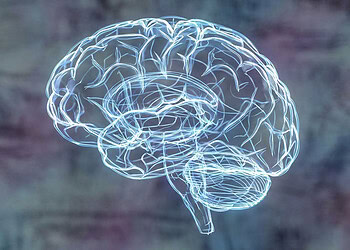
Kisspeptin is a naturally-occurring hormone that plays a crucial role in the regulation of the reproductive system. It is produced in the hypothalamus of the brain and acts on the pituitary gland to stimulate the release of other hormones involved in fertility. The new research suggests that kisspeptin may also play an important role in the psychology of sexual arousal.
“I first started researching kisspeptin many years ago with regards to its effects in reproduction,” explained study author Alexander Comninos, a consultant and honorary senior lecturer in endocrinology at Imperial College Healthcare NHS Trust. “When I realized that kisspeptin was also present in a lot of behavioral brain areas I wanted to explore this further. Following our identification that kisspeptin can influence behavior, the next natural step was to see if it could help people with problems related to these.”
Comninos and his colleagues conducted two randomized clinical trials, which employed a double-blind, two-way crossover, placebo-controlled protocol, at an academic research center in the United Kingdom. The researchers recruited heterosexual men and women who were concerned about and/or distressed by low sexual desire. Those who met the criteria for hypoactive sexual desire disorder were enrolled in the studies, leading to a sample of 32 male participants with an average age of 37.9 years and a sample of 32 female participants with an average age of 29.2 years.
Male participants visited the research center twice and received either an infusion of kisspeptin or a placebo at each visit. They then completed two video-based tasks while undergoing brain scans. In one task, they watched short videos alternating between sexual and nonsexual content for 12 minutes. In the other task, they watched a longer 8-minute video of a heterosexual couple engaging in sexual activity while their physical and subjective arousal were continuously recorded.
Female participants, on the other hand, watched 20-second videos of sexual content alternating with control nonsexual videos while undergoing brain scans. They also viewed 60 images of faces and were asked to rate their attractiveness on a 5-point Likert scale. The faces included highly attractive and medium attractive men.
Among men, kisspeptin had a significant effect on brain activity in response to sexual visual stimuli compared to a placebo. Specifically, the hormone increased activation in key areas of the brain related to sexual processing, including the left middle frontal gyrus and left anterior cingulate cortex. Kisspeptin also increased activity in two key visual brain regions, the right fusiform gyrus and bilateral visual cortex.
Additionally, kisspeptin significantly increased penile tumescence, leading to a greater level of physical arousal compared to placebo. Kisspeptin also improved “happiness about sex” reported by the men.
Among women, the researchers found evidence that kisspeptin enhanced brain activity in areas related to sexual and attraction processing. Women who were more distressed by their sexual function showed more kisspeptin-enhanced brain activity in the hippocampus, a brain region that has been implicated in female sexual desire.
The more kisspeptin activated the posterior cingulate cortex in response to attractive male faces, the less sexual aversion was reported by participants. Women also reported feeling “more sexy” after receiving kisspeptin compared to placebo.
“Kisspeptin is a potential safe and effective treatment for people who are seeking help for their low sexual desire and has a pro-erectile effect in men,” Comninos told PsyPost. “It is early days but the results so far are promising especially when one considers that currently available treatments in the United States for women have limited effectiveness and carry unpleasant side-effects (such as nausea and drowsiness) and in men there are no currently licensed treatments. Viagra is sometimes used but it is primarily a mechanical agent working on blood flow to the genitals. By contrast, our data suggest that kisspeptin as well as having a pro-erectile effect, can significantly improve underlying sexual desire and arousal.”
“The study participants underwent MRI during this study,” Comninos said. “This is clearly not the most comfortable environment and so we were surprised that kisspeptin administration had such a potent boosting effect on sexual pathways, behaviour and the penis in this clinical environment. Hopefully, kisspeptin may perform even better in this regard in more comfortable surroundings, such as an individuals home environment.”
Kisspeptin was well tolerated with no side effects or adverse events reported. But the researchers are interested in exploring alternative routes of administration.
“In this study, we administered kisspeptin through an intravenous infusion, which of course is not ideal during a sexual encounter! We are now looking at ways that may be easier to administer kisspeptin for example by injection or nasal spray,” Comninos explained.
“It is important to stress that this is early work. There is much to do. We are looking at performing larger studies, examining the effects in individuals with different identities and sexualities, and administering kisspeptin-based treatments in easier ways.”
The study, “Effects of Kisspeptin on Sexual Brain Processing and Penile Tumescence in Men With Hypoactive Sexual Desire Disorder: A Randomized Clinical Trial“, was authored by Edouard G. Mills, Natalie Ertl, Matthew B. Wall, Layla Thurston, Lisa Yang, Sofiya Suladze, Tia Hunjan, Maria Phylactou, Bijal Patel, Beatrice Muzi, Dena Ettehad, Paul A. Bassett, Jonathan Howard, Eugenii A. Rabiner, Paul Bech, Ali Abbara, David Goldmeier, Alexander N. Comninos, and Waljit S. Dhillo.
The study, “Effects of Kisspeptin Administration in Women With Hypoactive Sexual Desire Disorder: A Randomized Clinical Trial“, was authored by Layla Thurston, Tia Hunjan, Natalie Ertl, Matthew B. Wall, Edouard G. Mills, Sofiya Suladze, Bjial Patel, Emma C. Alexander, Beatrice Muzi, Paul A. Bassett, Eugenii A. Rabiner, Paul Bech, David Goldmeier, Ali Abbara, Alexander N. Comninos, and Waljit S. Dhillo.