Subscribe
The latest psychology and neuroscience discoveries.
My Account
  • Mental Health
  • Social Psychology
  • Cognitive Science
  • Neuroscience
  • About
No Result
View All Result
PsyPost
PsyPost
No Result
View All Result
Home Exclusive Mental Health

Neuroimaging study: Narcissists feel distressed rather than gratified when viewing themselves

by Eric W. Dolan
August 28, 2017
in Mental Health
Share on TwitterShare on Facebook

A fixation on one’s physical appearance is the hallmark of narcissism. But new research suggests that highly narcissistic people experience emotional distress rather than gratification when they see an image of themselves.

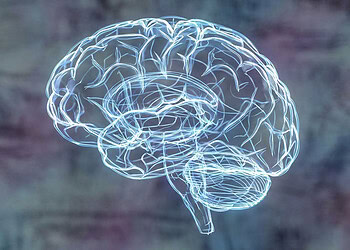
The Austrian researchers behind the study, who published their findings in the journal Scientific Reports, used brain imaging technology to examine the neural correlates of narcissistic self-viewing.

“Narcissism is a topic of increasing interest to science and the public, probably because cultural changes in the past decades favor narcissistic behavior,” explained Emanuel Jauk of the University of Graz. “Our study was aimed at taking a closer look at the self-image of narcissistic individuals using neuroscience, which might help to unveil its less conscious aspects.”

The researchers selected 21 German individuals who scored very high on a measure of narcissism and 22 who scored very low from a pool of more than 600 people who were pre-screened with the Narcissistic Personality Inventory. The participants were shown pictures of themselves, their close friends and strangers while the researchers monitored their brain activity with an fMRI.

Highly narcissistic men displayed brain activity that indicated negative affect and conflicting emotional processing when viewing themselves. In particular, they displayed increased activation in the dorsal and ventral anterior cingulate cortex — the latter of which is known to be involved in the processing of negative self-referential material.

The key finding, Jauk said, is that “narcissism, in terms of an inflated self-view, goes along with negative affect towards the self on an involuntary level.”

“This points to an ambiguity or conflict in the self-image of narcissistic people,” he explained to PsyPost. “This phenomenon is well known to therapists, for instance, but probably less so to the public. We think that our study can help raise awareness that narcissistic individuals are not simply “bad” people, but that narcissism is a way of expressing conflicts in self-related beliefs and feelings.”

The main limitation of the study is its sample, which was relatively small.

Google News Preferences Add PsyPost to your preferred sources

“Our study found differences in brain activation only between high and low narcissistic men, but not women,” Jauk said. “While it is generally in line with previous literature that male narcissists display more emotionally maladaptive characteristics, more research is need to understand the specifics of narcissistic women.”

The study, “Self-viewing is associated with negative affect rather than reward in highly narcissistic men: an fMRI study“, was also co-authored by Mathias Benedek, Karl Koschutnig, Gayannée Kedia and Aljoscha C. Neubauer.


Previous Post

A heartbeat-like vibration can reduce the anxiety associated with public speaking

Next Post

Study finds you can tell if someone is attracted to you by their voice

RELATED

Does cannabidiol reduce worry severity or anxiety symptoms? New placebo-controlled study says no
Autism

New trial suggests CBD oil could lower anxiety in autistic children and reduce parenting stress

March 18, 2026
Lonely individuals show greater mood instability, especially with positive emotions, study finds
Mental Health

How to stop overthinking, according to psychologists

March 18, 2026
Inflamed human digestive system highlighting stomach and intestines, medical illustration emphasizing gastrointestinal health and its impact on mental well-being and psychology news.
Dementia

Scientists discover how gut inflammation can drive age-associated memory loss

March 18, 2026
Scientists observe “striking” link between social AI chatbots and psychological distress
Depression

Brain scans reveal a bipolar-like link to childhood trauma in some depressed patients

March 17, 2026
Study suggests reality check comments on Instagram images can help protect women’s body satisfaction
Mental Health

Narcissistic traits and celebrity worship are linked to excessive Instagram scrolling via emotional struggles and fear of missing out

March 17, 2026
Harvard scientist reveals a surprising split in psychological well-being between the sexes
Cannabis

A massive review reveals cannabis falls short in treating psychiatric disorders

March 17, 2026
Albumin and cognitive decline: Common urine test may help predict dementia risk
Alzheimer's Disease

New brain scanning method safely tracks how Alzheimer’s drugs work in living patients

March 17, 2026
Capsule pills with green and yellow color for mental health or nutritional supplements.
Mental Health

A common antidepressant shows promise for treating post-orgasmic illness syndrome

March 16, 2026

STAY CONNECTED

RSS Psychology of Selling

  • How dark and light personality traits relate to business owner well-being
  • Why mobile game fail ads make you want to download the app
  • The science of sound reduplication and cuteness in product branding
  • How consumers react to wait time predictions from humans versus AI chatbots
  • The psychology of persuasion: When to use a friendly face versus a competent expert

LATEST

Popular AI chatbots generate unsafe diet plans for teenagers

New trial suggests CBD oil could lower anxiety in autistic children and reduce parenting stress

How to stop overthinking, according to psychologists

Psychologists found a surprisingly simple way to keep narcissists from cheating

First test of a new neuroscience theory shows how smart brains coordinate information

Scientists discover a new brain pathway that rapidly depletes diet-resistant body fat

The psychological reason we judge groups much more harshly than individuals

Scientists discover how gut inflammation can drive age-associated memory loss

PsyPost is a psychology and neuroscience news website dedicated to reporting the latest research on human behavior, cognition, and society. (READ MORE...)

  • Mental Health
  • Neuroimaging
  • Personality Psychology
  • Social Psychology
  • Artificial Intelligence
  • Cognitive Science
  • Psychopharmacology
  • Contact us
  • Disclaimer
  • Privacy policy
  • Terms and conditions
  • Do not sell my personal information

(c) PsyPost Media Inc

Welcome Back!

Login to your account below

Forgotten Password?

Retrieve your password

Please enter your username or email address to reset your password.

Log In

Add New Playlist

Subscribe
  • My Account
  • Cognitive Science Research
  • Mental Health Research
  • Social Psychology Research
  • Drug Research
  • Relationship Research
  • About PsyPost
  • Contact
  • Privacy Policy

(c) PsyPost Media Inc