Incorporating the psychedelic drug psilocybin into psychotherapy shows promise in the treatment of depression, according to new research published in the Journal of Psychopharmacology. But the study also highlights the difficulty of implementing effective blinding procedures to prevent expectancy effects when researching psychedelic substances. Despite using a rigorous methodology, researchers found that nearly all participants were able to distinguish between a placebo and the active substance.
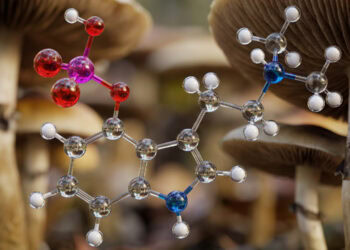
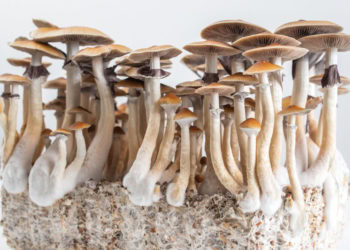
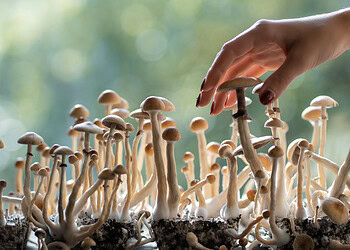
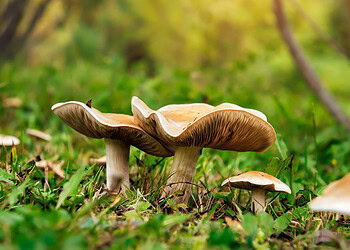
Psilocybin is a naturally occurring alkaloid found in certain species of “magic” mushrooms. It is classified as a “classical psychedelic” compound and acts on serotonin receptors in the brain, specifically the 5-hydroxytryptamine 2A (5-HT2A) receptors. Psilocybin, along with other psychedelic substances like LSD and DMT, produces profound changes in perception and mood when consumed.
Researchers have become interested in studying psilocybin and other psychedelics due to their potential therapeutic effects for various neuropsychiatric and behavioral health conditions. Several early-phase trials have indicated that psilocybin-assisted psychotherapy can lead to significant and long-lasting reductions in depressive symptoms.
These studies have shown promising results, suggesting that a single or a few doses of psilocybin can have rapid-acting effects that last for weeks to months, unlike conventional antidepressant medications that often require daily use over several weeks to achieve noticeable benefits.
In their new study, researchers at the Yale University School of Medicine and VA Connecticut Healthcare System sought to contribute to the growing evidence base for psilocybin therapy for depression by incorporating rigorous research design elements. The researchers utilized a placebo-controlled, within-subject, fixed-order design with enhanced blinding procedures.
Blinding, also known as masking, is a method used in research studies to minimize bias by preventing participants from knowing whether they are receiving the active treatment or a placebo/control. Blinding is particularly challenging in psychedelic research because these substances have distinctive effects. Participants are often able to tell if they have received the active substance.
The enhanced blinding procedures in the current study involved giving participants a placebo capsule and a psilocybin capsule during two separate sessions, 4 weeks apart. Participants and study staff were informed that participants would receive two out of three possible dosing conditions in a random order. The three possible conditions were placebo, low-dose psilocybin (0.1 mg/kg), and moderate-dose psilocybin (0.3 mg/kg).
However, in reality, the low dose was never administered. The fixed order of placebo followed by moderate-dose psilocybin was known only to the research pharmacists and a select group of study investigators who were not involved in collecting clinical outcome data.
Participants were recruited based on specific criteria, including having a diagnosis of Major Depressive Disorder, experiencing a current moderate to severe depressive episode, and having failed at least one adequate antidepressant trial. Participants were required to discontinue any antidepressant or antipsychotic medications for a certain period before the study. Various assessments and screenings were performed to ensure eligibility and safety.
Participants who had recent exposure to psilocybin within the past year were excluded from the study. This was done to minimize the potential impact of past experiences with psilocybin on participants’ expectations and blinding.
After screening out more than 900 individuals, the researchers enrolled 22 participants in the study. The participants had been diagnosed with depression for an average of 20 years and had an average age of 42.8 years. Seven participants dropped out before the study was concluded, leaving a final sample of 15.
The researchers found that there was a significant decrease in depression scores over time. Participants experienced greater decreases in depression scores during the two-week period after receiving psilocybin compared to after receiving a placebo, although the difference was not statistically significant.
About 60% of the participants in the study also had anxiety disorders in addition to depression. Similar to depression, anxiety symptoms improved over the course of the study, but there was no significant difference in anxiety improvement between the psilocybin and placebo treatments.
However, many participants experienced positive effects that lasted for about two months after the psilocybin treatment. They showed improvements in different aspects of their mood and quality of life. These improvements were not seen after the placebo treatment.
“While differences in these primary outcomes were not statistically significant, a number of secondary findings are consistent with results of other psilocybin therapy studies that demonstrated acute and sustained clinical improvements with large effects sizes after a single dose in the context of psychotherapeutic support,” the researchers wrote.
The researchers said the small sample size of the study may have affected the ability to detect statistically significant differences between placebo and psilocybin. They also noted their enhanced blinding procedure only had a “limited impact.” Most participants (78.9%) correctly identified the first dose as placebo.
“While we did not explicitly measure expectancy, our mostly self-referred participant sample generally had high expectations regarding the therapeutic potential of psilocybin as revealed during the screening interviews. … positive expectancy effects and functional unblinding during the psilocybin dosing session could have also contributed to the improvements observed in the period after the psilocybin dosing session,” the researchers wrote.
“Future studies should be designed to more explicitly enhance masking, mitigate, and measure expectancy effects, and assess the impact of repeated dosing and different forms and amounts of psychotherapeutic support,” they advised.
The study, “Psilocybin-assisted therapy for major depressive disorder: An exploratory placebo-controlled, fixed-order trial“, was authored by Jordan Sloshower, Patrick D. Skosnik, Hamideh Safi-Aghdam, Surbhi Pathania, Shariful Syed, Brian Pittman, and Deepak Cyril D’Souza.