Subscribe
The latest psychology and neuroscience discoveries.
My Account
  • Mental Health
  • Social Psychology
  • Cognitive Science
  • Neuroscience
  • About
No Result
View All Result
PsyPost
PsyPost
No Result
View All Result
Home Exclusive Social Psychology

Pianists have greater desire to learn but feel less competent than guitarists

by Eric W. Dolan
July 8, 2013
in Social Psychology
Share on TwitterShare on Facebook

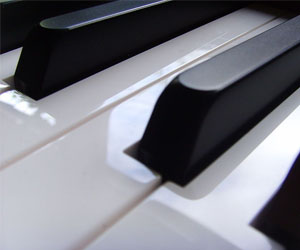
Piano keysTwo musical instruments — guitars and pianos — have their own unique sounds and methods of play. But do the two instruments also have their own unique motivational factors?

Research published online June 20 in Psychology of Music has shed light on some interesting similarities and differences between guitarists and pianists.

“Our results appear to show that pianists are working hard at perfecting their instrument but ironically emerging with less perceived competence and willingness to play,” said Peter D. MacIntyre of Cape Breton University, who co-authored the study with Gillian K. Potter. “We think that this pattern of results is connected to piano being taught in a more rigid, formal manner to more students, compared with guitarists. Pianists seem to be under more pressure to learn specific musical structures in specific ways; guitarists often learn with more freedom and autonomy.”

For their study, the researchers surveyed 292 guitarists and 307 pianists. They found pianists showed significantly higher motivational intensity and desire to learn. Pianists also showed higher levels of introjected regulation, meaning they felt obligated to practice their instrument.

Overall, the musicians reported that self-determined motives were stronger than external motives.

“It is interesting, and somewhat unexpected, that the correlations among the motivation variables are very similar between the two groups of musicians,” MacIntyre added. “We did not see evidence of differences in the structure of motivation, i.e. how motivation variables fit together, between guitarists and pianists. For example, both guitarists and pianists showed high levels of intrinsic motivation. But we did find that pianists perceive themselves overall as less competent and are more hesitant to play their instrument.”

MacIntyre and Potter also found a big difference between guitarists and pianists when it came to composing music. Nearly twice as many guitarists reported writing music than pianists. In addition, 40 percent of pianists said they had no intention to learn to write music in the future compared to only 13.5 percent of guitarists.

“I am surprised that there are not more studies on the motivational effects of writing music,” MacIntyre told PsyPost. “In our study, we found that almost 90 percent of guitarists either write music or plan to begin writing music. As a group, guitarists show a lot of diversity but have at least two things in common: calloused fingers and a desire to write music.”

Google News Preferences Add PsyPost to your preferred sources

“We found this result intriguing. Most often, I think of writing music on the piano rather than the guitar, but our sample shows guitar players are creating their own music in large numbers.”

The study found that writing music was associated with higher levels of willingness to play, musical self-esteem, intensity of effort, and desire to learn.

“In terms of motivation, our findings show that people who write their own music report higher perceived competence and musical self-esteem, and they exert more effort, have a greater desire to continue learning, and feel more willing to play in formal and informal settings,” MacIntyre explained. “This suggests that writing is associated with a very strong music motivation profile.”

MacIntyre and Potter believe musical composition is a fruitful area for new psychological research.

“As a follow-up, our research team is undertaking a study, led by Gillian Potter, among songwriters to examine how writing music affects identity development,” MacIntyre told PsyPost. “Writing music can be such a personal experience, often tapping into deeply felt emotion and laying bare the most personal experiences. Music is a potentially rich area in which to study the links among motivation, creativity and identity.”

Musicians interested in helping out can take a survey here.

Previous Post

News coverage of female politicians focuses more on character traits

Next Post

Teens’ self-consciousness linked to the medial prefrontal cortex

RELATED

Study links phubbing sensitivity to attachment patterns in romantic couples
Artificial Intelligence

How generative artificial intelligence is upending theories of political persuasion

April 1, 2026
Exploring discrepancies between anti-prejudice values and behavior
Racism and Discrimination

Scientists use brain measurements to identify a video that significantly lowers racial bias

April 1, 2026
Belief in the harmfulness of speech is linked to both progressive ideology and symptoms of depression
Political Psychology

Belief in the harmfulness of speech is linked to both progressive ideology and symptoms of depression

April 1, 2026
Men who favor the tradwife lifestyle often view the women in it with derision
Sexism

Men who favor the tradwife lifestyle often view the women in it with derision

April 1, 2026
Shifting genetic tides: How early language skills forecast ADHD and literacy outcomes
Authoritarianism

How a twin study untangled the surprising roots of authoritarian political beliefs

March 31, 2026
TikTok tics study sheds light on recovery trends and ongoing mental health challenges
Social Media

Researchers break down the digital habits of science influencers

March 30, 2026
ChatGPT acts as a “cognitive crutch” that weakens memory, new research suggests
Psychopathy

Psychopathic traits are linked to a lack of physical and emotional connection during face-to-face interactions

March 30, 2026
Does crying actually make you feel better? New psychology research shows it depends on a key factor
Sexism

Women who hate men: Study finds similarities in gendered hate speech on Reddit

March 29, 2026

STAY CONNECTED

RSS Psychology of Selling

  • Emotional intelligence linked to better sales performance
  • When a goal-driven boss ignores relationships, manipulative employees may fight back
  • When salespeople fail to hit their targets, inner drive matters more than bonus checks
  • The “dark” personality traits that predict sales success — and when they backfire
  • What communication skills do B2B salespeople actually need in a digital-first era?

LATEST

The neuroscience of hypocrisy points to a communication breakdown in the brain

How generative artificial intelligence is upending theories of political persuasion

Scientists use brain measurements to identify a video that significantly lowers racial bias

Brief mindfulness practice accelerates visual processing speeds in adults

Belief in the harmfulness of speech is linked to both progressive ideology and symptoms of depression

Better parent-child communication is linked to stronger soft skills and emotional stability in teens

Men who favor the tradwife lifestyle often view the women in it with derision

A diet based on ultra-processed foods impairs metabolic and reproductive health, study finds

PsyPost is a psychology and neuroscience news website dedicated to reporting the latest research on human behavior, cognition, and society. (READ MORE...)

  • Mental Health
  • Neuroimaging
  • Personality Psychology
  • Social Psychology
  • Artificial Intelligence
  • Cognitive Science
  • Psychopharmacology
  • Contact us
  • Disclaimer
  • Privacy policy
  • Terms and conditions
  • Do not sell my personal information

(c) PsyPost Media Inc

Welcome Back!

Login to your account below

Forgotten Password?

Retrieve your password

Please enter your username or email address to reset your password.

Log In

Add New Playlist

Subscribe
  • My Account
  • Cognitive Science Research
  • Mental Health Research
  • Social Psychology Research
  • Drug Research
  • Relationship Research
  • About PsyPost
  • Contact
  • Privacy Policy

(c) PsyPost Media Inc