Individuals in the early stages of Alzheimer’s disease often experience a declining ability to recognize and remember smells. A recent study published in Molecular Psychiatry suggests this sensory loss stems from communication breakdowns between memory-storing cells in two specific brain regions. By using light to stimulate these neural pathways in mice, researchers were able to temporarily restore olfactory memory function.
Diagnosing Alzheimer’s disease before broad cognitive decline occurs remains a constant challenge in neurology. Neurodegeneration often begins years before conventional memory loss becomes obvious. Changes to a person’s sense of smell can be a strong predictor of future cognitive decline. Research teams are trying to map exactly how early neurodegeneration disrupts the brain networks responsible for processing odors.
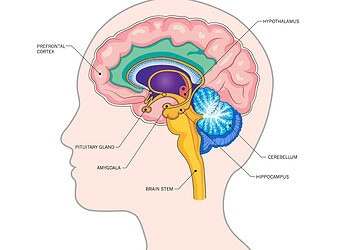
The study was led by researchers Yan Yan at Shenzhen MSU-BIT University and Zhifang Dong at Chongqing Medical University. They wanted to understand the structural connectivity between the piriform cortex, which processes odors, and the infralimbic cortex, a prefrontal region involved in storing and retrieving memories. Together, these two regions form a network that ties specific smells to past experiences.
Memories are thought to be stored in physical networks of neurons known as engrams. When a brain learns something new, a specific group of engram cells activate simultaneously. Retrieving that memory later requires the same engram cells to reactivate in the correct sequence. The researchers suspected that the connection between the piriform engram cells and the infralimbic engram cells was faltering in the early stages of cognitive decline.
To investigate structural changes in living humans, the research team analyzed functional magnetic resonance imaging scans from a public database. They compared brain scans from 183 individuals with mild cognitive impairment against scans from 182 healthy adults. The imaging data showed that connectivity between the piriform cortex and the infralimbic cortex was markedly reduced in the patients with mild cognitive impairment.
Seeking to understand the cellular mechanics behind this weakened connection, the team turned to a genetically modified mouse model of Alzheimer’s disease. These mice are engineered to accumulate amyloid plaques, a hallmark of the neurodegenerative condition. The researchers trained the mice to associate the scent of limonene with a mild foot shock, creating a fearful olfactory memory.
A day after the training, the researchers placed the mice in a new environment and exposed them to the scent without the shock. Age-matched normal mice immediately froze in place, anticipating the negative event. Mice engineered with the Alzheimer’s mutations displayed a normal fear response at three months of age, but they failed to freeze when tested at four months of age.
This behavioral change suggested that the four-month-old Alzheimer’s mice could encode the memory of the smell but struggled to retrieve it the next day. The researchers then used genetic tools to place fluorescent tags on the specific engram cells that fired during the initial smell training. By monitoring these fluorescent tags during the memory recall test, the team could watch individual neurons in real time.
The imaging revealed that the tagged engram cells in both the piriform cortex and the infralimbic cortex were much less active in the Alzheimer’s mice compared to the normal mice. To test whether this lack of activity was responsible for the memory failure, the team employed optogenetics. This technique involves modifying target neurons so they can be turned on or off with precisely timed flashes of light delivered through a tiny implanted fiber.
In the healthy mice, using light to suppress activity in the targeted engram cells prevented the mice from remembering the odor association. In the Alzheimer’s mice, the researchers tried the opposite approach. They delivered high-frequency pulses of light to the nerve fibers connecting the target cells in the piriform cortex to the infralimbic cortex, effectively forcing the cells to fire.
This targeted light stimulation caused the Alzheimer’s mice to freeze when exposed to the odor. The result indicated that the mice successfully recalled the memory when the brain circuit was artificially stimulated. Triggering the piriform cortex cells alone proved sufficient to activate the connected engram cells in the infralimbic cortex.
To find out why the natural memory signal was failing to bridge the gap between the two brain regions, the scientists analyzed the genetic activity of the individual engram cells. They identified abnormalities in how the cells processed glutamate. Glutamate is the primary excitatory neurotransmitter in the brain, responsible for sending activating signals from one neuron to the next across tiny gaps called synapses.
When a healthy brain forms a new memory, it undergoes long-term potentiation, a process that physically strengthens the synapses within the engram network. This strengthening normally depends on an influx of biological structures known as AMPA receptors. These specialized proteins sit on the receiving end of a synapse and catch the incoming glutamate molecules.
The researchers found that in healthy mice, the learning process successfully increased the number of functional AMPA receptors in the infralimbic cortex. In the Alzheimer’s mice, this routine strengthening mechanism did not occur. As a result, the chemical signal sent by the piriform cortex was too weak to properly activate the memory storage cells in the infralimbic cortex.
The high-frequency optical stimulation compensated for this chemical weakness. By manually forcing the presynaptic neurons to fire rapidly, the researchers artificially induced sudden synaptic strengthening. This influx of activity temporarily repaired the communication breakdown and allowed the memory signal to travel successfully across the brain circuit.
Animal models of Alzheimer’s disease primarily mimic isolated pathological features of the condition, meaning the timeline of memory loss in mice does not perfectly reflect the human experience. The optical stimulation techniques used in the laboratory require highly invasive surgical and genetic modifications. Such methods are fundamentally experimental and cannot be used as medical treatments for human patients.
Future research might explore noninvasive methods of neuromodulation capable of stimulating targeted memory circuits. Mapping the functional connectivity between these specific olfactory regions via brain scans could act as a supplementary diagnostic tool. Tracking early communication breakdowns in the olfactory system might eventually help clinicians detect neurodegenerative diseases long before severe cognitive symptoms appear.
The study, “The dynamic impairment of synaptic transmission in the PCx-IL engram circuit contributes to early olfactory memory decline in Alzheimer’s disease,” was authored by Yan Yan, Da Song, Guangfei Li, Junjie Li, Yuanhong Tang, Danyang Li, Jian Mao, Hui Li, Xiaoyun Liu, Ding Yu, Fangfang Ma, Yayan Pang, Yue Jin, Yujun Deng, Yunjie Qiu, Zhenzhen Quan, Junjun Ni, Yong Cheng, Zhe Wang, Zhifang Dong, and Qing Hong.