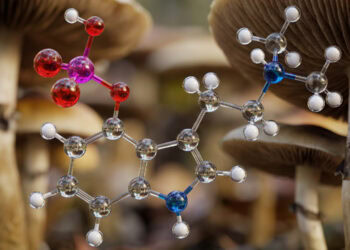
MDMA, more commonly known as ecstasy, can safely enhance the treatment of post-traumatic stress disorder when it is used in a clinical setting alongside psychotherapy, according to new research in Psychopharmacology that analyzed the outcomes of clinical trials.
“In 2004, I began researching MDMA in rodent models, and was surprised to hear that the first clinical trial of MDMA-assisted psychotherapy for PTSD had just started that year,” said study author Alli Feduccia, a clinical data scientist at the Multidisciplinary Association for Psychedelic Studies (MAPS) and the director of Psychedelic Support.
“I also learned about the unique effects of MDMA and why it was used in couple’s therapy prior to being placed on Schedule 1 list. Using a drug only a few times to enhance therapeutic processing to resolve underlying issues that cause PTSD symptoms seemed like an approach worth investigating.”
The researchers pooled data from six Phase 2 clinical trials that were carried out from 2004 to 2017 to examine the outcomes of MDMA-assisted psychotherapy for PTSD. The six trials included 103 participants in total, and included both civilians and veterans/first responders.
The participants first took part in two or three 90-minute psychotherapy sessions to establish a therapeutic alliance with the therapist and prepare for the MDMA experience. Participants were then randomly assigned to receive MDMA or a placebo during two or three 8-hour psychotherapy sessions.
The MDMA-assisted psychotherapy sessions were based on methods developed by MAPS.
“The method includes periods of introspection alternating with periods of communication between therapists and the participant. The method is aimed at allowing participants to revisit traumatic experiences while staying emotionally engaged even during intense feelings of anxiety, pain, or grief without feeling overwhelmed,” the researchers explained in their study.
These experimental sessions were followed by an overnight stay and 90-minute psychotherapy sessions aimed at integrating the psychedelic experience.
The researchers found that the treatment appeared to be both safe and effective. After two experimental sessions, approximately 50% of participants who received active doses of MDMA no longer met PTSD diagnostic criteria, compared to 23% of participants who received placebo.
“MDMA is powerful substance showing great promise as treatment for PTSD when combined with psychotherapy. The controlled clinical context and purity of the drug are critical components for the positive outcomes of the studies,” Feduccia told PsyPost.
“The severity of PTSD symptoms were reduced for many participants after 2-3 sessions of MDMA-assisted psychotherapy, with the effects durable 12 months after treatment.”
Although the MDMA treatment was generally well tolerated, participants who received the drug were more likely to report side-effects such as anxiety, dizziness, jaw clenching, lack of appetite, and nausea.
“Results from Phase 2 trials are exceptional for a PTSD treatment, but the findings will need to be replicated in a larger number of people in the Phase 3 trials. Phase 2 trials enrolled mostly White participants, lacking diversity in race and ethnicity. Studies need to enroll more people of color to know if this treatment will work in the same way for them,” Feduccia added.
MAPS is currently preparing for the Phase 3 clinical trials, which are required to develop MDMA-assisted psychotherapy into an FDA-approved treatment for PTSD.
“It has taken many decades to reach this point for MDMA drug development. We are seeing a shift in public opinion as scientific evidence builds support for use of MDMA and psychedelics for treating mental health conditions. These are exciting times we live in, and could very well likely be on the cusp of a new paradigm for psychiatric medicine,” Feduccia said.
The study, “MDMA-assisted psychotherapy for treatment of PTSD: study design and rationale for phase 3 trials based on pooled analysis of six phase 2 randomized controlled trials“, was authored by Michael C. Mithoefer, Allison A. Feduccia, Lisa Jerome, Anne Mithoefer, Mark Wagner, Zach Walsh, Scott Hamilton, Berra Yazar-Klosinski, Amy Emerson, and Rick Doblin.