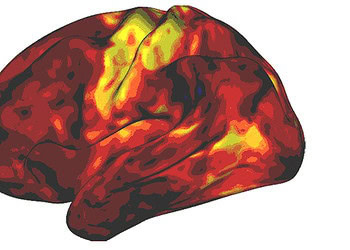
In a recent study published in Nature, researchers used advanced brain imaging techniques to explore how certain brain networks differ in people with depression. They discovered that a specific brain network, known as the “salience network,” was on average twice as large in individuals with depression compared to healthy individuals. The salience network plays a key role in processing rewards and deciding what deserves attention, and this expansion could help explain some unique mental and emotional features of depression.
Depression is a mental health disorder that affects millions worldwide, characterized by persistent sadness, lack of interest in activities, fatigue, and changes in appetite and sleep. These symptoms often come in episodes, meaning that individuals may experience periods of wellness before depression symptoms return. Depression’s effects go beyond mood, impacting a person’s ability to function in daily life, relationships, and work, making it one of the leading causes of disability.
The motivation behind this new study stems from the need for a more individualized understanding of depression at the brain level. Most traditional studies on depression take a “snapshot” approach, looking at brain activity at a single point in time. This approach, however, lacks the depth to capture the episodic nature of depression.
Additionally, many previous studies have focused on group averages, which overlook how each person’s brain may uniquely differ. Charles Lynch and Conor Liston, leading the research team at Weill Cornell Medicine, recognized that this lack of precision might prevent us from identifying brain patterns that could predict mood shifts or suggest new treatment approaches.
To address this, the team employed an advanced brain imaging technique called precision functional mapping. This “deep scanning” approach allows researchers to create detailed brain maps for each individual, capturing a more accurate view of brain activity and connectivity.
Precision functional mapping uses functional magnetic resonance imaging (fMRI) to study brain connectivity by measuring blood flow changes, which reveal patterns of brain activity in real time. Unlike traditional fMRI studies that create averaged brain maps across groups, this approach examines each person’s unique brain network organization. This study focused on comparing the salience network—a brain network involved in decision-making and reward processing—between individuals with depression and those without.
“Depression is an episodic condition, meaning symptoms come and go over time. However, most brain imaging studies to date acquire a single brain scan at one point in time (a cross-sectional approach),” explained Lynch, an assistant professor of neuroscience at Weill Cornell Medicine.
“A few years ago now, Conor and I reasoned that studying an individual with depression repeatedly over time (a longitudinal approach) would help us understand what brain signals or processes regulate these mood state transitions. This was the original goal of our study, and we noticed the difference in salience network size in the process of carrying out that study, in part because we had collected an unprecedented amount of fMRI data (10+ hours) per patient, which allowed us to create really precise individual-specific maps of brain function.”
The study initially involved two groups of participants: six people with a clinical diagnosis of major depression and 37 healthy individuals without any psychiatric disorders. The participants in both groups underwent multiple brain scans over an extended period, allowing the researchers to capture changes and patterns in the brain that may develop gradually. Those in the depression group were scanned for an average of 621.5 minutes each, across an average of 22 sessions.
In four of the six depressed individuals studied in detail, the salience network was more than twice the size of any salience network observed in the healthy control group. This expansion was most noticeable in certain brain regions associated with emotional and cognitive processing, particularly in the anterior cingulate cortex and insular cortex. Notably, these regions are already known to play a role in how people process emotions and assess rewarding or meaningful experiences.
On average, the salience network occupied about 73% more of the cortical surface, or outer layer, of the brain in people with depression than in those without it. While the salience network typically covered about 3.17% of the cortical surface in healthy individuals, in people with depression, it occupied approximately 5.49% on average.
“We had set out originally to study the brain connectivity correlates or predictors of mood state transitions, and we were quite surprised to see these differences in the size of the salience network,” Lynch told PsyPost.
In addition to the initial six individuals with depression, the researchers then extended their analysis to three other groups of people with depression to see if their results would hold. These groups, recruited from two universities, included sample sizes of 48, 45, and 42 people. In these additional groups, they used standard brain imaging techniques to validate whether the findings could be generalized to a broader sample.
When the researchers looked at these broader sample groups, the results were consistent. The expansion in the salience network continued to appear even when using different imaging methods and sample populations.
Another significant insight was that the salience network’s expansion often involved the network’s borders shifting into areas that are usually managed by other networks in the brain. Specifically, the salience network in depressed individuals tended to encroach upon nearby networks, particularly those involved in self-reflection and higher-order cognitive functions, such as the default mode network and the frontoparietal network. This network encroachment was not random.
The researchers identified three distinct patterns of salience network expansion, which they called “border shifts,” and noted that they occurred mainly into higher-order networks rather than regions associated with sensory or motor functions. This suggested a targeted disruption in the brain’s higher-order networks, potentially affecting how people with depression process emotional and social information.
An interesting additional finding was that the size of the salience network was stable over time in each person with depression. This stability suggests that salience network expansion is a long-lasting characteristic of major depressive disorder, rather than a marker of individual depressive episodes or a reflection of symptom severity or illness duration.
To explore the possibility that salience network expansion might signal a risk for depression, the researchers turned to data from the Adolescent Brain Cognitive Development (ABCD) study. This study provided brain imaging data from children aged 10 to 12, none of whom showed clinical symptoms of depression at the time of their scans.
The researchers specifically looked at a subset of 57 children who later went on to develop clinical symptoms of depression by ages 13 or 14, comparing them to another group of children who did not develop depressive symptoms over the same period. They found that the salience network was already larger in these children before they showed any signs of depression, hinting that this network expansion could potentially signal an increased risk for developing the disorder.
Finally, the study explored whether the salience network’s altered connections within the brain related to specific depression symptoms, such as anhedonia, or the loss of interest and pleasure, which is a common feature of depression. In two of the individuals with major depression who were studied over an extended period, the researchers found that the strength of connections between the anterior cingulate cortex and another area called the nucleus accumbens, which is involved in reward processing, varied with levels of anhedonia.
When these connections were stronger, individuals tended to experience lower levels of anhedonia. Similarly, a different connection in the brain was found to correlate with symptoms of anxiety, suggesting that the salience network may play a role in different symptoms of depression through its connections with various brain regions.
“Our study contributes to understanding the brain areas and networks responsible for individuals with depression transitioning between periods of relative wellness vs. periods of severe illness, in addition to identifying features of how these brain networks are organized spatially (for example, their size) that may confer risk for depression,” Lynch said.
While these findings provide an exciting step forward, the study has limitations. Precision functional mapping requires a high amount of data per individual, which may limit its accessibility in typical clinical settings. It remains unclear how salience network expansion might differ across various types of psychiatric conditions. Future research is needed to investigate whether network expansion is present in other disorders, as well as to explore whether early-life experiences or genetic factors contribute to this structural difference.
“I think it is important to be clear that in the short term we are not advocating for brain scans to diagnose depression, or anything like that,” Lynch noted. “This would be impractical in many cases, and there is still lots of work to be done, for example, to determine how specific this effect is to depression vs. other kinds of psychiatric illnesses.”
“But I do think there is an opportunity to incorporate information about how functional brain networks are organized spatially in individuals with depression to inform how we administer targeted brain stimulation therapies, like transcranial magnetic stimulation (TMS) or deep brain stimulation (DBS). In other words, we can adjust how we deliver the brain stimulation to target the parts of the brain or brain networks that we think contribute to particular kinds of symptoms, as one example.”
“We hope to conduct additional longitudinal experiments with a larger number of individuals to better understand the cause-and-effect relationship between brain function and the emergence and remission of depressive symptoms, how this may differ across patients with different clinical profiles, and also to develop interventions so we can try to act in real time to rescue brain circuits before symptoms reemerge,” Lynch continued.
“We also want to better understand the developmental origins of salience network expansion, whether early life experiences or stressors may contribute to this difference in brain organization, or if this is primarily genetic in origin.”
The study, “Frontostriatal salience network expansion in individuals in depression,” was authored by Charles J. Lynch, Immanuel G. Elbau, Tommy Ng, Aliza Ayaz, Shasha Zhu, Danielle Wolk, Nicola Manfredi, Megan Johnson, Megan Chang, Jolin Chou, Indira Summerville, Claire Ho, Maximilian Lueckel, Hussain Bukhari, Derrick Buchanan, Lindsay W. Victoria, Nili Solomonov, Eric Goldwaser, Stefano Moia, Cesar Caballero-Gaudes, Jonathan Downar, Fidel Vila-Rodriguez, Zafiris J. Daskalakis, Daniel M. Blumberger, Kendrick Kay, Amy Aloysi, Evan M. Gordon, Mahendra T. Bhati, Nolan Williams, Jonathan D. Power, Benjamin Zebley, Logan Grosenick, Faith M. Gunning, and Conor Liston.