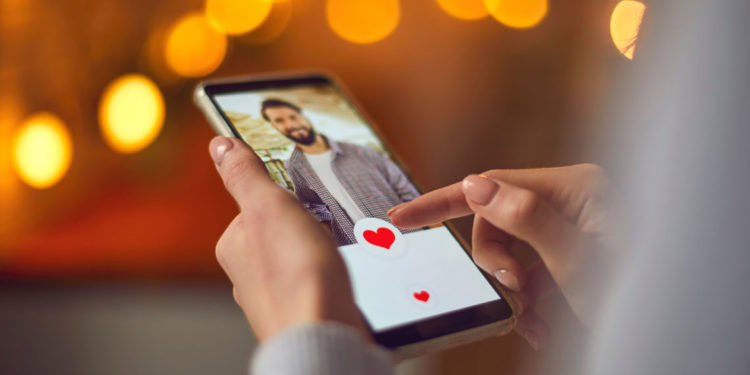

A recent study published in the journal Cyberpsychology: Journal of Psychosocial Research on Cyberspace has shed light on the various reasons why people use the popular dating application Tinder. Researchers discovered that individuals fall into distinct groups based on their personality traits and attitudes towards casual sex, and these groups differ in what they seek to gain from using the app.
The rise of dating applications like Tinder has significantly altered how people connect and form relationships. These apps offer a convenient and accessible way to meet potential partners, and Tinder, with its user-friendly swiping interface, has become one of the most widely used platforms globally. While these applications are often termed “dating” apps, many users are not solely seeking romance. People use Tinder for a variety of reasons, ranging from finding a serious relationship to seeking casual sexual encounters, boosting self-esteem, or simply out of curiosity and entertainment. Understanding these diverse motivations is important, especially when considering the personality characteristics and sexual attitudes of users.
The new study specifically examined the influence of what psychologists call the “Dark Triad” of personality traits, along with a person’s “sociosexual orientation,” on their reasons for using Tinder. The Dark Triad consists of three socially aversive personality traits: narcissism, Machiavellianism, and psychopathy. Narcissism is characterized by an inflated sense of self-importance and a need for admiration. Machiavellianism involves a manipulative and cynical approach to others, prioritizing personal gain. Psychopathy is marked by a lack of empathy, impulsive behavior, and antisocial tendencies.
More recently, researchers have expanded this concept to the “Dark Tetrad” by including sadism, which is the tendency to derive pleasure from inflicting or witnessing pain and suffering in others. These traits are considered “dark” because they are associated with negative social behaviors and outcomes.
Sociosexual orientation, on the other hand, refers to an individual’s attitudes and behaviors related to casual sex. People with an “unrestricted” sociosexual orientation are generally more open to and interested in sexual relationships that are not committed or emotionally intimate.
Researchers were interested in exploring how these personality traits and sexual attitudes might predict why people use Tinder. Previous studies have suggested that individuals with Dark Triad traits are more likely to engage in risky online behaviors and may be more inclined to use dating apps for casual sex rather than for seeking meaningful relationships. By understanding these connections, researchers hope to gain insights into the potential benefits and risks associated with dating app use, and potentially inform efforts to promote safer and more responsible online interactions.
“Our interest in this topic stems from the growing popularity of dating apps like Tinder and their impact on modern relationships,” said study author David Pineda, the director of the Forensic Psychology Unit at Miguel Hernández University of Elche. “While many studies focus on the Big Five personality traits, fewer have explored how the Dark Tetrad traits and sociosexual orientation influence users’ motives. Understanding these connections is crucial because individuals with darker traits may engage in riskier or more manipulative behaviors, which can affect both their experiences and those of others on these platforms.”
The researchers conducted an online survey with 200 participants. The average age of the participants was approximately 31 years old, and the majority (nearly 68%) were women. Participants were recruited through social media and were included in the study if they were over 18 and had used Tinder either currently or in the past. Those who were not current users were asked to reflect on their past Tinder usage.
The survey included several questionnaires designed to measure different aspects of the participants’ personality, sexual attitudes, and Tinder usage. To understand the reasons for using Tinder, the researchers used the Tinder Motives Scale. This scale includes a comprehensive list of 13 different motives for using Tinder, such as seeking romantic relationships, wanting casual sex, looking for social validation, or simply for entertainment. Because a validated Spanish version of this scale was not available, the researchers first translated and adapted the scale for use in Spanish, also creating a shorter, more efficient version of the scale as part of their study.
Participants also completed questionnaires to assess their Dark Tetrad traits and their sociosexual orientation. The Short Dark Triad scale was used to measure narcissism, Machiavellianism, and psychopathy. The Assessment of Sadistic Personality scale measured levels of sadism. Finally, the Revised Sociosexual Orientation Inventory was used to assess participants’ attitudes, desires, and behaviors related to unrestricted sex.
In addition to these standardized scales, the survey also included questions about how frequently participants used Tinder and what outcomes they had experienced, such as meeting people in person, forming romantic relationships, having sexual encounters, or making friends.
The researchers used a statistical technique called Latent Profile Analysis to identify different groups of individuals based on their scores on the Dark Tetrad traits and sociosexual orientation measures. This method helps to find patterns in data and categorize people into distinct profiles. After identifying these profiles, the researchers then compared the groups to see if they differed in their reported motives for using Tinder.
The analysis revealed three distinct profiles of Tinder users. “Our study shows that not all Tinder users are motivated by the same goals,” Pineda told PsyPost. “These insights can help users better understand the diverse motivations behind online dating.”
The first group, representing about 41% of the participants, was labeled “Non-dark and non-sociosexual.” Individuals in this profile scored relatively low on all Dark Tetrad traits and also had a less unrestricted sociosexual orientation, meaning they were less inclined towards casual sex.
The second profile, comprising approximately 39% of participants, was named “Slightly narcissistic and sociosexual.” This group showed moderate levels of Machiavellianism and psychopathy, but slightly higher levels of narcissism, and they were more open to casual sex than the first group. In fact, this group had the highest sociosexual orientation scores among the three profiles.
The third and smallest profile, making up about 20% of the sample, was called “High-dark and slightly sociosexual.” This group had the highest scores across all Dark Tetrad traits, particularly psychopathy and sadism. However, their sociosexual orientation was moderate, not as high as the “Slightly narcissistic and sociosexual” group.
When examining the reasons for using Tinder across these profiles, the study found significant differences. The “Non-dark and non-sociosexual” group, those low in dark traits and less interested in casual sex, were more motivated to use Tinder for finding romantic relationships. While all groups expressed some level of interest in romance, this was the strongest motive for this profile.
The “Slightly narcissistic and sociosexual” group, characterized by moderate narcissism and high sociosexual orientation, showed the strongest motivation to use Tinder for sexual purposes. This suggests that individuals with these traits are particularly drawn to Tinder as a platform for seeking casual sexual encounters.
Interestingly, the “High-dark and slightly sociosexual” profile, despite having the highest Dark Tetrad scores, were not primarily driven by sexual motives on Tinder. Instead, their motives were more focused on social approval, being trendy, relieving social pressure, improving social skills, and using the app for distraction or to get over a past relationship.
“One surprising finding was that individuals with the highest scores on the Dark Tetrad traits were not the most motivated by sexual encounters,” Pineda said. “Instead, those with moderate dark traits and higher sociosexuality were more likely to use Tinder for sexual purposes. This suggests that while dark traits can influence dating behaviors, sociosexuality plays a more significant role in driving sexual motivations. Additionally, the high-dark profile was more focused on gaining social approval and coping with social pressure, highlighting a more complex relationship between dark traits and online behavior.”
The researchers noted some limitations to their study. The sample size was relatively small and primarily composed of women, which may limit how broadly the findings can be applied. The study design was also cross-sectional, meaning it captured a snapshot in time and cannot determine cause-and-effect relationships. “Future studies should use larger, more diverse samples and longitudinal designs to explore how these profiles and motivations evolve over time,” Pineda said.
“We aim to further investigate how dark personality traits and sociosexual orientation interact with other psychological variables, such as impulsivity, emotional regulation, and interpersonal trust, in the context of online dating. We also plan to examine how these traits influence users’ behaviors and self-presentation on dating apps, as well as their long-term relationship outcomes. Ultimately, our goal is to provide insights that can help design awareness programs to prevent the misuse of dating apps and promote safer online interactions.”
“Our study underscores the importance of understanding the diverse motivations that drive people to use dating apps like Tinder,” Pineda added. “While these platforms offer opportunities to meet new people, they can also present risks, particularly for users who interact with individuals displaying high dark traits. By identifying different user profiles and their motives, we hope to contribute to the development of strategies that promote more informed and safer use of online dating platforms.”
The study, “Unveiling the Depths of Tinder: Decoding the Dark Tetrad and Sociosexuality in Motives Behind Online Dating,” was authored by Pilar Rico-Bordera, Manuel Galán, David Pineda, and José A. Piqueras.