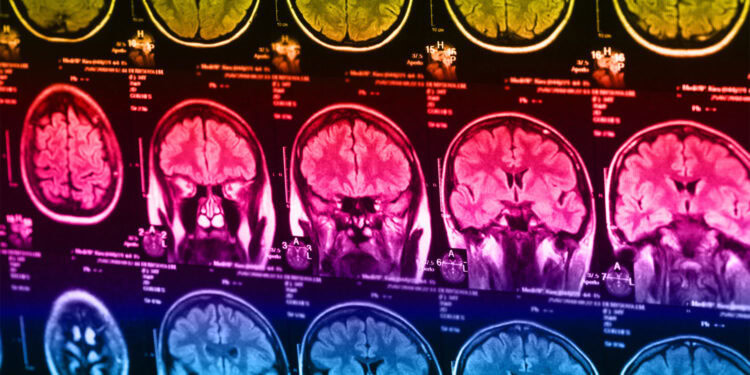

Researchers have recently uncovered new insights into how the brain’s reward system functions in individuals with posttraumatic stress disorder (PTSD) and its relationship with psychological resilience and metabolic syndrome. The study, published in Psychiatry Research: Neuroimaging, highlights distinct patterns of brain activity in areas associated with reward processing. These patterns were influenced by PTSD, depression severity, resilience, and trauma exposure. While psychological resilience appeared to positively affect reward-related brain activity, metabolic syndrome showed limited associations.
Metabolic syndrome is a cluster of health conditions that collectively increase the risk of developing cardiovascular disease, diabetes, and stroke. These conditions include high blood pressure, elevated blood sugar, abnormal cholesterol or triglyceride levels, and excess fat around the waist.
While each condition is problematic on its own, their combination amplifies the risk of serious health issues. Lifestyle factors such as poor diet, lack of physical activity, and obesity are primary contributors to metabolic syndrome, but genetic predispositions and stress also play significant roles in its development.
Individuals with PTSD are at a heightened risk for developing metabolic syndrome compared to the general population. The new study was designed to explore whether dysfunction in the brain’s reward system might serve as a shared mechanism underlying PTSD and metabolic syndrome.
“This study forms part of a neuroimaging substudy of a larger project ‘Understanding the SHARED ROOTS of Neuropsychiatric Disorders (NPDs) and Modifiable Risk Factors for Cardiovascular Disease (CVD)’ that aimed to investigate the pathways that contribute to the comorbidity of metabolic syndrome in neuropsychiatric disorders. The SHARED ROOTS study is utilizing various methodologies to investigate what factors may contribute to increased risk of cardiovascular disease in neuropsychiatric disorders,” explained study author Leigh van den Heuvel, an associate professor and psychiatrist at the Stellenbosch University Department of Psychiatry and Tygerberg Hospital
“In this study, we wanted to use functional neuroimaging (fMRI) to assess whether alterations in the reward pathway could play a role in the comorbidity of metabolic syndrome in PTSD. The reward pathway is involved in experiencing pleasure and in motivating human behaviour. Alterations in reward function have been found across mental health conditions, including in addictive behaviors, such as substance use disorders, and in disorders that include a limited ability to experience positive emotions or anhedonia, such as major depressive disorder.”
“PTSD also includes symptoms of anhedonia and studies have demonstrated that reward function is altered in individuals with PTSD. Metabolic syndrome entails a group of risk factors that increase the risk of developing cardiovascular disease, such as hypertension, diabetes, and central obesity. The behaviors that contribute to these risks, such as unhealthy diets and overeating and sedentary behaviour are also linked to altered reward function.”
“We thus wanted to build on the existing body of evidence by investigating whether reward function investigated with fMRI using a monetary incentive delay (MID) task would be altered in relation to PTSD and metabolic syndrome. To broaden our investigation and include a more positive or protective aspect, we also wanted to assess whether psychological resilience, involving stress-coping ability, would influence reward function in our sample.”
Conducted in Cape Town, South Africa, the study included 173 participants: 88 diagnosed with PTSD and 85 trauma-exposed controls who did not meet PTSD criteria. All participants were adults of mixed ancestry who had experienced some form of trauma. Researchers excluded individuals with significant medical or psychiatric comorbidities unrelated to PTSD, current substance use disorders, or contraindications for MRI scans.
Participants underwent fMRI while completing a monetary incentive delay task. This task is commonly used to assess reward system activation, as it separates the anticipation of a reward from the receipt of the reward. During the task, participants viewed visual cues signaling whether they could win money or not. They were then required to press a button quickly in response to a target, with feedback indicating whether they had succeeded in earning the reward.
The study focused on two key brain regions: the ventral striatum, which is involved in reward anticipation, and the orbitofrontal cortex, which processes reward outcomes. Psychological resilience was measured using the Connor-Davidson Resilience Scale, while PTSD severity was assessed with the Clinician-Administered PTSD Scale. Metabolic syndrome was diagnosed based on established clinical criteria, including elevated blood pressure, abnormal cholesterol or triglyceride levels, elevated blood sugar, and increased waist circumference.
The researchers observed distinct patterns of reward system activation in individuals with PTSD, influenced by the severity of depressive symptoms. Among PTSD participants with lower depression severity, activation in the ventral striatum during reward anticipation was reduced, while activation in the orbitofrontal cortex during reward outcomes was heightened.
Conversely, PTSD participants with significant depressive symptoms exhibited the opposite pattern: heightened ventral striatum activation during anticipation and diminished orbitofrontal cortex activation during reward outcomes. These findings suggest that depressive symptoms shape how PTSD affects reward system function.
Psychological resilience also played a significant role in modulating reward responses. Participants with higher resilience showed less activation in the ventral striatum during reward anticipation but greater activation in the orbitofrontal cortex during reward outcomes.
This pattern implies that resilient individuals may experience less anticipation for rewards but greater enjoyment upon receiving them. Notably, these resilience-related effects were most pronounced in participants with PTSD, highlighting its potential as a protective factor in trauma-exposed populations.
Trauma exposure influenced reward system function as well. Individuals with greater childhood trauma showed heightened orbitofrontal cortex activation during reward outcomes, particularly among those with PTSD. Meanwhile, participants with fewer types of lifetime trauma exhibited stronger reward responses overall, indicating that cumulative trauma exposure may diminish the brain’s ability to process rewards effectively.
“Our study demonstrated that reward function in the ventral striatum and orbitofrontal cortex differed between cases with PTSD and trauma-exposed controls, but only when we accounted for depression severity in our models,” van den Heuvel said told PsyPost. “We also found that PTSD cases with depression showed opposite effects to PTSD cases without depression. Depression is highly comorbid with PTSD and our results suggest that reward function may be altered in different ways in those with and without comorbid depression.”
“In our sample, PTSD cases with depression tended to demonstrate a pattern suggestive of greater anticipation of monetary reward but decreased pleasure on receipt of reward, with those without depression showing the opposite effects. We also found that those with higher psychological resilience had a pattern suggesting lower anticipation of a monetary reward and greater pleasure on receipt of the reward. This is in alignment with an observed tendency to experience greater satisfaction when least expecting a reward.
“The results pertaining to psychological resilience were more prominent in the PTSD cases than trauma-exposed controls, suggesting that in PTSD cases psychological resilience may protect against comorbid depression and that these effects may at least be partially mediated through reward circuitry.”
Regarding metabolic syndrome, the study found no significant differences in reward system activation between participants with and without the condition. However, exploratory analyses hinted at subtle effects when examining individual components of metabolic syndrome, such as obesity and elevated triglycerides. For instance, participants with higher triglyceride levels showed reduced ventral striatum activation during reward anticipation, suggesting potential links between metabolic health and reward processing.
“Our sample size may have been underpowered” to detect statistically significant effects,” van den Heuvel said. It is also possible that “the ways in which reward function is altered in relation to metabolic syndrome may be more complex” than previously thought.
In addition, the sample was limited to individuals of mixed ancestry in South Africa, which may affect the generalizability of the findings.
“The context of our study is important to take into consideration,” van den Heuvel noted. “Our study was conducted in South Africa in a sample who generally experienced significant socio-economic challenges and high rates of trauma exposure. The setting of the study could influence the study outcomes, with results differing from those demonstrated in other environments. This highlights the importance of greater diversity in geographical, environmental, and cultural representation in neuroscience research.”
Future research could explore how interventions aimed at enhancing resilience or addressing reward dysfunction might improve outcomes in PTSD. For instance, therapies like behavioral activation or mindfulness-based practices that boost positive affect and reward sensitivity could help mitigate the negative impact of trauma and depression.
“Our research emphasizes the role of positive valence systems in the expression and comorbidity of PTSD,” van den Heuvel said. “Most interventions targeting PTSD aim to decrease negative affect and our results suggest that interventions should be developed and tested that focus on enhancing reward function and positive affect in PTSD. These interventions may be particularly useful in addressing depression comorbidity in PTSD. We hope that this research can be utilized toward broadening the treatment options available in PTSD and comorbid conditions and improving patient outcomes.”
The study, “Reward functioning in posttraumatic stress disorder, metabolic syndrome, and psychological resilience,” was authored by Leigh Luella van den Heuvel, Laila Asmal, Stefan du Plessis, Chanellé Juanita Hendrikse, and Soraya Seedat.