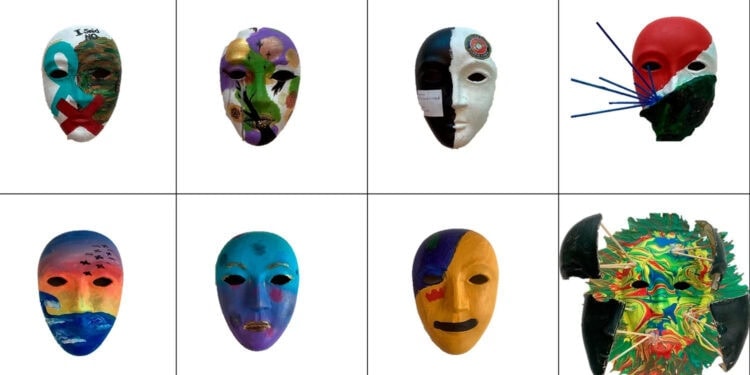

A recent study published in Scientific Reports reveals that art therapy, specifically mask-making, may reflect significant emotional changes in military personnel suffering from post-traumatic stress symptoms.
Art has long been recognized as a powerful form of non-verbal communication, capable of expressing complex emotions and experiences which may be challenging to articulate through language.
Post-traumatic stress symptoms, including irritability and aggressive behavior, affect a significant number of military service members. While medications such as antidepressants are commonly used to treat post-traumatic stress symptoms, complete remission is unlikely. Hence, finding effective interventions to address the emotional aftermath of traumatic experiences is crucial.
Researchers embarked on this study to explore whether the emotional states of military personnel with post-traumatic stress symptoms could be discerned through their art, specifically masks made during an art therapy program.
The team, led by V. Estrada Gonzalez from the University of Pennsylvania, hypothesized that the masks would show a transition from negative to positive emotional expressions as therapy progressed.
The methodology involved five service members undergoing an 8-session art therapy protocol, where they were instructed to alter masks using art materials at the beginning and end of the therapy sessions.
The 10 masks that were created were presented to 203 independent English-speaking individuals, who viewed digital images of the masks.
These viewers were unaware of the treatment details and the masks’ creation stage, and they were instructed to assess the emotions expressed through the art along 11 dimensions: angry, calm, compassionate, challenged, edified, enraptured, enlightened, interested, inspired, pleasure and upset.
Following data analysis, it was made clear that the masks created in earlier therapy sessions were associated with more negative emotions, such as feeling angry, challenged and upset.
Meanwhile, the masks created later in therapy conveyed more positive emotions including increased feelings of calmness and pleasure. The authors suggest this reflects an emotional transition experienced by the participants.
Gonzalez and team concluded, “Our findings support the usefulness of art therapy within the array of treatment options for post-traumatic stress symptoms. As one of relatively few non-verbal approaches available, art therapy holds particular significance for patients who struggle with verbal expression of their trauma. By highlighting positive outcomes, our study advocates for a broader, more versatile therapeutic approach that accommodates the needs of patients who may find treatments based on verbal communication challenging.”
However, the findings are limited by the small sample of artwork. Furthermore, the progress of patients receiving therapy was not reported, and therefore clinical improvement cannot be correlated directly with art therapy.
The study, “Art therapy masks reflect emotional changes in military personnel with PTSS”, was authored by V. Estrada Gonzalez, V. Meletaki, M. Walker, J. Payano Sosa, A. Stamper, R. Srikanchana, J. L. King, K. Scott, E. R. Cardillo, C. Sours Rhodes, A. P. Christensen, K. M. Darda, C. I. Workman, and A. Chatterjee.