Subscribe
The latest psychology and neuroscience discoveries.
My Account
  • Mental Health
  • Social Psychology
  • Cognitive Science
  • Neuroscience
  • About
No Result
View All Result
PsyPost
PsyPost
No Result
View All Result
Home Exclusive Psychopharmacology Cannabis

The link between cannabis use and psychotic-like experiences is largely the result of genetic factors

by Eric W. Dolan
November 18, 2018
in Cannabis, Psychopharmacology
(Photo credit: Kirsty Pargeter)

(Photo credit: Kirsty Pargeter)

Share on TwitterShare on Facebook

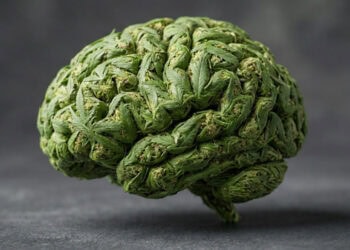
Studies have found an association between cannabis use and transient psychotic symptoms, such as unusual thoughts, suspiciousness, and hallucinatory experiences. A new study suggests that this relationship is mostly attributable to genetic predisposition.

But the research, which appears in JAMA Psychiatry, found that person-specific factors also influence the association between psychotic-like experiences and cannabis use to a lesser extent.

“I initially became interested in this topic as a result of trying to understand factors associated with the development of psychotic-like experiences (i.e., sub-clinical odd beliefs or perceptual distortions),” said study author Nicole R. Karcher of the Washington University School of Medicine in St Louis.

“It is very important to understand who is at risk for the development of psychotic-like experiences, what role marijuana use plays in the development of psychotic-like experiences, and to what extent this relationship is the result of genetics versus environmental factors.”

The researchers analyzed data from the Human Connectome Project and the Australian Twin Registry Cohort 3. The data allowed them to compare 4,674 individuals, including 758 pairs of monozygotic twins, 780 pairs of dizygotic twins, and 195 same-sex sibling pairs with no more than 2 years’ age difference.

Karcher and her colleagues found that cannabis use was positively associated with psychotic-like experiences, even after controlling for a number of demographic variables and other substance use measures. But genetic factors accounted for 69.2% to 84.1% of the association.

“The study indicates that the relationship between psychotic-like experiences and marijuana use is largely the result of shared genetics,” she explained to PsyPost.

“However, there is a person-specific environmental component. This person-specific component was due to siblings who smoked more marijuana reporting greater psychotic-like experiences compared to siblings who reported smoking less marijuana. Overall, the results suggest that cannabis use prevention may be an important tool in preventing worsening of PLEs in individuals at increased genetic liability to PLEs and cannabis use,” Karcher continued.

Google News Preferences Add PsyPost to your preferred sources

The study — like all research — contains some limitations. The data was cross-sectional, meaning the researchers could not determine the direction of causality.

“Limitations of the study include that we could not directly address the issue of whether smoking more marijuana causes greater psychotic-like experiences (or whether it is actually the reverse — psychotic-like experiences lead to greater marijuana use),” Karcher explained.

“Also, future research should examine the relationship between psychotic-like experiences and different varieties and components of marijuana, including whether synthetic marijuana is associated with psychotic-like experiences versus whether cannabidiol (CBD) is associated with evidence of reduced risk for psychotic-like experiences.”

The study, “Genetic Predisposition vs Individual-Specific Processes in the Association Between Psychotic-like Experiences and Cannabis Use“, was authored by Nicole R. Karcher, Deanna M. Barch, Catherine H. Demers, David A. A. Baranger, Andrew C. Heath, Michael T. Lynskey, and Arpana Agrawal.


Previous Post

Study suggests brain reward response plays an important role in anorexia nervosa

Next Post

Study suggests Black women are more sexually objectified than White women

RELATED

A popular weight loss drug shows promise for treating alcohol addiction
Addiction

A popular weight loss drug shows promise for treating alcohol addiction

February 21, 2026
Brain imaging study finds large sex-differences in regions tied to mental health
Addiction

Neural signatures of impulsivity and neuroticism are largely distinct in youth

February 19, 2026
Psychologists developed a 20-minute tool to help people reframe their depression as a source of strength
Psychedelic Drugs

Ibogaine appears to trigger an accelerated “auto-psychotherapy” process during PTSD treatment

February 18, 2026
High school IQ predicts alcohol use patterns in midlife, study finds
Alcohol

Alcohol drinking habits predict long-term anxiety differently across age groups

February 17, 2026
Surprising new research links LSD-induced brain entropy to seizure protection
LSD

Surprising new research links LSD-induced brain entropy to seizure protection

February 17, 2026
Cannabis use associated with better decision-making skills in people with bipolar disorder
Psilocybin

Low-dose psilocybin reduces weight gain and hyperglycemia in mice fed obesogenic diet

February 16, 2026
Cannabis use associated with better decision-making skills in people with bipolar disorder
Cannabis

Cannabis use associated with better decision-making skills in people with bipolar disorder

February 16, 2026
Scientists find age-related links between beverage choices and mental health risks
Cognitive Science

Daily soda consumption linked to cognitive difficulties in teens

February 15, 2026

STAY CONNECTED

LATEST

Shingles vaccine linked to slower biological aging, but brain markers show no change

The presence of robot eyes affects perception of mind

Psychological capital mitigates the impact of interpersonal sensitivity on anxiety in future nurses

Men and women tend to read sexual assault victims’ emotions differently, study finds

Researchers discovered a surprising link between ignored hostility and crime

A popular weight loss drug shows promise for treating alcohol addiction

How unemployment changes the way people dream

Girls rarely experience the “friend zone,” psychology study finds

PsyPost is a psychology and neuroscience news website dedicated to reporting the latest research on human behavior, cognition, and society. (READ MORE...)

  • Mental Health
  • Neuroimaging
  • Personality Psychology
  • Social Psychology
  • Artificial Intelligence
  • Cognitive Science
  • Psychopharmacology
  • Contact us
  • Disclaimer
  • Privacy policy
  • Terms and conditions
  • Do not sell my personal information

(c) PsyPost Media Inc

Welcome Back!

Login to your account below

Forgotten Password?

Retrieve your password

Please enter your username or email address to reset your password.

Log In

Add New Playlist

Subscribe
  • My Account
  • Cognitive Science Research
  • Mental Health Research
  • Social Psychology Research
  • Drug Research
  • Relationship Research
  • About PsyPost
  • Contact
  • Privacy Policy

(c) PsyPost Media Inc