The psychologist David Lykken once wrote that most violent crime could be prevented by cryogenically freezing all males aged 12 to 28. Although this option might be appealing at times for high school teachers and parents of teenage boys, it has some fairly obvious problems. For one thing, 28-year-old men might react violently, after thawing out, when they realise they’ve been cheated of their youth.
More seriously, the cryogenic solution misses the point that a small minority of men commit the great majority of violent crime. Many of these men meet the diagnostic criteria for antisocial personality disorder. People with this condition have a history of impulsive aggression, risk-taking and irresponsibility that extends back into childhood.
Even within this small group of violence-prone men there is an important minority. Some are psychopaths and some are not. Compared to other antisocial people, psychopaths lack empathy, behave callously and manipulatively towards others, and have difficulty recognising emotional displays. Their aggression is more premeditated and instrumental, calculated to achieve a goal, rather than reactive to provocation. Their offending is more versatile, starts at an earlier age and is harder to rehabilitate.
Psychologists and psychiatrists have long tried to understand the roots of psychopathy, proposing an assortment of moral or emotional deficits to account for the psychopath’s callousness. To explain their impulsiveness, researchers argue that psychopaths lack anxiety, foresight or self-control. These deficiencies leave them unconcerned about the future consequences of their behaviour or unable to restrain their urges.
These explanations are attempts to make sense of psychopaths’ puzzling failure to learn from experience. The popular imagination is now saturated with successful psychopaths – expensively dressed office tyrants, fiendish ex-boyfriends, slick criminals who outwit thick cops – but most repeatedly make foolish decisions and suffer the predictable consequences. Life, often in the form of the criminal justice system, continues to punish them for their misbehaviour, but they fail to learn its lessons.
As psychiatrist Hervey Cleckley, an early authority on psychopathy, wrote, the psychopath’s “execrable judgement is not particularly modified by experience, however chastening his experiences may be”.
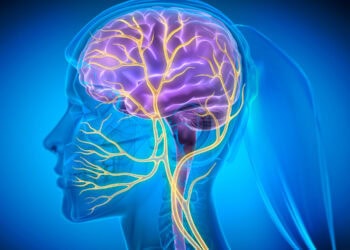
Research published this week in The Lancet – Psychiatry uses neuro-imaging in an attempt to clarify why psychopaths fail to learn from punishment. The researchers recruited a sample of 32 men with antisocial personality disorder who had committed murder, rape, attempted murder or grievous bodily harm. Twelve were assessed as high in psychopathic traits and 20 as lower. The researchers also studied 18 non-offender men.
All 50 men completed a “response reversal task” inside an MRI scanner while researchers recorded their brain activity. Participants first viewed multiple pairs of images, choosing one image each time and winning or losing points for correct and incorrect choices. The correct choices were then changed unexpectedly so that previously rewarded choices were punished and vice versa.
This task offers an experimental analogue of life’s slings and arrows. It also provides a measure of the ability to deal with them in a flexible, adaptive manner. Failure to adapt following the unexpected reversal might reflect the psychopath’s difficulty learning from experience. Indeed, people with damage to the frontal regions of the brain, who have been described as having “acquired sociopathy”, experience difficulties with the task.
The psychopathic men actually made no more errors on the task than the other groups either before the reversal (which would suggest inferior learning of the correct choices) or after (which would imply inferior unlearning of them).
However, their neural responses to post-reversal errors differed. Compared to the non-psychopathic offenders, the psychopaths showed a stronger response in some brain regions when they were punished for these mistakes. These regions are involved in avoiding negative outcomes and responding to unexpected change. Non-psychopathic offenders and non-offenders did not differ in their brain activation patterns.
These findings suggest that psychopaths respond abnormally to prediction errors, where they expect reward but receive punishment. Contrary to the view that they are cold as stone, insensitive to punishment and untroubled by it, the findings imply the opposite. The psychopaths appeared more bothered and bewildered to be losing points for choices that had previously been winners, rather than coolly accepting that things had changed.
This work adds to the growing evidence that there is something anomalous about how psychopaths process reward and punishment.
However, it also shares some common limitations of neuro-imaging research. Samples are small and the task presents a pale imitation of real-world punishment.
There is also ambiguity about what the brain activation patterns mean. Does the stronger activation among psychopaths imply greater reaction to prediction errors or a dysfunctional network operating inefficiently?
The researchers suggest that their findings might help prevent and treat psychopathy, but offer no concrete proposals about how that might be achieved. One of the challenges of neuroscientific work of this kind is that the distance from brain dysfunction to psychological treatment and social policy is large.
Whether the heart of the psychopath can be unfrozen remains to be seen.

By Nick Haslam, University of Melbourne
This article was originally published on The Conversation.
Read the original article.