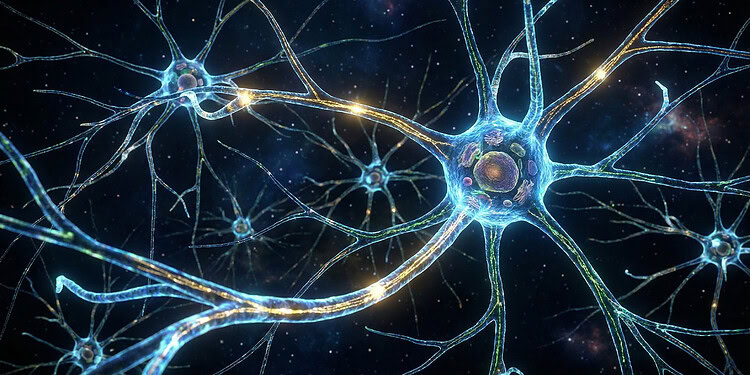
A new study has identified specific cellular machinery that helps brain cells dispose of toxic proteins associated with Alzheimer’s disease. By screening thousands of genes in lab-grown human neurons, researchers discovered a protein complex that acts as a disposal system and a separate mechanism linking cellular stress to the formation of harmful protein fragments. These findings, published in the journal Cell, offer potential new targets for treating neurodegenerative conditions.
The protein tau normally functions to stabilize the internal skeleton of nerve cells. In diseases such as Alzheimer’s and frontotemporal dementia, this protein collapses into sticky clumps that injure and eventually kill the cell. This process does not affect all neurons equally, as some brain cells succumb quickly while their neighbors survive for years. Understanding the molecular differences between these vulnerable and resilient cells is a primary goal for neuroscientists.
Avi Samelson, an assistant professor of Neurology at UCLA Health, led this investigation while working at the University of California, San Francisco. He collaborated with a team including senior author Martin Kampmann. They sought to uncover the genetic instructions that determine whether a neuron clears tau away or allows it to accumulate.
“We wanted to understand why some neurons are vulnerable to tau accumulation while others are more resilient,” says Samelson. “By systematically screening nearly every gene in the human genome, we found both expected pathways and completely unexpected ones that control tau levels in neurons.”
The research team began by creating human neurons from induced pluripotent stem cells. These cells were engineered to carry a genetic mutation known to cause a hereditary form of dementia, ensuring the cells would naturally develop tau abnormalities. The team then employed a gene-editing technology called CRISPR interference. This tool allowed them to systematically switch off roughly 20,000 genes, one at a time, to observe which ones influenced tau levels.
This exhaustive screening process identified a protein complex involving the gene CUL5 as a primary regulator of tau. The researchers found that this complex functions as a tagging system. It attaches a molecular label called ubiquitin to specific sections of the tau protein.
The attachment of ubiquitin serves as a signal to the cell’s waste disposal machinery. This machinery, known as the proteasome, recognizes the tag and destroys the marked tau protein. The study revealed that CUL5 works in tandem with an adaptor protein called SOCS4 to physically grab the tau molecule.
To verify the relevance of this finding to human health, the team analyzed data from donated human brain tissue. They examined gene expression patterns in neurons from patients who had died with Alzheimer’s disease. A distinct pattern emerged regarding this disposal system.
Neurons from patients with Alzheimer’s disease that expressed higher levels of CUL5 were more likely to survive the disease process. This correlation suggests that a robust disposal system may protect specific brain cells from degeneration. Cells with lower levels of these components appeared to be more vulnerable to death.
The study also revealed a connection between the cell’s energy production and tau toxicity. The initial screen indicated that genes involved in mitochondrial function were necessary for keeping tau levels in check. Mitochondria are the power plants of the cell, and their failure often leads to cellular stress.
When the researchers inhibited the mitochondria in their lab-grown neurons, the cells experienced a rise in reactive oxygen species. These are unstable molecules that can damage cellular components. This state of oxidative stress impaired the function of the proteasome.
Instead of fully degrading tau, the malfunctioning disposal machinery only partially processed the protein. This resulted in the production of a specific tau fragment approximately 25 kilodaltons in size. This fragment was not randomly generated but appeared consistently when the cells were under stress.
“This tau fragment appears to be generated when cells experience oxidative stress, which is common in aging and neurodegeneration,” says Samelson. “We found that this stress reduces the efficiency of the proteasome, the cell’s protein recycling machine, causing it to improperly process tau.”
This specific fragment appears to be biologically active. It resembles a biomarker found in the spinal fluid of Alzheimer’s patients, suggesting it might be released from stressed neurons into the surrounding fluid. The researchers confirmed that the stressed neurons secreted this fragment into their culture media.
Experiments in test tubes showed that the presence of this fragment altered how other tau proteins bonded together. The fragment caused tau to form straighter, stiffer structures compared to the tangles typically seen in disease. This suggests that the fragment is not merely a byproduct but an active participant in the aggregation process.
The discovery highlights the duality of the proteasome’s role. Under normal conditions, aided by CUL5, it helps clear tau and maintain cell health. Under stress, however, it can malfunction and produce fragments that may worsen the disease.
The findings provide a potential explanation for why aging is the biggest risk factor for neurodegeneration. As we age, mitochondrial function often declines, and oxidative stress increases. This environment could promote the generation of these toxic fragments over time.
There are limitations to the current findings that must be considered. The neurons used in these experiments were grown in a dish and resemble fetal brain cells more than the mature cells found in an aging adult brain. They also lack the complex environment of a living brain, which includes support cells and blood vessels.
Additionally, the study relied on antibodies to detect tau clumps. These tools do not always provide a complete picture of the protein’s three-dimensional shape. The researchers focused on specific types of tau aggregates, and other forms may interact differently with the CUL5 system.
Future work will need to determine if these mechanisms operate similarly in animal models of dementia. Samelson and his colleagues aim to explore whether enhancing the CUL5 system could serve as a therapeutic strategy. They are also investigating ways to protect the proteasome from oxidative stress to prevent the formation of toxic fragments.
“What makes this study particularly valuable is that we used human neurons carrying an actual disease-causing mutation,” says Samelson. “These cells naturally have differences in tau processing, giving us confidence that the mechanisms we identified are relevant to human disease.”
This research underscores the complexity of protein quality control in the brain. It suggests that reinforcing the brain’s natural ability to tag and clear proteins could offer a new avenue for medicine. Simultaneously, protecting the energy systems of the cell might prevent the creation of seeds that start the aggregation process.
The study, “CRISPR screens in iPSC-derived neurons reveal principles of tau proteostasis,” was authored by Avi J. Samelson, Nabeela Ariqat, Justin McKetney, Gita Rohanitazangi, Celeste Parra Bravo, Rudra S. Bose, Kyle J. Travaglini, Victor L. Lam, Darrin Goodness, Thomas Ta, Gary Dixon, Emily Marzette, Julianne Jin, Ruilin Tian, Eric Tse, Romany Abskharon, Henry S. Pan, Emma C. Carroll, Rosalie E. Lawrence, Jason E. Gestwicki, Jessica E. Rexach, David S. Eisenberg, Nicholas M. Kanaan, Daniel R. Southworth, John D. Gross, Li Gan, Danielle L. Swaney, and Martin Kampmann.