PsyPost
  • Mental Health
  • Social Psychology
  • Cognitive Science
  • Neuroscience
  • About
No Result
View All Result
Join
My Account
PsyPost
No Result
View All Result
Home Exclusive Psychopharmacology

Neuroscience study uncovers psilocybin-induced changes in brain connectivity

by Eric W. Dolan
January 20, 2020
Reading Time: 2 mins read
Share on TwitterShare on Facebook

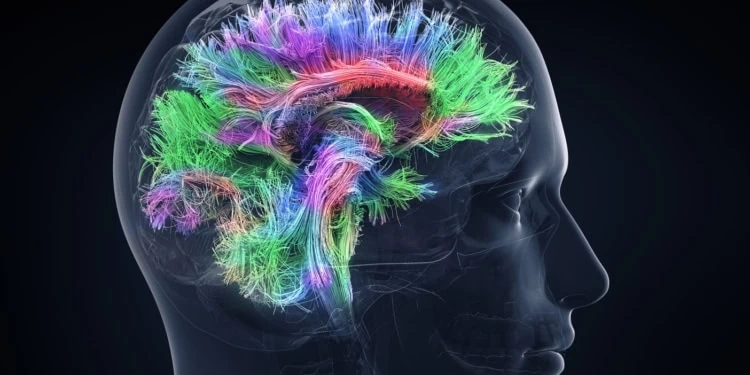
New research published in Biological Psychology sheds light on the neurophysiological underpinnings of the psychedelic experience. The study provides new details about how psilocybin — the active component in “magic” mushrooms — changes the communication patterns between regions of the brain.

“Psychedelics are currently being investigated for the treatment of psychiatric disorders. However, it is still unclear how they change brain activity and connectivity to induce their unique effects,” explained study author Katrin Preller of the University of Zurich and Yale University.

“We therefore conducted a study to investigate the time-dependent effects of psilocybin on brain connectivity and the association between changes in brain connectivity and receptor pharmacology.”

In the study, 23 healthy human participants underwent MRI brain scanning 20 minutes, 40 minutes, and 70 minutes after receiving either psilocybin or a placebo. The researchers observed reduced connectivity between brain areas involved in planning and decision-making but increased connectivity between areas involved in sensation and movement while the participants were under the influence of the psychedelic drug.

Preller and her colleagues conducted a similar study on LSD, and obtained “virtually identical” results.

“Psilocybin – similar to LSD – induced a pattern of brain connectivity that is characterized by increased synchronization of sensory brain regions and decreased connectivity of associative networks,” she told PsyPost.

“Increased sensory processing but altered integration of this sensory information may therefore underlie the psychedelic state and explain the symptoms induced by psilocybin. Furthermore, this pattern of changes in connectivity was closely associated with spatial expression of the serotonin 2A and 1A receptors – pinpointing these receptors as critical for the effects of psilocybin.”

Another drug called ketanserin, a serotonin 2A antagonist, prevented the effects of both psilocybin and LSD, suggesting that changes in brain connectivity caused by these psychedelic drugs are linked to stimulation of the serotonin 2A receptor.

Google News Preferences Add PsyPost to your preferred sources

“In this study we investigated different time points from administration to subjective peak effects. Future studies need to investigate how psilocybin impacts brain connectivity during a later phase and post-acutely,” Preller noted.

The study, “Psilocybin induces time-dependent changes in global functional connectivity“, was authored by Katrin H. Preller, Patricia Duerler, Joshua B. Burt, Jie Lisa Ji, Brendan Adkinson, Philipp Stämpfli, Erich Seifritz, Grega Repovs, John H. Krystal, John D. Murray, Alan Anticevic, and Franz X. Vollenweider.

TweetSendScanShareSendPin24ShareShareShareShareShare

Follow PsyPost

The latest research, however you prefer to read it.

Daily newsletter

One email a day. The newest research, nothing else.

Google News

Get PsyPost stories in your Google News feed.

Add PsyPost to Google News
RSS feed

Use your favorite reader.

Copy RSS URL
Social media
Support independent science journalism

Ad-free reading, full archives, and weekly deep dives for members.

Become a member

Trending

  • Kids’ aggression appears to shape parents’ discipline more than the reverse, study finds
  • One in three teen boys follows Andrew Tate at least a little, and those who do hold more rigid views of manhood
  • Neuroscientists uncover brain clues to why some people with childhood trauma struggle to look forward to things
  • How chronic drinking masks the brain’s hidden scars from childhood trauma
  • A bigger paycheck tends to come with personality changes, according to a large-scale analysis of psychology research

Science of Money

  • Does remote work increase birth rates? Census data points to the opposite
  • France cut the workweek to 35 hours to boost hiring, but new research suggests it failed
  • The hidden psychology behind pro-company misconduct
  • Feeling buried in debt hurts living standards more than the actual math
  • California’s proposed billionaire tax could cost the state billions more than it raises

Recent

  • People with psychosis and a history of aggression are more likely to mistake negative emotions for positive ones
  • Expecting to lose economic standing hurts well-being more than expecting to gain helps it
  • Breast reduction surgery is linked to improved sexual function
  • Emotional struggles are linked to vulnerable narcissism but not grandiose narcissism, meta-analysis finds
  • The psychology behind Taylor Swift’s billion-dollar media empire
  • Psychopathy scores run a bit higher among Americans still living in their home state, study finds
  • Psychologists showed extreme metal fans a series of disgusting images, and their reactions stood out
  • American Catholics reported a greater sense of meaning in life after Pope Leo XIV’s election, study finds
  • When politicians echo white replacement theory, extremist activity rises
  • College-educated people aren’t Big Tech’s biggest fans. They’re its most conflicted, study suggests

PsyPost is a psychology and neuroscience news website dedicated to reporting the latest research on human behavior, cognition, and society. (READ MORE...)

  • Mental Health
  • Neuroimaging
  • Personality Psychology
  • Social Psychology
  • Artificial Intelligence
  • Cognitive Science
  • Psychopharmacology
  • Contact us
  • Disclaimer
  • Privacy policy
  • Terms and conditions

(c) PsyPost Media Inc

Welcome Back!

Login to your account below

Forgotten Password?

Retrieve your password

Please enter your username or email address to reset your password.

Log In

Add New Playlist

Subscribe
  • My Account
  • Cognitive Science Research
  • Mental Health Research
  • Social Psychology Research
  • Drug Research
  • Relationship Research
  • About PsyPost
  • Contact
  • Privacy Policy

(c) PsyPost Media Inc