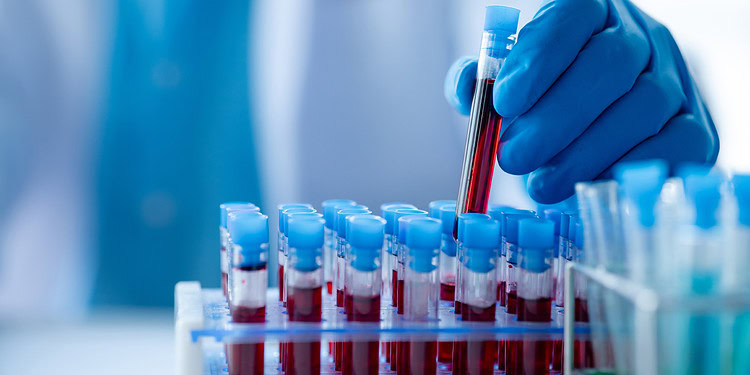
Major depressive disorder is often treated through trial and error, but a blood test may soon help doctors choose the right medication on the first try. Researchers have identified a circular RNA molecule in the blood that predicts whether a patient will respond to a common class of antidepressants. The findings were published in Molecular Psychiatry.
Millions of people globally experience major depressive disorder. Doctors frequently prescribe selective serotonin reuptake inhibitors, commonly known as SSRIs, as a first line of medical defense. These drugs block the reabsorption of serotonin in the brain, leaving more of the chemical available to help transmit messages between nerve cells.
Less than half of patients experience relief from their symptoms after trying their first prescribed antidepressant. This forces patients to spend months trying different medications before finding one that works. The prolonged wait imposes a heavy burden on individuals and adds substantial costs to the healthcare system.
Medical professionals currently lack biological tests to predict which drug will work for a specific person. Genetic tests exist to show how fast a person’s body might metabolize a drug. They cannot, however, forecast if the drug will actually relieve depression symptoms.
To find a better biological indicator, a team of researchers investigated circular RNAs. These are stable, loop-shaped genetic molecules that influence how other genes operate. Because they lack exposed ends, they resist degrading enzymes in the body, giving them a much longer lifespan than standard linear RNA molecules.
Circular RNAs are highly concentrated in the brain and help regulate how neurons connect and communicate. Some of these molecules can pass through the blood-brain barrier, the semi-permeable membrane that separates circulating blood from brain fluid. Because they leak into the bloodstream in a stable form, researchers can detect brain-derived circular RNAs using a standard blood draw.
The investigation was led by scientists Grigorios Papageorgiou, Eleni T. Tzavara, and Nikolaos Mellios of Circular Genomics and various research institutes in the United States and France, along with Madhukar H. Trivedi at the University of Texas Southwestern Medical Center. They focused on a specific circular RNA called CDR1as. This molecule is highly abundant in the brain but rarely found in other human tissues.
The researchers first analyzed baseline blood samples from patients enrolled in two independent clinical trials. They extracted RNA from the blood of patients diagnosed with major depressive disorder who were about to begin taking the SSRI sertraline. Using a technique that amplifies genetic material, the team measured the starting levels of CDR1as for each patient.
The team found that patients who did not respond to sertraline after eight weeks of treatment had notably higher baseline levels of CDR1as in their blood. Patients who experienced symptom relief had lower starting levels of the molecule. The researchers observed that unaffected control subjects also showed lower baseline levels of the molecule.
Taking advantage of the clinical trial design, the researchers also measured the patients’ blood at different intervals after they started taking sertraline. They discovered that patients who responded well to the drug experienced an increase in CDR1as levels after treatment began. Patients who did not respond to the medication saw no such increase in the molecule’s concentration.
To test if this molecule simply predicts general improvement rather than specific drug responses, the researchers looked at other treatment groups. They measured baseline blood levels in patients who were given a placebo pill. They also evaluated patients who failed to respond to sertraline and were subsequently switched to bupropion, a different type of antidepressant.
Baseline levels of CDR1as did not predict whether a patient would feel better on a placebo. The molecule also failed to predict if a patient would go on to experience remission while taking bupropion. This suggested the biomarker is specifically tied to the mechanisms of sertraline.
The research team then wanted to know if this predictive power applied to the entire SSRI drug class. They examined blood samples from patients in other clinical programs who were taking fluoxetine, citalopram, or escitalopram. They also analyzed samples from a small study of patients taking alternative medications like serotonin and norepinephrine reuptake inhibitors.
The researchers observed that CDR1as levels successfully identified patients who were faring well on various SSRIs, not just sertraline. When evaluating patients taking other classes of antidepressants, the molecule’s levels did not predict symptom relief. This pointed to a specific relationship between the circular RNA and SSRI medications as a whole.
To understand exactly how the brain produces this circular RNA, the team conducted experiments on mice. They administered different chemical compounds to the animals to block specific brain receptors. They then extracted brain tissue to measure changes in Cdr1as, the mouse equivalent of the human molecule.
When the researchers blocked the serotonin 5-HT2A receptor, levels of the circular RNA dropped across three different regions of the mouse brain. Blocking dopamine or glutamate receptors did not produce a similar drop in the molecule. This established a direct link between serotonin system activity and the production of the circular RNA.
The investigators conducted a final set of experiments on lab-grown human and mouse nerve cells. They treated the cells with chemicals that inhibit brain-derived neurotrophic factor, a protein that promotes the survival and growth of neurons. Inhibiting this protein’s receptors caused the cells to produce less of the circular RNA.
The researchers noted that certain medical conditions could interfere with the accuracy of this blood test. For instance, the test performed poorly in depressed patients who had a family history of mania, which is often a sign of undiagnosed bipolar disorder. When the researchers excluded these patients from their analysis, the test’s predictive accuracy improved.
Medical events that disrupt the blood-brain barrier might also artificially alter the amount of circular RNA in the bloodstream. Severe head trauma or strokes could potentially cause these brain molecules to leak into the blood at abnormal rates. Future research will need to verify how such physical injuries influence the test results.
The study authors noted that high baseline levels of the molecule correlated with specific depression symptoms like anhedonia and social withdrawal. These symptoms are often associated with a subtype of depression that is historically harder to treat with SSRIs. Further studies will need to explore exactly how this biological marker overlaps with different clinical subtypes of the disorder.
The study, “A brain-enriched circRNA blood biomarker can predict response to SSRI antidepressants,” was authored by Grigorios Papageorgiou, El Chérif Ibrahim, Victor Gorgievski, Gabriella Maxson, Evelyn Lozano, Eric Gordon, Antoine Lefrere, Marie-Julie Toupet, Philippe Courtet, Raoul Belzeaux, Jane Foster, Thomas Carmody, Roy H. Perlis, Madhukar H. Trivedi, Eleni T. Tzavara, and Nikolaos Mellios.
