Subscribe
The latest psychology and neuroscience discoveries.
My Account
  • Mental Health
  • Social Psychology
  • Cognitive Science
  • Neuroscience
  • About
No Result
View All Result
PsyPost
PsyPost
No Result
View All Result
Home Exclusive Mental Health

Brain changes related to religion and spirituality could confer resilience to depression

by Eric W. Dolan
February 3, 2019
in Mental Health, Psychology of Religion
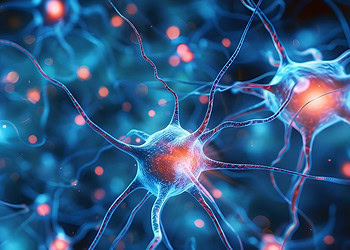
(Photo credit: phonlamaiphoto)

(Photo credit: phonlamaiphoto)

Share on TwitterShare on Facebook

New research published in Brain and Behavior provides evidence that religious and spiritual beliefs lower the risk of depression because they’re associated with changes in white matter microstructure, the communication pathways of the brain.

“A previous study found that persons who said that religion or spirituality were highly important to them were protected against depression over 5 years, even though they were at high risk because of their family history. Because of these findings, we tried to understand what may be going on in the brain that would have this effect,” said study author Dongrong Xu of Columbia University and the New York State Psychiatry Institute.

Another study, published in 2014, found that belief in the importance of religion or spirituality was associated with thicker cortices in several brain regions, including the left and right parietal and occipital regions, which could confer resilience to depression.

In their new study, the researchers used diffusion tensor imaging to examine the brain microstructure of 99 participants. Diffusion tensor imaging is an MRI-based neuroimaging method that allows for the visualization of white matter tracts within the brain.

Xu and his colleagues found that the brains of those with high familial risk for depression more closely resembled the brains of those with low familial risk for depression when they reported that religion or spirituality was highly important.

“Our findings suggest that the reported high importance of [religion or spirituality] beliefs may have effects on white matter integrity in the bilateral frontal lobe, temporal lobe, and parietal lobe, particularly the bilateral precuneus. While these regions are also associated with risk of developing [depression], reorganization of white matter through [religion or spirituality] may help protect individuals from going on to develop the illness,” the researchers wrote in their study.

“In summary, individuals at high familial risk for depression typically share a neural signature that is similar to the one that can be found in those at low familial risk, as long as they take [religion or spirituality] beliefs as highly important.”

But the study — like all research — includes some caveats.

Google News Preferences Add PsyPost to your preferred sources

“People’s religious beliefs may change over the time of lifespan. This study was based on the religiosity and spirituality measure across only about 5 years,” Xu explained.

“Future studies may want to use samples with more stable measures across a longer time period to validate our findings. Of course, all results require replication.”

The study, “A diffusion tensor imaging study of brain microstructural changes related to religion and spirituality in families at high risk for depression“, was authored by Xuzhou Li, Myrna Weissman, Ardesheer Talati, Connie Svob, Priya Wickramaratne, Jonathan Posner, and Dongrong Xu.


Previous Post

LSD allows more information to flood into the brain by altering activity in the thalamus

Next Post

Addiction to social networking sites linked to romantic disengagement and infidelity-related behaviors

RELATED

The surprising relationship between vaccinations and Alzheimer’s disease
Dementia

Shingles vaccine linked to slower biological aging, but brain markers show no change

February 21, 2026
Asian workers hit hard by job losses, wage cuts as anti-Asian sentiment rose under Trump, new study shows
Anxiety

Psychological capital mitigates the impact of interpersonal sensitivity on anxiety in future nurses

February 21, 2026
A popular weight loss drug shows promise for treating alcohol addiction
Addiction

A popular weight loss drug shows promise for treating alcohol addiction

February 21, 2026
Incels misperceive societal views, overestimating blame and underestimating sympathy
Depression

Persistent depression linked to resistance in processing positive information about treatment

February 20, 2026
Shifting genetic tides: How early language skills forecast ADHD and literacy outcomes
Depression

Genetic analysis reveals shared biology between testosterone and depression

February 20, 2026
Emotionally intelligent women use more emojis when communicating with friends
Business

New study sheds light on the psychological burden of having a massive social media audience

February 20, 2026
A healthy lifestyle predicts heightened sexual satisfaction nine years later
Mental Health

Moving in boosts happiness for older couples, but marriage adds no extra spark

February 19, 2026
Alcohol use disorder may exacerbate Alzheimer’s disease through shared genetic pathways
Alzheimer's Disease

Scientists discover a liver-to-brain signal that mimics exercise benefits

February 19, 2026

STAY CONNECTED

LATEST

Shingles vaccine linked to slower biological aging, but brain markers show no change

The presence of robot eyes affects perception of mind

Psychological capital mitigates the impact of interpersonal sensitivity on anxiety in future nurses

Men and women tend to read sexual assault victims’ emotions differently, study finds

Researchers discovered a surprising link between ignored hostility and crime

A popular weight loss drug shows promise for treating alcohol addiction

How unemployment changes the way people dream

Girls rarely experience the “friend zone,” psychology study finds

PsyPost is a psychology and neuroscience news website dedicated to reporting the latest research on human behavior, cognition, and society. (READ MORE...)

  • Mental Health
  • Neuroimaging
  • Personality Psychology
  • Social Psychology
  • Artificial Intelligence
  • Cognitive Science
  • Psychopharmacology
  • Contact us
  • Disclaimer
  • Privacy policy
  • Terms and conditions
  • Do not sell my personal information

(c) PsyPost Media Inc

Welcome Back!

Login to your account below

Forgotten Password?

Retrieve your password

Please enter your username or email address to reset your password.

Log In

Add New Playlist

Subscribe
  • My Account
  • Cognitive Science Research
  • Mental Health Research
  • Social Psychology Research
  • Drug Research
  • Relationship Research
  • About PsyPost
  • Contact
  • Privacy Policy

(c) PsyPost Media Inc