A neuroimaging study has revealed differences in brain activity between cannabis users and nonusers during cognitive tasks that involve switching behavior based on changing task requirements. Cannabis users exhibited weaker neural responses during these switches compared to nonusers, although both groups performed equally well on the tasks. This research was published in the Journal of Psychopharmacology.
Cannabis is one of the most widely used recreational drugs in the U.S., second only to alcohol and nicotine. Recent statistics show that approximately 19% of Americans, or 52.5 million people, used cannabis in 2021, up from 13% in 2014. This increase likely reflects more positive attitudes toward cannabis use over the years.
Despite its growing popularity, scientific studies suggest that cannabis may negatively impact higher-order cognitive processes. These detrimental effects can occur both immediately after consumption and in long-term users, regardless of whether they are currently under the influence.
One cognitive ability thought to be impaired by cannabis use is cognitive flexibility. Cognitive flexibility is the ability to selectively switch behaviors on a change in stimulus or environmental demands. This ability to change behavior based on changing conditions in the environment is something people generally need in their everyday lives. Due to this, decreased cognitive flexibility makes individuals less able to adapt to their environment impairing their overall functioning.
Study lead author Kellen M. McDonald and her team aimed to investigate the impact of regular cannabis use on neural processes involved in cognitive flexibility. Previous research had shown altered neural activity in cannabis users related to visual processes, but little was known about its effects on cognitive flexibility.
The researchers used magnetoencephalography (MEG) to measure brain activity in real-time while participants performed tasks designed to test cognitive flexibility. MEG detects the magnetic fields generated by neuronal activity, providing precise information about the timing and location of brain activity.
The study included 25 cannabis users and 30 nonusers, aged 19 to 60. Cannabis users had consumed the drug at least three times per week for the past three years or longer. All participants underwent thorough interviews about their substance use history and completed assessments for alcohol and cannabis use. Urine and breathalyzer tests confirmed that they had not recently used other substances.
Participants’ cognitive functioning was assessed using a series of neuropsychological tests. During the MEG sessions, they performed tasks that required switching between two sets of instructions. For example, they had to determine if a number was greater than five or if it was odd or even, depending on the shape surrounding the number. These tasks tested their ability to switch behavior based on changing instructions.
Results showed no significant differences in task performance between cannabis users and nonusers. Both groups were slower to respond during trials with changing instructions compared to those without.
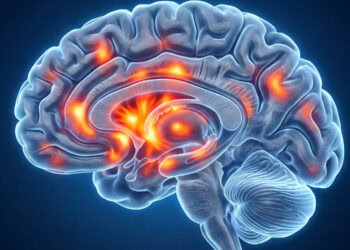
However, MEG data revealed differences in the dorsolateral and dorsomedial prefrontal cortices—brain regions involved in task-switching. Cannabis users exhibited weaker neural responses in these areas. Additionally, the level of cannabis consumption correlated with the strength of brain activity in the dorsomedial prefrontal cortex.
“In summary, we found that cannabis users exhibit altered theta oscillations [rhythmic electrical patterns in the brain, occurring at a frequency of about 4-8 cycles per second] during a task-switching paradigm that probed cognitive flexibility,” the study authors concluded.
“Essentially, nonusers displayed the typical switch cost activation pattern of stronger theta activity in the dmPFC and dlPFC [dorsolateral and dorsomedial prefrontal cortices of the brain] during switch trials [tasks where instructions for responding were changing] relative to no switch trials, while this effect was blunted among cannabis users. Furthermore, weaker theta switch cost effects in the dmPFC were significantly correlated with greater cannabis involvement in the cannabis users, a novel finding in the MEG literature.”
The study sheds light on the specificities of neural activity in cannabis users. However, the small sample size means that only strong differences would be statistically detectable. It is possible that more subtle performance differences could not be identified due to the limited number of participants.
The study, “The neural oscillations serving task switching are altered in cannabis users,” was authored by Kellen M. McDonald, Mikki Schantell, Lucy K. Horne, Jason A. John, Maggie P. Rempe, Ryan Glesinger, Hannah J. Okelberry, Anna T. Coutant, Seth D. Springer, Amirsalar Mansouri, Christine M. Embury, Yasra Arif, and Tony W. Wilson.