Subscribe
The latest psychology and neuroscience discoveries.
My Account
  • Mental Health
  • Social Psychology
  • Cognitive Science
  • Psychopharmacology
  • Neuroscience
  • About
No Result
View All Result
PsyPost
PsyPost
No Result
View All Result
Home Exclusive Social Psychology Political Psychology Donald Trump

Study on ideological fit examines why Clinton and Trump supporters don’t mix

by Michigan State University
July 9, 2016
in Donald Trump, Political Psychology
Photo credit: DonkeyHotey

Photo credit: DonkeyHotey

Share on TwitterShare on Facebook

Living around people with opposing political viewpoints affects your ability to form close relationships and accept other perspectives – and may even change your personality, finds a national study led by a Michigan State University scholar.

The findings also could help explain why so many Americans are moving to areas that suit them politically, further segregating the nation into “red” and “blue” states, said William Chopik, MSU assistant professor of psychology.

And while living among folks of common ideology may reduce conflict and promote individual well-being, it also could be stifling healthy political discourse, said Chopik, who was named one of Forbes’ “30 Under 30” for Science in 2016.

“You might be happier if you’re a conservative and you move to a stereotypical conservative place, or a liberal to a liberal one, but maybe that’s one of the reasons we see all the deadlock and polarization along party lines,” Chopik said. “If you never live among people you disagree with, how does compromise happen?”

The study, published online in the journal Social Psychological and Personality Science, examined national survey data of 19,162 people. The researchers looked at participants’ political orientation, ideological climate and personality measures such as anxiety and avoidance (survey items include “I try to avoid getting too close to others” and “I sometimes try to understand my friends better by imagining how things look from their perspective”).

Living among politically dissimilar others, the study found, had a psychological effect on people. These political “misfits” had difficulty depending on and accepting the viewpoints of others. Further, rather than assimilate or alter their dispositions to be more similar to their neighbors, they withdrew from relationships.

“Because living among politically dissimilar others is associated with a reduced sense of belonging, ideological misfits may feel as though they cannot reliably depend on the people around them,” the study states.

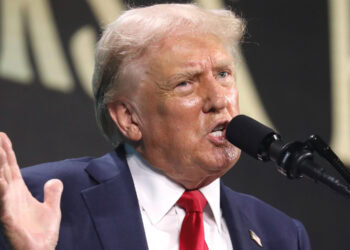
In the current political climate, Chopik said it’s not uncommon for conservatives not to know any Hillary Clinton supporters, or for liberals not to know any Donald Trump supporters. This may be at least partly the result of political segregation.

“Obviously, Trump supporters exist, and Clinton supporters exist, but people are choosing an environment where the other side doesn’t exist,” Chopik said. “As people continue segregating themselves into geographic areas according to political ideology, it’s important to understand the psychological states of the individuals living in these discordant communities.”

RELATED

Study finds little evidence of the Dunning-Kruger effect in political knowledge
Political Psychology

Study finds little evidence of the Dunning-Kruger effect in political knowledge

December 24, 2025
Shame makes people living in poverty more supportive of authoritarianism, study finds
Political Psychology

Egalitarians and anti-egalitarians share the same negative mental image of the poor

December 19, 2025
Paternal psychological strengths linked to lower maternal inflammation in married couples
Political Psychology

Progressives and traditional liberals generate opposing mental images of J.K. Rowling

December 15, 2025
Scientists say X (formerly Twitter) has lost its professional edge — and Bluesky is taking its place
Political Psychology

What are legislators hiding when they scrub their social media history?

December 12, 2025
Scientists just uncovered a major limitation in how AI models understand truth and belief
Political Psychology

Parents who support school prayer also favor arming teachers

December 11, 2025
Conservatives are more prone to slippery slope thinking
Political Psychology

Conservatives are more prone to slippery slope thinking

December 10, 2025
Russian propaganda campaign used AI to scale output without sacrificing credibility, study finds
Artificial Intelligence

AI can change political opinions by flooding voters with real and fabricated facts

December 9, 2025
Childhood adversity linked to poorer cognitive function across different patterns of aging
Political Psychology

No evidence of “beauty is beastly effect” found in German federal elections

December 8, 2025

PsyPost Merch

STAY CONNECTED

LATEST

The dark side of ‘T maxxing’: why young men are risking their fertility for muscles

Less WEIRD societies show stronger ornamentation preferences

New data confirms stable marriage is a key predictor of happiness in old age

A simple measurement of body shape may predict future mental health

Some men may downplay climate change risks to avoid appearing feminine

Perceived spiritual strength of a group drives extreme self-sacrifice through collective narcissism

Scientists identify dynamic brain patterns linked to symptom severity in children with autism

New research frames psychopathy as a potential survival adaptation to severe early adversity

RSS Psychology of Selling

  • Brain scans suggest that brand longevity signals quality to shoppers
  • The double-edged sword of dynamic pricing in online retail
  • How expert persuasion impacts willingness to pay for sugar-containing products
  • Experiments in sports marketing show product fit drives endorsement success
  • Study finds consumers must be relaxed for gamified ads to drive sales
         
       
  • Contact us
  • Privacy policy
  • Terms and Conditions
[Do not sell my information]

Welcome Back!

Login to your account below

Forgotten Password?

Retrieve your password

Please enter your username or email address to reset your password.

Log In

Add New Playlist

Subscribe
  • My Account
  • Cognitive Science Research
  • Mental Health Research
  • Social Psychology Research
  • Drug Research
  • Relationship Research
  • About PsyPost
  • Contact
  • Privacy Policy