
Differences between men and women in intelligence and behaviour have been proposed and disputed for decades.
Now, a growing body of scientific evidence shows hundreds of genes act differently in the brains of biologically male or female humans. What this means isn’t yet clear, though some of the genes may be linked to sex-biased brain disorders such as Alzheimer’s and Parkinson’s diseases.
These sex differences between male and female brains are established early in development, so they may have a role in shaping brain development. And they are found not only in humans but also in other primates, implying they are ancient.
Gene activity in male and female brains
Decades of research have confirmed differences between men and women in brain structure, function and susceptibility to mental disorders.
What has been less clear is how much of this is due to genes and how much to environment.
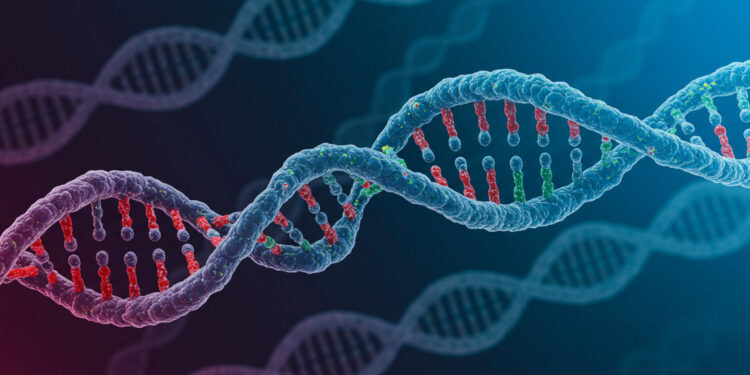
We can measure the influence of genetics by looking directly at the activity of genes in the brains of men and women. Now that we have the full DNA sequence of the human genome, it is comparatively easy to detect activity of any or all of the roughly 20,000 genes it contains.
Genes are lengths of DNA, and to be expressed their sequence must be copied (“transcribed”) into messenger RNA molecules (mRNA), which are then translated into proteins – the molecules that actually do the work that underpins the structure and function of the body.
So by sequencing all of this RNA (called the “transcriptome”) and lining up the base sequences to the known genes, we can measure the activity of every gene in a particular tissue – even an individual cell.
When scientists compared the transcriptomes in postmortem tissue samples from hundreds of men and women in 2017, they found surprisingly different patterns of gene activity. A third of our 20,000 genes were expressed more in one sex than the other in one or several tissues.
The strongest sex differences were in the testes and other reproductive tissues, but, surprisingly, most other tissues also showed sex biases. For instance, a subsequent paper showed very different RNA profiles in muscle samples from men and women, which correspond to sex differences in muscle physiology.
A study of brain transcriptomes published earlier this year revealed 610 genes more active in male brains, and 316 more active in female brains.
What genes show sex bias in the brain?
Genes on the sex chromosomes would be expected to show different activity between men (with an X chromosome and a Y chromosome) and women (with two X chromosomes). However, most (90%) sex-biased genes lie on ordinary chromosomes, of which both males and females have two copies (one from mum, one from dad).
This means some sex-specific signal must control their activity. Sex hormones such as testosterone and oestrogen are likely candidates, and, indeed, many sex-biased genes in the brain respond to sex hormones.
How are sex differences established in the brain?
Sex differences in brain gene activity appear early in the development of the foetus, long before puberty or even the formation of testes and ovaries.
Another 2025 study examined 266 post mortem fetal brains and found more than 1,800 genes were more active in males and 1,300 in females. These sets of sex-biased genes overlapped with those seen in adult brains.
This points to direct genetic effects from genes on the sex chromosomes, rather than hormone-driven differences.
Do these differences mean male and female brains work differently?
It would be remarkable if sex differences in the activity of so many genes were not reflected in some major differences in brain function between men and women. But we don’t know to what extent, or which functions.
Some patterns are emerging. Many female-biased genes have been found to encode neuron-associated processes, whereas male-biased genes are more often related to traits such as membranes and nuclear structures.
Many genes are sex-biased only in particular sub-regions of the brain, which suggests they have a sex-specific function only in those regions.
However, differences in RNA levels don’t always produce differences in proteins. Cells can compensate to maintain protein balance, meaning that not all RNA differences have functional outcomes. Sometimes, developmental processes differ between sexes but lead to the same end result.
Brain health
Of particular interest is the finding of a relationship between sex biases and sex differences in the susceptibility to some brain disorders.
Many genes implicated in Alzheimer’s disease are female-biased, perhaps accounting for the doubled incidence of this disease in women. Studies on rodents imply that expression of the male-only SRY gene in the brain exacerbates Parkinson’s disease.
Evolution of sex differences in brain gene function
These sex-biased gene expression patterns are by no means unique to humans.
They have also been found in the brains of rats and mice as well as in monkeys.
The suites of male- and female-biased genes in monkeys overlap significantly with those of humans, implying that sex biases were established in a common ancestor 70 million years ago.
This suggests that natural selection favoured gene actions that promoted slightly different behaviours in our male and female primate ancestors – or perhaps even further back, in the ancestor of all mammals, or even all vertebrates.
In fact, sex differences in the expression of genes in the developing brain look to be ubiquitous in animals. They have been observed even in the humble nematode worm.
This article is republished from The Conversation under a Creative Commons license. Read the original article.