
Trauma survivors process angry expressions differently on a subconscious level
People who experienced abuse during childhood may automatically lock their attention onto signs of anger. A new brain wave study reveals that survival adaptations tied to early trauma manifest as involuntary reflexes rather than conscious emotional evaluations.
Read moreDetails
Religion-justified childhood abuse linked to higher adult anxiety and depression
When perpetrators use faith to justify physical or sexual abuse, the psychological impact on victims is magnified. A new study links religion-justified maltreatment to quadrupled odds of extreme anxiety in adulthood compared to secular forms of abuse.
Read moreDetails
New scientific discoveries reveal the lifelong impact of childhood trauma
Childhood trauma leaves a lasting footprint far beyond memory. Recent research reveals how early adversity physically alters our brain structure, disrupts gut health, and reshapes our body's stress response long into adulthood.
Read moreDetails
Study finds unpredictable childhood environments are linked to borderline personality traits in adulthood
People who remembered their childhoods as unstable and unpredictable reported more emotional, interpersonal, impulsive, and dissociative borderline traits in adulthood, according to research published in Evolutionary Psychological Science.
Read moreDetails
Brain structure variations are linked to different types of traumatic memories
New research shows that the microscopic structure of specific brain pathways is linked to how people experience trauma-related flashbacks. Variations in white matter integrity may determine whether traumatic memories manifest as spontaneous intrusions or vivid sensory reliving.
Read moreDetails
Childhood trauma linked to depression in fathers of toddlers via masculine role stress
A new study reveals how a history of childhood trauma can lead to depressive symptoms in fathers raising toddlers, operating through a sequential pathway of masculine gender role stress and emotional dysregulation.
Read moreDetails
New research challenges the idea that memories of childhood maltreatment can’t be trusted
Society often doubts memories of childhood trauma, assuming emotions distort the past. However, a major new study reveals that survivors are highly reliable narrators, with accounts of abuse remaining remarkably stable over time.
Read moreDetails
Your body’s stress response before trauma may predict PTSD symptoms later
Could biological markers predict PTSD risk? Scientists found that a smaller hypothalamus and low pre-trauma cortisol levels are strongly linked to persistent re-experiencing symptoms in trauma survivors, particularly those with a history of childhood adversity.
Read moreDetails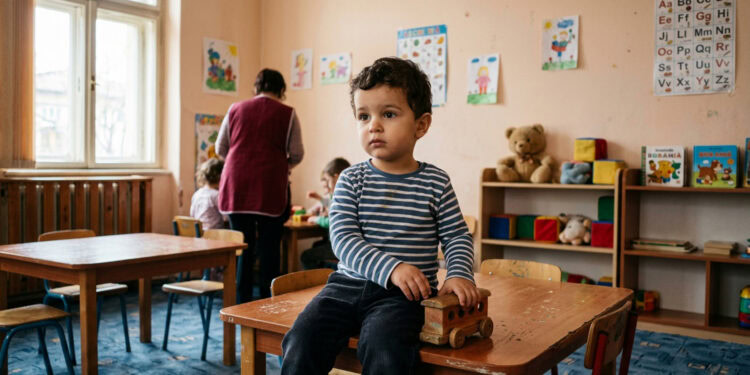
Severe early deprivation leaves lasting mark on life skills 16 years later
Children who experience severe early deprivation in institutional care often struggle with independent living skills as young adults. A new study shows that early placement in high-quality foster care can significantly improve their long-term social and practical abilities.
Read moreDetails
Age at which childhood abuse occurs is associated with distinct brain activity in adulthood
A new study in Molecular Psychiatry suggests that the timing of childhood abuse is linked to distinct differences in how the adult brain processes emotional information, depending on whether the trauma happened in early childhood or adolescence.
Read moreDetails
Impulsivity is the missing link between childhood trauma and intimate partner violence
A psychological study of men convicted of intimate partner violence found that a lack of social support increases the risk of reoffending, while childhood abuse fuels physical aggression by severely impairing a person's impulse control.
Read moreDetails
Researchers identify key psychological traits linking childhood abuse to future domestic violence victimization
By analyzing genetic and environmental data from thousands of twins, researchers found that early trauma shapes mental health in distinct ways that increase a person's vulnerability to later domestic abuse.
Read moreDetails
Taking psychedelics at raves and ceremonies may help heal childhood trauma
Adults with a history of childhood trauma who use psychedelics at raves or ceremonies may experience mental health improvements. New research suggests these communal settings are associated with reductions in PTSD symptoms and feelings of shame.
Read moreDetails
Machine learning uncovers how childhood trauma amplifies genetic risks for depression
A new machine learning analysis reveals how childhood trauma can amplify genetic vulnerabilities to depression, uncovering thousands of biological interactions that traditional statistical methods have consistently missed.
Read moreDetails
Childhood trauma predicts higher risk of combined mental and physical illness in later life
A longitudinal study of aging adults reveals that severe childhood adversity substantially raises the risk of developing simultaneous physical and mental illnesses in later life. Early-onset depression often acts as a bridge to these overlapping health struggles.
Read moreDetails