
Biological roots of PTSD differ strikingly between men and women
Researchers analyzing blood samples discovered that the biological mechanisms driving PTSD vary by sex, potentially explaining why some drug trials have failed to help female patients.
Read moreDetails
New study reveals how the brain learns to adapt to harmless threats
A study in Molecular Psychiatry pinpoints a brain circuit that reduces fear of harmless threats over time. The research in mice offers new insight into the neural basis of adaptive learning and stress-related conditions like anxiety.
Read moreDetails
Children with more autistic traits show increased vulnerability to PTSD in early adulthood
Childhood autistic traits may predict a future PTSD diagnosis, according to a long-term study in the Journal of Child Psychology and Psychiatry. The findings show young people with more traits are more vulnerable to developing the disorder after experiencing a...
Read moreDetails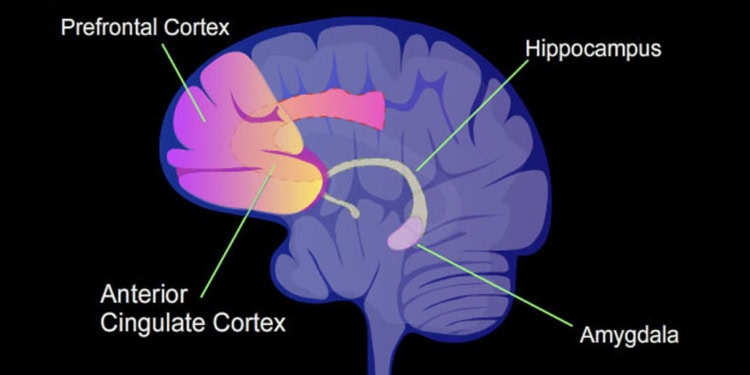
Neuroscientists are starting to unravel the amygdala’s complexity, shedding new light on PTSD
Often labeled the brain’s fear center, the amygdala is much more complex than that. A study in Translational Psychiatry suggests that PTSD is linked to altered connectivity in one of its subregions, with potential implications for emotion and body awareness.
Read moreDetails
Cannabis use linked to short-term relief of PTSD symptoms in veterans
A new study suggests cannabis use may offer same-day reductions in PTSD symptoms and negative affect among veterans. However, the effects appear short-lived, raising questions about long-term reliance on cannabis for managing trauma-related symptoms.
Read moreDetails
PTSD symptoms linked to the tendency to absorb others’ stress reactions
Can witnessing another person’s stress silently stir your own trauma? A new study suggests that people who “resonate” more strongly with others’ distress are also more likely to report PTSD symptoms.
Read moreDetails
Testosterone levels linked to PTSD symptoms in both men and women, study finds
Mid-range testosterone levels were linked to the lowest PTSD symptoms in both men and women, while both low and high levels were associated with more symptoms. This U-shaped relationship was stronger among individuals with higher body mass index.
Read moreDetails
Trauma can trigger obsessive-compulsive disorder, not just PTSD, new study shows
Following the October 7th attacks, a study of survivors revealed a startling link. Direct exposure to the violence made individuals nearly six times more likely to develop obsessive-compulsive disorder.
Read moreDetailsNew research identifies multiple personal, social, and biological risk factors for PTSD
While PTSD is often linked directly to traumatic experiences, a new investigation shows that individual background, biological susceptibility, and social circumstances play equally important roles. The study highlights why some people develop lasting symptoms while others recover more quickly.
Read moreDetails
Childhood trauma tied to sexual narcissism and hypersexual behavior
Researchers report that sexual narcissism may serve as a psychological link between childhood trauma and compulsive sexual behavior. Participants with compulsive sexual behavior reported more trauma, greater sexual narcissism, and higher hypersexuality scores than controls.
Read moreDetails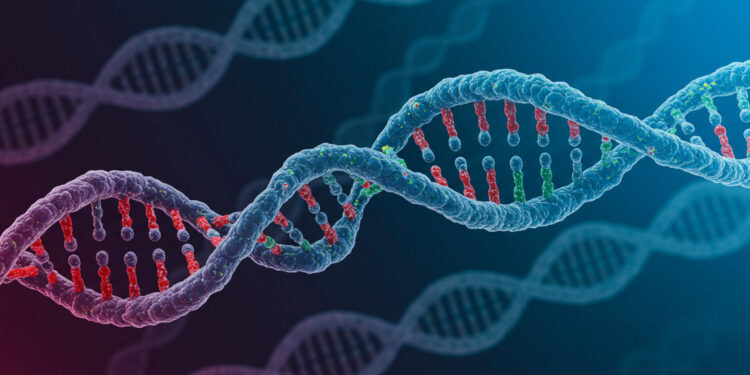
Is trauma really carried in our DNA? The scientific story is more complicated
Our bodies have a remarkable ability called "phenotypic plasticity," which allows our environment to shape how our genes are expressed. This is the key to understanding inherited trauma—not as a permanent scar, but as a changeable biological response to our...
Read moreDetails
Brain scans reveal who may benefit most from MDMA for trauma-related symptoms
MDMA-assisted therapy shows promise for trauma, but its effects vary. Now, a study in JAMA Network Open offers a solution: brain scans that measure reactivity to unconscious threat cues can identify individuals most likely to respond positively to the treatment.
Read moreDetails
Positive early experiences may buffer suicidal thoughts in those with trauma symptoms, new study finds
Positive relationships in childhood may play a lasting role in protecting college students from suicidal ideation tied to trauma, a new study finds, offering promising implications for both clinical care and campus mental health programs.
Read moreDetails
Psychedelics may buffer against PTSD, finds new study of survivors of Nova music festival massacre
A new study of Nova festival massacre survivors suggests that taking classic psychedelics before the attack was linked to lower anxiety and trauma symptoms weeks later, offering rare insights into how psychedelics may influence trauma memory formation in real-world settings.
Read moreDetails
Cognitive training may reduce negative self-perceptions in people with depression and PTSD
Underestimating one’s own cognitive abilities is common in depression and PTSD. A new study finds that cognitive training—especially through engaging games—may help people recalibrate their self-perceptions and feel better.
Read moreDetails