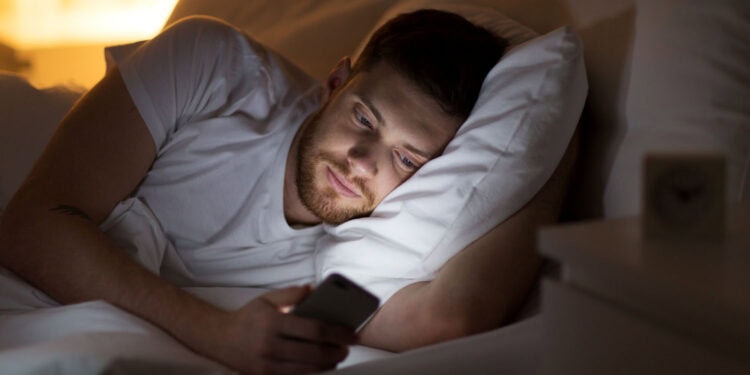
Exposure to smartphone light suppresses melatonin levels at night
Reading on a smartphone without a blue-light filter significantly reduces melatonin levels, with adults experiencing prolonged suppression. Blue-light filters and printed books have less impact on melatonin levels.
Read moreDetails
Night owls beware: Late bedtimes linked to higher risk of depression and anxiety
Staying up late, even if you're a night owl, is linked to higher risks of depression and anxiety. This surprising study suggests that an earlier bedtime could improve mental health, regardless of natural sleep preferences.
Read moreDetails
Brain connections reset during first half of sleep
Researchers have found that the brain weakens synaptic connections formed during wakefulness primarily in the first half of the night, supporting the idea that sleep acts as a reset for the brain.
Read moreDetails
Cognitive behavioral therapy shows promise in improving sleep for anxious teens, study finds
Cognitive behavioral therapy improved sleep onset and duration for adolescents with anxiety disorders. Teens took less time to fall asleep and slept longer after therapy, though nighttime awakenings remained unchanged.
Read moreDetails
Exercise appears to improve sleep quality in older adults and enhance brain connectivity
A 12-week Tai Chi exercise program improved sleep quality and reduced anxiety and depression in older adults with insomnia. The intervention also enhanced functional connectivity between the brain's motor network and the cerebellum.
Read moreDetails
New study links irregular sleep patterns to academic and behavioral problems in adolescents
Inconsistent sleep schedules in adolescents are linked to poorer academic performance and more behavioral issues at school, underscoring the importance of regular sleep patterns for educational success and well-being.
Read moreDetails
Men who spend fewer hours sleeping might be worse in wayfinding tasks, study suggests
A recent study found that men, but not women, with shorter sleep durations performed worse on wayfinding tasks. The findings were published in Scientific Reports.
Read moreDetails
Slow-wave activity in specific brain area during sleep can predict how charitable you are
Researchers discovered that deep sleep quality, specifically in the brain's right temporoparietal junction, correlates with higher prosocial behaviors like cooperation and charity.
Read moreDetails
The surprising cognitive effects of creatine on sleep-deprived brains
Researchers have found that a single dose of creatine can temporarily enhance cognitive functions impaired by sleep deprivation. This study suggests creatine as a potential non-stimulant alternative for boosting brain performance when sleep is compromised.
Read moreDetails
People who get “catch-up sleep” on weekends are less likely to have depressive symptoms
Individuals who sleep more on weekends, known as weekend catch-up sleep, show significantly fewer depressive symptoms, particularly men and adults under 65 who sleep less during weekdays.
Read moreDetails
Sleep quality can be predicted from the way one walks, study finds
A study has found that individuals with poor sleep quality exhibit less variability in pelvic tilt and struggle with maintaining a consistent walking speed, suggesting a link between sleep patterns and gait characteristics.
Read moreDetails
Being sleepy can make you feel several years older than you really are, study finds
Researchers found that sleep significantly impacts how old we feel, with sleep deprivation making us feel older by an average of 4.4 years, while feeling alert can make us feel four years younger.
Read moreDetails
Green streets, better sleep: Global study links nature with nighttime rest
A study across 18 countries found that living on greener streets is linked to better sleep quality, mediated by improved mental well-being. This highlights the potential of urban greenery in enhancing public health through healthier sleep patterns.
Read moreDetails
Morning light exposure plays key role in children’s sleep onset, study finds
Bright morning light shortens the time kids take to fall asleep at night, according to new research. Evening light intensity, on the other hand, delays sleep onset, highlighting the importance of natural light-dark cycles for improving children's sleep quality.
Read moreDetails
Sleep deprivation can be detected in your blood
Researchers developed a blood test that can detect with 99.2% accuracy if someone has been awake for over 24 hours, offering a breakthrough in identifying sleep deprivation to enhance safety in critical roles and potentially reduce accidents caused by lack...
Read moreDetails