
Researchers studied psychopathy and mind-reading ability. One result was particularly surprising.
How well can people with psychopathic traits understand what others are thinking or feeling? A recent study examined this question using a film-based test—and found that one trait, in particular, was linked to stronger performance.
Read moreDetails
Hybristophilia: Study links TikTok to women’s sexual attraction to criminals
For some young women, a sexual attraction to criminals may be linked to their TikTok habits and personality. A recent study found that engaging with videos that romanticize offenders, along with having higher psychopathy scores, predicted greater hybristophilic tendencies.
Read moreDetails
Psychopathy is associated with higher openness to engaging in casual sex without emotional intimacy
Psychopathic traits like low empathy and impulsivity are linked to specific mating strategies, new research confirms. A comprehensive meta-analysis has established a robust correlation between trait psychopathy and a greater willingness to engage in casual sex without emotional commitment.
Read moreDetails
Antisocial personality traits linked to blunted brain responses to angry faces
New neuroimaging research indicates that individuals with higher levels of antisocial personality traits show weaker brain responses to looming angry faces. The findings may help explain why some people fail to recognize or respond appropriately to social threats.
Read moreDetails
Psychopathic men and less selective women report more sex via Tinder
New research finds that men high in psychopathy and sexual desire, and women who are less picky with matches, report more sexual encounters via Tinder. The findings suggest dating apps favor fast, opportunistic mating strategies shaped by personality.
Read moreDetails
People high in psychopathy and low in cognitive ability are the most politically active online, study finds
New research highlights a striking pattern: individuals with high psychopathic traits and lower cognitive ability tend to be the most politically active online. The study also links fear of missing out to digital engagement across eight diverse national contexts.
Read moreDetails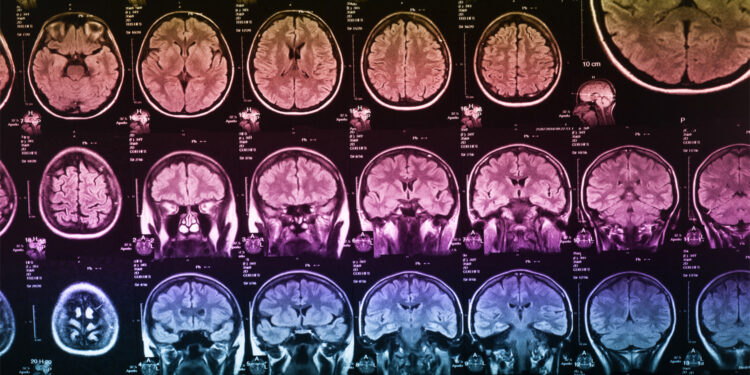
New neuroscience research links psychopathy’s antisocial features to distinct brain structure abnormalities
Researchers used high-resolution brain imaging to investigate psychopathy’s neural basis, finding widespread structural differences in men with high psychopathy scores, particularly in frontal-subcortical circuits linked to impulse regulation, decision-making, and behavioral control.
Read moreDetails
Female killers in Sweden show low psychopathy, primarily reactive motives
A nationwide Swedish study finds most women who commit lethal violence act in emotionally charged situations, with low psychopathy scores and little planning. Severe mental disorders were linked to a more complex blend of reactive and instrumental features.
Read moreDetails
Scientists have uncovered these weird facts about psychopathic individuals
Psychologists are learning that psychopathic traits can be subtle, widespread, and surprisingly influential. These 11 studies offer a science-backed glimpse into how callousness, impulsivity, and emotional detachment shape everything from romantic behavior to mortality risk and facial emotion processing.
Read moreDetails
Narcissists report high emotional intelligence but perform worse on objective tests
Researchers found that narcissists and psychopaths score lower on emotional intelligence—if measured with objective tasks. But when asked to self-rate their emotional skills, narcissists gave themselves higher marks. The findings highlight key differences in how personality shapes self-perception.
Read moreDetails
How psychopathy connects alexithymia to decisions that sacrifice others
A new study finds that people with low emotional awareness tend to make more utilitarian moral decisions—but only when psychopathic traits are also present. The findings reveal how emotional detachment and empathy deficits interact in shaping difficult moral choices.
Read moreDetails
Psychopathic traits linked to distinct brain networks in new neuroscience research
Researchers used structural brain imaging to explore how psychopathy is linked to externalizing behaviors. The study found that variations in brain connectivity—especially in emotion and attention networks—may help explain why some individuals with psychopathic traits engage in antisocial behavior.
Read moreDetails
Psychopathic personality and weak impulse control pair up to predict teen property crime
Psychopathic traits alone don’t always lead to serious offending—but when combined with weak self-regulation, they may significantly raise the risk. A new study reveals how these factors interact to shape property crime patterns in adolescents already involved in the justice...
Read moreDetails
Psychopathic tendencies may be associated with specific hormonal patterns
What if the roots of psychopathy could be traced in our blood? New research is looking beyond psychology and into our endocrine system. A new study suggests hormones like cortisol and testosterone may hold important clues to a person's manipulative...
Read moreDetails
Youth with psychopathic traits at increased risk of dying young, study finds
A long-term study of incarcerated teens has found that psychopathic personality traits are linked to a greater risk of dying young. The findings suggest these traits may be more predictive of premature mortality than conduct disorder or substance use.
Read moreDetails