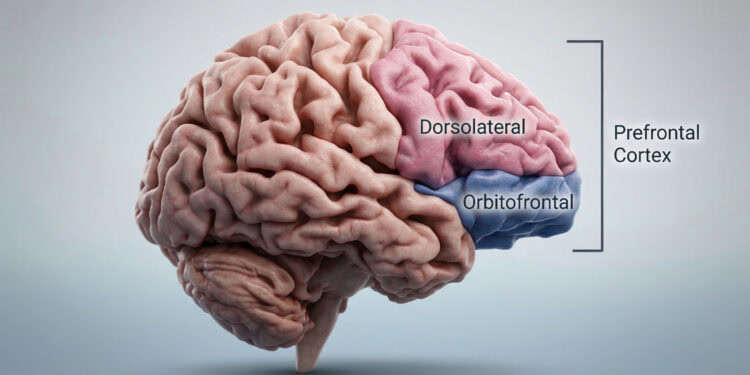
Neuroscientists have pinpointed a potential biological signature for psychopathy
A recent study suggests that high psychopathic traits are linked to reduced thickness in brain regions responsible for processing emotions. This neural pattern appears consistently, regardless of a person's criminal history.
Read moreDetails
Can brain stimulation treat psychopathy?
A new review of 64 experiments suggests non-invasive brain stimulation can improve empathy and guilt in healthy people. However, researchers caution there is currently no direct evidence that the technology works on individuals with psychopathy.
Read moreDetails
New research links psychopathy to a proclivity for upskirting
As digital sex crimes rise, psychologists are uncovering the traits of potential offenders. A new study links upskirting to the "Dark Tetrad" of personality and exposes a significant generational gap in victim blaming.
Read moreDetails
Researchers confirm the detrimental effects of psychopathic traits on job performance
A new meta-analysis published in the Journal of Applied Psychology reveals that employees with psychopathic traits tend to exhibit lower task performance and are less likely to help colleagues, while engaging in more counterproductive behaviors.
Read moreDetails
Primary psychopathy linked to lower morning cortisol levels
A new study reveals that students with high primary psychopathic traits tend to have lower cortisol levels in the morning. This finding suggests a biological link to the emotional coldness and low anxiety characteristic of psychopathy.
Read moreDetails
Psychopathic female criminals exhibit unexpected patterns of emotional processing
Incarcerated women with high psychopathy scores report feeling less dominant when viewing distressing images. The findings suggest a complex form of defensive emotional regulation.
Read moreDetails
These two dark personality traits are significant predictors of entrepreneurial spirit
Entrepreneurial spirit is driven by a complex mix of personality traits, including narcissism and psychopathy. Researchers found that these dark characteristics predict entrepreneurial potential even when controlling for general personality factors.
Read moreDetails
Psychopathic traits are associated with a substantially increased risk of schizophrenia
Individuals with high levels of psychopathy are over nine times more likely to develop schizophrenia than those with low levels, according to a 40-year longitudinal study of forensic psychiatric patients in Finland.
Read moreDetails
New research frames psychopathy as a potential survival adaptation to severe early adversity
Subclinical psychopathy appears to strengthen the connection between childhood trauma and "fast" life history strategies, suggesting these dark traits may serve as a survival adaptation in harsh environments.
Read moreDetails
Not all psychopathic traits are equal when it comes to sexual aggression
New research sheds light on how different psychopathic personality traits relate to different forms of sexual aggression.
Read moreDetails
Perceiving these “dark” personality traits in a partner strongly predicts relationship dissatisfaction
A new study shows that perceiving psychopathic traits in a romantic partner is a strong predictor of your own relationship dissatisfaction. One's own manipulative tendencies and being seen as callous were also consistently linked to lower satisfaction for the couple.
Read moreDetails
Researchers studied psychopathy and mind-reading ability. One result was particularly surprising.
How well can people with psychopathic traits understand what others are thinking or feeling? A recent study examined this question using a film-based test—and found that one trait, in particular, was linked to stronger performance.
Read moreDetails
Hybristophilia: Study links TikTok to women’s sexual attraction to criminals
For some young women, a sexual attraction to criminals may be linked to their TikTok habits and personality. A recent study found that engaging with videos that romanticize offenders, along with having higher psychopathy scores, predicted greater hybristophilic tendencies.
Read moreDetails
Psychopathy is associated with higher openness to engaging in casual sex without emotional intimacy
Psychopathic traits like low empathy and impulsivity are linked to specific mating strategies, new research confirms. A comprehensive meta-analysis has established a robust correlation between trait psychopathy and a greater willingness to engage in casual sex without emotional commitment.
Read moreDetails
Antisocial personality traits linked to blunted brain responses to angry faces
New neuroimaging research indicates that individuals with higher levels of antisocial personality traits show weaker brain responses to looming angry faces. The findings may help explain why some people fail to recognize or respond appropriately to social threats.
Read moreDetails