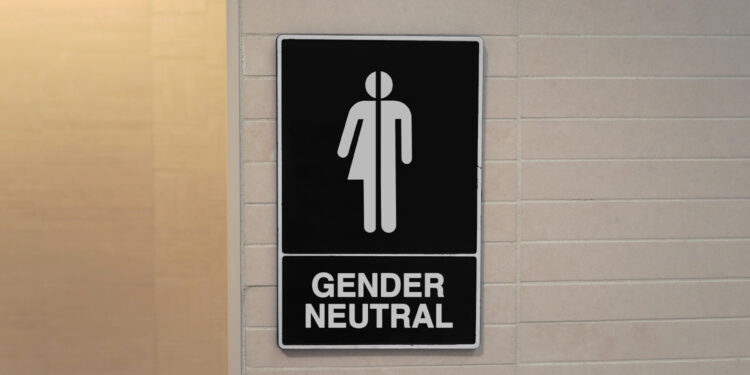
How public opinion on transgender bathroom access shifted between 2016 and 2022
Public opinion on transgender bathroom access has grown more conservative since 2016. A new study reveals how Americans weigh competing arguments about safety and discrimination, and why conflicted voters increasingly support restrictive policies.
Read moreDetails
Nostalgia for a party’s past cuts both ways when it comes to support for political violence
Nostalgia for a party’s past doesn’t mean the same thing to every partisan. Partisans who felt nostalgic reported more support for violence if their passion was obsessive, but less if it was harmonious.
Read moreDetails
Hiring bias against transgender women depends on both identity and appearance, field experiment suggests
In a field experiment involving more than 10,000 job applications in Germany, trans women who disclosed their identity or had male-coded facial features each received about 10 percent fewer positive responses from employers. When both signals were present, the penalty...
Read moreDetails
Many people judge candidates and policies by a single deciding feature, new research suggests
Many survey methods assume people weigh every feature of a candidate or policy. New research suggests most don’t: mental shortcuts dominated, and the strategy people used often shifted from one issue to the next.
Read moreDetails
Oxytocin amplifies negative childhood memories for anxiously attached adults
Oxytocin is often called the "love hormone," but new research shows it can actually amplify negative childhood memories for people who experience relationship anxiety. The hormone appears to heighten our sensitivity to social cues, rather than simply boosting affection.
Read moreDetails
Your job says little about what you want in a partner, study suggests
Does a nurse want a different kind of partner than an engineer? In a study of nearly 2,000 adults across seven countries, the industry people worked in had almost no link to what they prioritized in a partner.
Read moreDetails
Social freedom shapes whose version of reality you adopt, new research suggests
Does living somewhere with lots of social freedom change whose worldview you share? New research suggests it does, mostly by pulling people’s minds away from contacts who don’t support their goals.
Read moreDetails
Psychologists identify three distinct profiles of support for free speech
Advocating for unrestricted freedom of speech is not always driven by democratic ideals. A new psychological study finds that the broadest support for free expression is closely tied to conspiracy beliefs and a deep distrust of societal institutions.
Read moreDetails
Happiness, not awe, may be the better emotional lever for openness to diversity
Researchers expected awe to make people more open to diversity. Instead, in a study of nearly 3,200 adults, a short happy video nudged attitudes in a more inclusive direction, while awe had no measurable effect.
Read moreDetails
High smartphone dependency linked to altered time allocation in teens
Teenagers who overuse smartphones often struggle to manage their own learning later on. A new longitudinal study reveals that digital habits hinder academic skills by displacing study time, rather than by directly increasing academic stress.
Read moreDetails
How partisan hatred shapes American views of the Black Lives Matter protests and January 6
Americans evaluate major political events through a deeply polarized lens. A new study finds that intense dislike of political opponents and differing beliefs about what threatens democracy warp how the public remembers the Black Lives Matter protests and January 6.
Read moreDetails
Genetic scores linked to depression and neuroticism are associated with lower voter turnout
A recent study of over 50,000 individuals reveals that genetic predispositions for health and personality traits predict voter turnout. Using advanced DNA scoring, researchers shed light on how genetics might influence our likelihood to engage in the political process.
Read moreDetails
Researchers identify a factor linked to how much happier couples are than singles
Partnered people tend to be more satisfied with their lives than singles, but a study of more than 380,000 adults in Great Britain suggests the size of that gap is tied to how common relationships are in the local area.
Read moreDetails
Is fatness a feminist issue?
Feminist scholars have long argued that anti-fat stigma is rooted in sexism. But when researchers asked fat women directly, many disagreed, some framing their weight as a personal matter, and a few even said fat women deserve to be teased.
Read moreDetails
How extreme boredom can push people toward aggressive behavior
Boredom does more than just drain your energy. New research reveals that extreme monotony increases the desire for stimulation, pushing people toward both physical aggression and stronger support for military conflicts as a way to escape the dullness.
Read moreDetails